Pathophysiology Of Coronary Artery Disease Health And Social Care Essay

Heart attack has become a common household term in the United States, due to the fact that approximately 16 million American have been diagnosed with coronary artery disease. According to American Heart Association, an American dies every minute due to coronary artery disease. Coronary artery disease also known coronary heart disease or ischemic heart disease encompasses other pathologies, such as angina and myocardial infarction (heart attack). Coronary artery disease occurs when there is a narrowing of the coronary arteries, due to the development of plaques leading to reduce amounts of oxygenated blood to the heart. [2]

Anatomy and Physiology of the Heart:-

The heart is an essential organ that is responsible for pumping blood all throughout the body and supplying it with oxygen and nutrients. It is the central hub for the cardiovascular system and acts as the transport system of the body, which performs via electrical conduction activity. The anatomy of the heart is composed of many structures, such as the four chambers: the right and left atria and ventricles, numerous blood vessels such as the aorta, the pulmonary artery and vein, and the coronary arteries, four valves, three layers of tissue, etc. The aorta is the main artery that pumps the blood out of the heart to the rest of the body; the pulmonary artery and vein transport oxygenated and deoxygenated blood receptively, and the coronary arteries make a crown on the heart muscle and supply the myocardium with oxygenated blood and nutrients. The valves in the heart are responsible for preventing backflow of blood and allow the blood to circulate in an uniform fashion. The electrical conduction system of the heart accounts for the beating of the heart allowing it contract and act as the pump of the body. [2, 3]

Pathophysiology of Coronary Artery Disease:-

When the coronary arteries become occluded due to plaque build up a condition called atherosclerosis occurs. Atherosclerosis means narrowing and hardening of the arteries leading to damage to the blood vessels and is a major contributor to many heart diseases and disorders [4]. These atherosclerotic plaques are formed are from lipid and fat deposits, mainly being cholesterol, which is a reason why diet is also major risk factor in developing coronary artery disease. Arteries are composed of three layers: adventita, intima, and media; the plaque tends to develop between the intima and media layers [5]. These atherosclerotic plaques narrow the lumen of the arteries causing decreased amounts of blood to reach the heart and overtime harden them causing decrease flexibility during vasoconstriction and vasodilatation [4]. Additionally, the atherosclerotic plaques can dislodge causing thrombosis and ischemic events [5]. When the coronary arteries’ function is compromised, the heart does not receive adequate supply of oxygenated blood and nutrients causing decrease cardiac function. At times of stress, the body will try to counteract these changes to achieve homeostasis, by working harder than normal; however, prolonged exertion initiates a cascade to many disease processes and pathologies, such as cardiomyopathy, heart failure, arrhythmias, cardiac arrest, and classically myocardial infarction (heart attack) [4]. Most patients of coronary artery disease experience angina and/or myocardial infarction, or possibly death.

Risk Factors of Coronary Artery Disease:-

Coronary artery disease tends to be the most common cause of death and disability in the United States. The main risk factors of coronary artery disease are as follows: positive family history, physical inactivity, poor diet, smoking and/or alcohol intake, along with other diseases pathologies like hypertension, diabetes, high cholesterol, and obesity. A person that has positive family history of heart disease of a first degree relative is at greater risk of developing coronary artery disease [2]. Physical inactivity, poor diet, and obesity go hand in hand for developing coronary heart disease. Obesity has become an epidemic that affects one in four Americans and results in many life-threatening consequences. Heart disease has become the cause of death in industrialized nations compare to underdeveloped nations, due to sedentary lifestyle and increased fast-food consumption. The American Heart Association encourages patients to exercise regularly and eat healthy and this also accounts for better prognosis of coronary artery disease even if someone has other risk factors [2]. Research indicates that a diet that’s rich in omega 3-fatty acids, such as fish helps protect against vascular disease [2]. One of the most preventable risk factors for any disease is smoking, and for cardiovascular disease it is the number one preventable cause [2]. The World Health Organization states that 1 year after cessation of smoking, the risk of coronary artery disease decrease by almost half [2]. Additionally, increased age and sex are other contributing factors to coronary artery disease. Statistically, males are more likely to develop coronary heart disease at an early age, however the risk equals for both men and women after post-menopause. Other diseases such as diabetes, hypertension, and/or hypercholesterolemia combined with coronary artery disease results life-threatening consequences, which it is why it’s recommended to keep a close eye on cholesterol, blood pressure and glucose levels and checked on regular basis [2, 4].

Symptoms of Coronary Artery Disease:-

Most patients of coronary artery disease are asymptomatic, whereas other patients can present with a variety of symptoms such as: shortness of breath, tightness around the chest, chest pain, Levine’s sign, or possibly death [2]. Patients that exhibit symptoms tend have advance stages of damage to their coronary arteries [4]. Angina is the classic heart pain most patients complain about that is caused by ischemia. Ischemia is the lack of oxygen supply to a region of the heart [4]. Patients can experience angina at anytime, however classically it’s exhibited after a person has been involved in an extraneous activity, such as exercise. Angina can be categorized as stable, unstable, or Prinzmetal’s (variant) angina [2]. The Levine’s sign is the classic presentation of a heart attack that most actors in Hollywood portray, when they are having a heart attack, which is a clenching fist over their chest [1].

Complications of Coronary Artery Disease/ What is a heart attack?

Myocardial infarction occurs when the heart is deprived of oxygenated blood because of rupture of the atherosclerotic plaque, resulting in a state of ischemia. Supply meets demand theory comes into play, because the heart is demanding oxygenated blood and nutrients, but the coronary arteries are unable to provide due to atherosclerosis build up. The area of the heart that the damage occurs to the heart depends on the vessels that are occluded, exhibiting a variety of symptoms and/or complications [4]. For example, if the myocardial infarction occurs at the right atrium and disturbs the electrical conduction activity of the SA node, it may cause the patient to possibly suffer from arrhythmias. Therefore, essentially if a patient experiences a myocardial infarction at a particular region of the heart that area will suffer an ischemic event and kills the heart tissue hence making it non-functional. Overall, a myocardial infarction has poor prognosis and tends to lead to morbidity and mortality [2].

Diagnosis of Coronary Artery Disease:-

Coronary artery disease is a condition that develops overtime; therefore there aren’t any real tests that can indicate if a person is suffering from coronary artery disease [6]. Healthcare providers use patient’s history, physical exam results, and assess risk factors for developing coronary artery disease [2, 6]. Electrocardiogram, stress testing, echocardiography, and laboratory testing prove to be the test of choice by healthcare providers when examining patients that are at risk of developing coronary artery disease. Electrocardiograms also know as an EKG or ECG detects the heart’s electrical activity, rhythm, heart rate, axis, and any abnormal enlargements of the heart [6]. An EKG is a quick and painless test and can tell healthcare providers if the patient had or is having a myocardial infarction [2, 6]. Stress testing can be induced by exercise or medication for evaluating ischemia in a patient [2]. An echocardiography (echo) utilizes sound waves to monitor the heart’s activity, including the size, shape, and blood flow. Laboratory testing, such as blood tests are conducted on a regular basis to assess the levels of cholesterol, sugar, and proteins such as inflammatory markers [2]. Other tools, such as chest x-rays, angiography, positron emission tomography (PET), and cardiac cauterization can be utilized for patients with greater risk factors and/or advance stages of coronary artery disease [2].

Treatment of Coronary Artery Disease:-

Coronary artery disease is a complex disease since it encompasses other pathologies; however treatment options for coronary artery disease tends to be simple at its early stages, such as lifestyle changes. Patients are encouraged to partake in therapeutic lifestyle changes (TLC), such as daily exercise, eating healthy well-balanced meals, and stress and weight management. A comprehensive TLC plan also helps control other diseases, such diabetes, hypertension and obesity [6]. The American Heart Association recommends patients with risk factors to utilize the DASH diet, which encourages consumption of fruit and vegetables on a daily basis, eating fish twice a week, limiting salt and alcohol consumption [5]. TLC helps reduce the risk of heart disease by lowering cholesterol and maintaining a body mass index (BMI) of less than 25, which is considered to be normal [6]. For advanced stages of coronary artery disease medication such as anticoagulants, aspirin, beta-blockers, calcium channel blockers, and nitroglycerin are prescribed to help reduce symptoms, lower cholesterol and blood pressure, prevent blood clots [2, 6]. Aspirin is the leading medication to help relieve angina and prevent myocardial infarction. Patients that have extensive damage to their arteries or have experienced a myocardial infarction may require medical procedures, such as angioplasty or coronary artery bypass grafting (CABG) [6]. Angioplasty or percutaneous coronary intervention (PCI) is a medical procedure done to open blocked or narrowed coronary arteries [6]. Commonly, people refer this medical procedure as having a “stent” put in, which helps prevent future blockage from occurring. CABG is an extensive surgical procedure done where doctors use blood vessels from other areas of the body that aren’t blocked to bypass narrowed and damaged coronary arteries, thus improving the blood flow to the heart [2, 6]. Overall, patient education proves to be the best treatment option to help prevent coronary artery disease.

Conclusion:-

Levine sign- ^ Edmondstone WM (1995). “Cardiac chest pain: does body language help the diagnosis?”. BMJ 311 (7021): 1660-1. PMC 2539106. PMID 8541748.

Chapter 10 pg 341 CMDT

Human Anatomy and Physiology Chapter 18 pg 662; Marieb/Hoehn

Clinical Pathophysiology made ridiculously simple; Berkowitz

AHA Website- http://www.heart.org/HEARTORG/Conditions/HeartAttack/Heart-Attack_UCM_001092_SubHomePage.jsp

http://www.nhlbi.nih.gov/health/health-topics/topics/cad/
What shortcomings and/or pitfalls would you want to be aware of when planning this research project?

What shortcomings and/or pitfalls would you want to be aware of when planning this research project?

APA Style 300 words

M5D1: Steps in the Research Process

No unread replies.No replies.

You have been asked to conduct a job satisfaction project for your company. How would you structure the research project to answer the following questions:

1. How satisfied are employees with their jobs?

2. How satisfied are employees with senior management?

3. Do current employees have turnover intentions (planning on quitting)?

4. Are employees satisfied with the amount and types of communication they are receiving from senior management?

Finally, answer the following general questions:

1. What shortcomings and/or pitfalls would you want to be aware of when planning this research project?

2. How could you increase participant responses while ensuring the accuracy of your findings?

Understanding and Using the Levine Nursing Theory in Practice

Understanding and Using the Levine Nursing Theory in Practice

Paper instructions
Understanding and Using the Levine Nursing Theory in Practice
Instructions:1. Choose a clinical problem from the list below and choose an identity for the person experiencing the problem–male or female, pediatric, middle-aged, or geriatric. Post a paragraph that describes the person and how the problem is affecting them.
Clinical problems
• Type II Diabetes
• Congestive heart failure
• Multiple sclerosis
• Infertility
Click here for more on this paper…….
Click here to have a similar A+ quality paper done for you by one of our writers within the set deadline at a discounted

• Chronic leukemia
• Asthma
2. Use the theoretical perspectives described in Levine’s Model. From each perspective, identify 3 questions and/ or issues related to the clinical problem.

Basically, you will describe the person’s problem using Levine’s Model, then develop questions/ issues related to the client or nursing care of the client. Post your

lists of questions/issues.
3. After you have identified questions and issues using the Levine Model of nursing care, discuss in a paragraph how easy or difficult it was to assume the

different theoretical stances.
Click here for more on this paper…….
Click here to have a similar A+ quality paper done for you by one of our writers within the set deadline at a discounted

4. Identify whether Levine’s theoretical perspective, fit you the best. Did the exercise give you a broader view of the clinical problem and its ramifications for

the individual and for their care? Does it make theory more real and accessible for use in practice? In summary, your posting will have 3 parts:
• a paragraph describing a hypothetical person experiencing the clinical problem you selected from the list and telling how the problem is affecting that

person.
• your lists of 3 questions/problems for the client or nursing care based on the use of the Levine Model.

smilesmilePLACE THIS ORDER OR A SIMILAR ORDER WITH NURSING TERM PAPERS TODAY AND GET AN AMAZING DISCOUNT

How can nursing intervention reduce delirium for patients

How can nursing intervention reduce delirium for patients

The development of nursing research in recent decades.
– What is an extended literature review? Development and presentation of the literature review.
– Evidence based practice and clinical effectiveness/evaluation of sources of nursing knowledge.
– Rationale for critique of the literature.
– Advanced literature searching skills/data collection. Inclusion/exclusion criteria.
– Examination of research designs: if it
– Quantitative designs: positivist/’scientific’. RCTs, surveys.
or – Qualitative designs: ethnography, phenomenology, grounded theory, , case studies.- Issues of rigour, trustworthiness, bias and generalisability.
– Concepts of hierarchy of evidence, best available evidence and the underpinning philosophies of research.
– Issues of sampling: probability and non-probability techniques.
– Ethical principles and their effects on the research process.
– Analysis and presentation of data. Levels of measurement, descriptive and inferential statistics.
– Analysis of data; qualitative methods, content analysis and computer packages.
– Methods of data collection: measurements, questionnaires, interviews, observation and use of written data
– Outline why the research focus has been chosen
– Explain the “so what” of the topic: how will this impact on the nursing knowledge base
– Explain how the research question was framed e.g. PICO, FINER etc.
It will take the form of an 8000-word extended review of the literature relating to the student’s chosen topic.

Skills and Techniques Assessing Depression in a patient

Assessment of a depressed patient in at a keen level of mental illness could perhaps be one of the most significant jobs that a registered mental health nurse should deals within their vocation. The significance of achieving the accurate information at this decisive level presents the little scope for mis-acquisition. Sullivan (1990) evidently appraises that the outcomes of a deprived appraisal or misapprehension of a patient appearance can guide to a patient not accepting the treatment they required at a significant level through to the ratio of a casualty due to non admittance to mental health examination. With this information in mind, it becomes crucial that the mental health nurse is proficient in conducting an assessment. The skill of identifying and reporting the most in depth account of the presenting facts, for continual involvement of the multi disciplinary team, and initialization of the care plan and care pathway program, remains the benchmark for a true professional (Lancester, 2000).

This account reflects on such practice whilst witnessing an assessment at an acute unit. It will, analyses and reflect on the skills used to assess the bio-psycho-social needs of the patient and will include references gained from extensive reading to clarify evidence based practice and draw also from the academic study related to the subject of assessment. In compliance with the Nursing and Midwifery Council, code of conduct, (2002), Relating to client confidentiality, the names and locations of people involved to have been changed, and for the purpose of this account the client will be called Mary.

The Gibbs model (1988), exclusively presented by Jasper M (2003), as a reflection paradigm as it gives the author an opportunity to make a well-organized report of the scenario, and viably provides that true reflection in practice has occurred during its research. Mary is a 58-year-old woman that presented herself to the acute unit, after an incident of self-harming due to depression (diagnosed from 10 years). He had informed the admitting nurse that she is not taking any food and does not talking with anyone for any reason, even she would take off her incontance pads, and they would be thrown on the floor and she would scratch and legs until they were black and blue. It can arguably be stated that there are two major type i.e. major depressive disorder and dysthymiac disorder.

Major depressive disorder, also known as major depression, is distinguished by a blend of indications that interfere with a person’s capability of eat, sleep, work, study, and enjoy once-pleasing behaviors. Major depression is hindering and thwarting a person from operating general purpose activities. An affair of major depression may take place only once in a person’s aeons, but more usually, it persists all the way to a life of a person.

Dysthymic disorder, is also known as dysthymia, is distinguished by long-term (two years or longer) but less harsh indications that may not hinder a person but can thwart one from acting usual or working well as the patient in the study have stopped eating and does not responding to her day to day activities. People with dysthymia may also practice one or more affairs of major depression within their lifetimes.

While working on Mary’s condition, I found that she only reacts in her necessities, but the method to attain attention is very awful. She would lash out with the doctors and other staff of the medical unit and sometimes gave them a stern response in their assessment job. Assessment can be described as the evaluation of the client’s biological psychological and sociological needs. However, most importantly it must be the detailed and precise record of what happened and what answers were given to often very structured form of psychological questioning. Thompson and Mathias (2000) similarly describe the process as acquiring information about a person or situation that may include a description of the person’s wants and ambitions.

If we talk about the general issues causing of depression, we cannot find a single issue reasoning of depression. Sometimes, it probably results from a dissimilar interaction of biochemical, genetic, psychological and environmental issues. Mary was undergoing with some of the mentioned factors, which motivates her to this level of depression.

Different school of thoughts specifies that depressive illnesses are disorders of the mental issues. Brain-imaging tools, for example, magnetic resonance imaging (MRI), have reveled that the brains of people who have depression look special than those of people without depression. The divisions of the brain liable for changeable thinking, mood, sleep, appetite and activates materialized to work unusually. Additionally, appropriate neurotransmitters, compounds that brain cells utilize to converse, emerges to be out of equilibrium in life. However, these illusions do not provide why the depression has been raised.

Most of the forms of depression tend to run in families, signifying a genetic connection. Tsuang (1990) describes though, depression can arise in people without family background of depression in addition. Genetics research specifies that jeopardy for depression outcomes from the pressure of multiple genes performing together with ecological or other aspects (Tsuang, 2004).

Additionally, trauma, loss of a loved persons a hard connection, or any traumatic condition may motivate a depressive affair. Subsequent depressive affairs may happen with or without an apparent motivation factor. In the case of Mary the occurrence of depression is from another factor. She does not find a caring deal from her ancestors and fall into depression. This thing led her towards the uncommon behavior with other people surrounding to her. She found her as a lonely soul and always treats everyone as a devilish person. After having good care from the staff members and nurses in the unit, she is now turning back to life, and now she reacts to content her necessities (Beaglehole, 2000).

The process of maintaining eye contact was further used to examine his ability to do the same. Nelson Jones, (2002) mentions that the inability of patients to maintain pro longed eye contact would indicate he may be in a withdrawn state or feels uncomfortable in his condition. Barker (1997) further stated that being over enthusiastic about eye contact could cause an aggressive or confrontational experience. The use of this method was appropriate as the assessment progressed. The nurse tried summarized the interview in a clear language that Mary could understand, but as she is not communicating in any way the nurse phrased the report on the previous assumption. She further gained his acknowledgement that her interpretation was a true reflection of his feelings and thoughts at this time, and afterwards the nurse guided to take Mary to nursing home, that will be good for her to necessities more than this unit. Nelson-Jones (2002) said that this process gives the patient a clear feeling of acknowledgement by another of their deepest feelings while aiding the recovery process.

The skills used in Mental Health assessments have been identified and discussed in this paper and it emphasis the use of a holistic approach at all times in the work of the Mental Health Nurse. One size does not fit all in the profession of Mental Health Nursing and although many tools and strategies are used throughout the process the skill of treating each person as an individual, with their own set of needs and concerns should remain paramount at all times. The assessment witnessed demonstrated that combining these skills promote a good rapport with the patient and most importantly getting a full picture that can be interpreted and shared with the multi disciplinary team for the onward process of the care pathway approach.

I have learnt that being non-judgemental and assessing the current situation at presentation is a key attribute in the skill of assessment. It becomes difficult when the client does not respond or react of any query or conduction, likewise, in the case of Mary. I have further reflected that it becomes necessary sometimes to help a patient with a question by the use of inter personal skills and effective non-verbal stimuli in order to allow them to express their feeling, sometimes at a rather difficult stage in their life. It is only by academic research and observed practice based experience that I will be able to develop these skills. I have further learnt that people in crisis need continual assistance and support through their acute phase. The first experience of the initial assessment has a large bearing on the way and the time it takes them to make improvements in their health.

Proposal to Address the Obesity Crisis in the UK


Table of Contents


Executive Summary


The UK obesity crisis


What is obesity?


What does the UK obesity crisis stand for?


Obesity facts in the context of life insurance business


Proposal to address the obesity risk in our business


1. Emerging risks


2. Actions of competitors


3. Reputational risk


4. Risk brings opportunities if managed properly


5. Not all business lines will be affected by obesity risk


6. BMI is not a perfect measure


7. Going back in our steps


8. Full protection is not achieved with the proposal


9. Linked contracts as a risk management tool


Conclusion & Recommendation


References


EXECUTIVE SUMMARY

The United Kingdom (UK) is currently facing an obesity crisis. According to official health surveys, almost two thirds of adults are either overweight or obese and slightly higher than a quarter of adults are obese. This problem puts a high strain on the UK economy and it is a menace to the profitability of our business if no risk management actions are taken.

In this context, a proposal to only write policies with customers who are within a healthy weight range (i.e. a Body Mass Index between 18.5 and 24.9) seems to be a possible solution to fully protect our business; however, this approach neither will wholly cover the office from the poor experience arising from obesity, nor will allow our company to embrace the opportunities every risk brings so as to create value and optimise our outcomes for shareholders.

In that vein, this paper starts depicting the weight problem threatening the UK. Then, a discussion regarding the proposal outlined in the previous paragraph is presented, emphasizing in its effectiveness to provide obesity risk protection as well as its side effects.  Finally, the author’s conclusions and the suggested path our Office should follow are stated.


THE UK OBESITY CRISIS

Obesity is a big problem in the UK, but before describing the UK weight problem, let’s put into context what is meant by obesity.


WHAT IS OBESITY?


[1]


,[2]

The term obese describes a person who’s very overweight, with a lot of body fat. The most widely used measure of obesity is the Body Mass Index (BMI), defined as weight divided by the square of height (kg/m²). A person is classified as obese if their BMI is 30 or higher. A BMI of 40 or more is often known as ‘morbid obesity’. The full range of classifications is as follows.


Classification


BMI

Underweight

< 18.5

Normal weight

18.5 – 24.9

Overweight

25.0 – 29.9

Obese: Class I

30.0 – 34.9

Obese: Class II

35.0 – 39.9

Obese: Class III

40.0+


TABLE 1: BMI Classification


WHAT DOES THE UK OBESITY CRISIS STAND FOR?

The UK Obesity crisis refers mainly to:

(i)         The steady increase in the levels of overweight or obese people in the UK; coupled with,

(ii)        The financial and non-financial burden derived from it.

In respect to the upward tendency in the proportion of overweight or obese people; according to official health surveys conducted in 2016

[1]

, roughly 61% of adults (16 years or above) are either overweight or obese – with 27% accounting only for the obese. The following table shows the proportion of overweight and obese people by country in the UK.


Adults (16+)


England


Wales


Scotland


Northern Ireland

Overweight

35%

36%

36%

36%

Obese

26%

23%

29%

27%


Total


61%


59%


65%


63%


TABLE 2: Percentage of overweight and obese people per country in the UK (2016)

In the same year (2016), the OECD stated the UK has the highest proportion of obese people in Western Europe (nearly 27%) and has showed a 92% increase since 1996

[3]

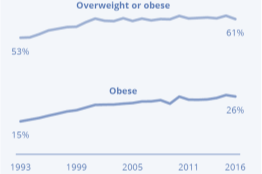
. Past statistics confirm that there has been a clear increase in obesity levels in England since 1993 (see FIGURE 1), from 15% to 26%. Correspondingly, the percentage of adults who are either overweight or obese has risen from 53% to 61%. Researchers predict that if the current trend continues, up to 48% of men and 43% of women in the UK could be obese by 2030

[5]

.


FIGURE 1: Obesity levels have increased from 15% to 26% since 1993 in England (similar results apply for the rest of UK).

With relation to the obesity-linked costs, it is clear that excess weight and obesity impact significantly on lifespan, disability, quality of life, and work productivity, with subsequent burdens on population health and healthcare systems. Likewise, obesity is known to be associated with various chronic diseases, which impose considerable costs, from the use of healthcare services and medical treatments to the loss of productivity

[5]

.

It is estimated that the NHS spent £6.1 billion on overweight and obesity-related ill-health in 2014 to 2015. However, that is only the direct cost of obesity; the overall cost of obesity to wider society is estimated at £27 billion. Besides, the UK-wide NHS costs attributable to overweight and obesity are projected to reach £9.7 billion by 2050, with wider costs to society estimated to reach £49.9 billion per year

[6]

.

Finally, in the international arena, according to a 2017 OECD report, the UK has the sixth highest rates of obesity

[1]

among countries reporting measured data and belonging to the OECD area.


OBESITY FACTS IN THE CONTEXT OF LIFE INSURANCE BUSINESS

In the context of the life insurance business, in order to properly deal with obesity risk there are some important statistical facts

[1],[6]

that need to be taken into account. They are:


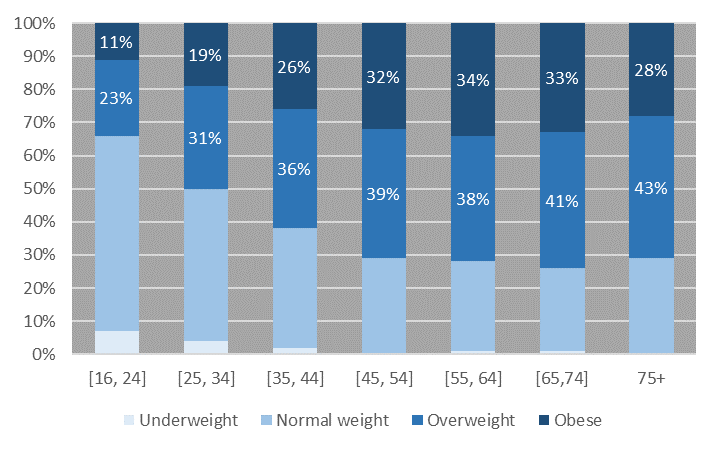
1. OBESITY TENDS TO INCREASE WITH AGE


[1]


FIGURE 2: Obesity levels among ages (England, 2016)


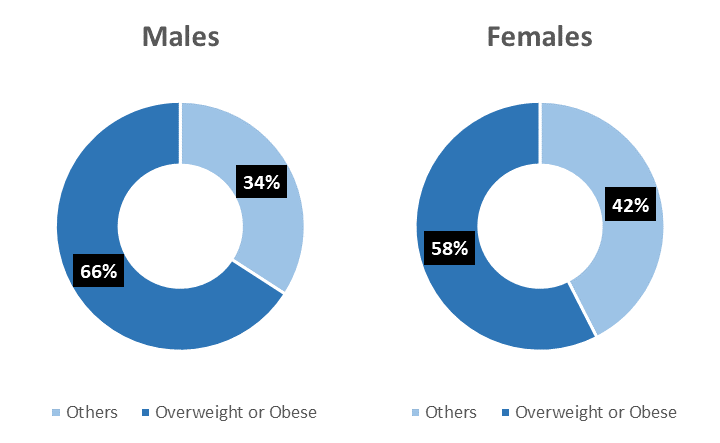
2. MEN ARE MORE LIKELY TO BE OVERWEIGHT


[1]


FIGURE 3: Overweight/Obesity levels by sex (UK, 2016)


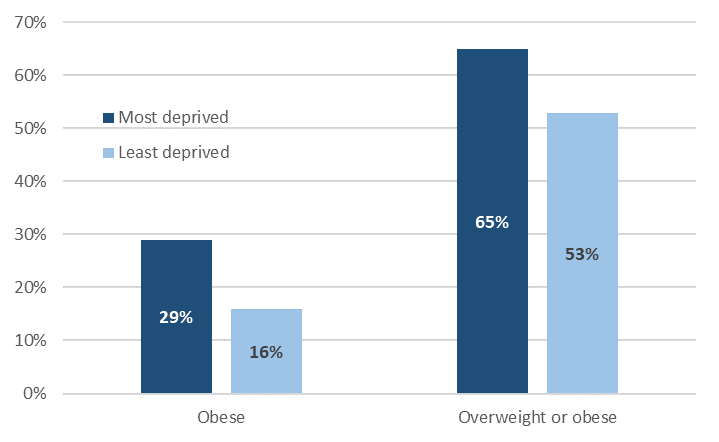
3. HOUSEHOLDS WITH LOWEST INCOMES HAVE HIGHER OBESITY RATES


[1]


FIGURE 4: Obesity levels vs. Deprivation (Wales, 2016)


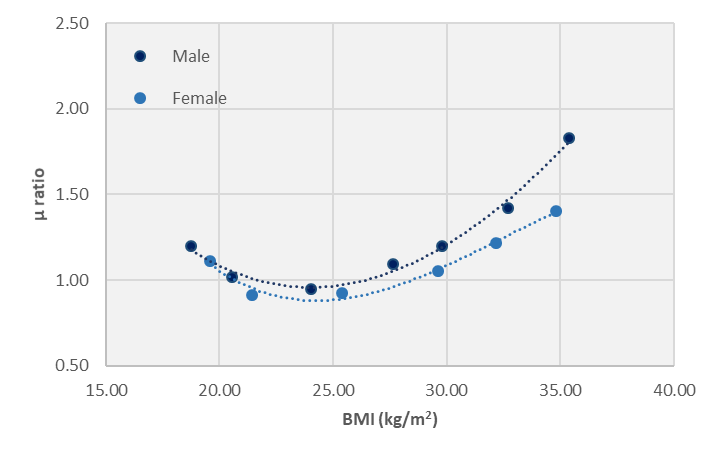
4. J-SHAPED ASSOCIATION BETWEEN BMI AND THE RISK OF DEATH


[6]


FIGURE 5: Impact of BMI on mortality rate


PROPOSAL TO ADDRESS THE OBESITY RISK IN OUR BUSINESS

It has been suggested that our Office should only accept new business from customers who have a BMI between 18.5 and 24.9 (i.e. normal weight). By doing so, proposers argue that the company will be fully protected from poor experience as a consequence of the UK obesity crisis.

Implementing that proposal will certainly reduce the risk arising from obesity; however, that is only the tip of the iceberg, and a comprehensive and long-term approach should be taken. Next, a list of things to consider:


1.


EMERGING RISKS

Ruling out overweight/obese people might carry additional risks, which would be even more dangerous than accepting them.

Only 37% of the UK adult population belongs to the healthy BMI range, i.e. our potential market will be shrunk. New businesses – as well as future renewals – will be reduced, bringing increased volatility and random fluctuation risk. Likewise, fixed costs per policy might soar, reducing further our competitiveness.


2.


ACTIONS OF COMPETITORS

If competitors accept applicants we reject, they can create long term bonds with them and at the same time still make profit, if priced properly.

Overweight/obese people certainly have higher mortality rates, but increasing obesity is less likely to be a problem if the extra risks can be rated more accurately.


3.


REPUTATIONAL RISK

Our reputation will suffer if our business model is not competitive. By only accepting applicants who are in the healthy BMI range, our actions will probably not be aligned with the ones of our competitors. It is known that significant performance gaps vis-à-vis competitors can diminish reputation if not addressed properly

[8]

.

Furthermore, rejecting overweight/obese people could put our business under severe criticism from the public and customers, leading to a reduction in sales.


4.


RISK BRINGS OPPORTUNITIES IF MANAGED PROPERLY

Managing the risk arising from obesity can be achieved by: (i) Pricing those customers in line with their increased risk, (ii) Offering shorter term products that allow us, at renewal, to adjust premiums if necessary, (iii) Creating incentives, like premiums reductions, if they lose weight, (iv) Establishing limits to risk and benefit levels, (v) Requiring stricter medical underwriting for overweight/obese people, etcetera.

Moreover, by reinsuring its portfolio of business, the Office not only reduces its risk, but also benefits from the larger expertise in underwriting and pricing reinsurers have.


5.


NOT ALL BUSINESS LINES WILL BE AFFECTED BY OBESITY RISK

Obesity is linked to an increased mortality; therefore, if not managed properly it might negatively impact our book of term assurance policies, income protection, long term care contracts and non-profit endowments.

Nonetheless, our annuity business could benefit from an increased mortality. Consequently, there is no reason to stop writing contracts in this particular product line.

On the other hand, the loading contained in the premiums of our with-profits endowment business acts as a cushion against future adverse experience. Hence, by advertising this product especially for the applicants outside the healthy BMI range, the Office can make profit while managing its risk.

Nevertheless, consideration has to be given to policyholders’ reasonable expectations.


6.


BMI IS NOT A PERFECT MEASURE

BMI does not show the difference between excess fat and muscle. As a result, a very muscular body may show high BMI with no adverse effects of overweight. Thence, focusing only on BMI could lead to reject profitable business.

Thus, it is required to use other metrics (e.g. waist circumference, waist-hip ratio, visceral fat assessment, subcutaneous fat thickness, and liver fat content) in conjunction with BMI, so as to separate overweight/obese people and consolidate them as a distinct group for insurance purposes.


7.


GOING BACK IN OUR STEPS

If today, the majority of applicants are rejected (63% of the UK adult population is not in the healthy BMI range), but later we want to come back to our original sales criteria, there is a high chance refused customers will prefer to insure somewhere else, putting our sustainability at risk.

This claim is supported by research; overweight/obese people are more sensitive to rejection

[9]

. Hence, accepting them (with the corresponding loading factor) will allow us to create long-term links and possibly new business opportunities.


8.


FULL PROTECTION IS NOT ACHIEVED WITH THE PROPOSAL

Even if only individuals in the healthy BMI range are accepted, there is always a chance that policyholders will become overweight/obese in the future, exposing us to obesity risk.

However, if the Office accepts them (accounting for their increased risk) setting risk mitigants – such as shorter term contracts or reinsurance treaties – it will get expertise in that market niche. This expertise can be turned into profits.


9.


LINKED CONTRACTS AS A RISK MANAGEMENT TOOL

Currently, only conventional business are offered; however, by selling linked contracts the Office can substantially reduce the increased mortality risk arising from obesity.

This can be achieved by:

(i)         Offering a linked product without mortality benefit. However, this can be impractical if the market practice is the opposite.

(ii)        Including a mortality benefit and charging for it. Since mortality charges are reviewable, the Office – based on its experience – can allow for increased risk if necessary.

Again, by not rejecting overweight/obese people we can engage in profitable business opportunities while controlling risk.


CONCLUSION & RECOMMENDATION

The Office will not be fully protected from obesity risk by only accepting individuals in the healthy BMI range. As it was outlined, the potential benefits of continuing to offer products to a wider range of customers outweigh the ones from selling only products to normal-weight applicants.

Conversely, by rejecting applicants outside the healthy BMI range, new risks may emerge, our reputation will be damaged and our sustainability would be at risk.

In that sense, the Office should continue offering life insurance products to clients outside the healthy BMI range, in an amount commensurate with the shareholders’ risk appetite. However, in order to control the risk arising from obesity and avoid losing profitable business, we should:

(i)         Price the contracts in line with their increased risk.

(ii)        Define risk limits (for overweight/obese applicants) in regard to sum assured, term or BMI, e.g. do not accept customers with BMI higher than 40 (morbidly obese).

(iii)      Advertise mainly our annuity and with-profits endowment business to applicants outside the healthy BMI range.

(iv)      Tighten underwriting. Ask for personal medical attendant report or conduct a medical exam in order to detect pre-existence conditions in overweight/obese people.

(v)        Reinsure our portfolio in order to reduce our risk and take advantage of the larger expertise in underwriting and pricing reinsurers have.

(vi)      Possibly, launch a linked product. This will give us flexibility to adjust mortality charges if needed.

Implementing these measures successfully, while taking heed of policyholders’ reasonable expectations, will allow us to manage properly our risks and engage in sustainable profitable businesses.


REFERENCES

  1. Baker, C. (2018).

    Obesity Statistics

    . [online] Researchbriefings.parliament.uk. Available at: https://researchbriefings.parliament.uk/ResearchBriefing/Summary/SN03336 [Accessed 13 Feb. 2019].
  2. National Health Service (2016).

    Obesity

    . [online] Available at: https://www.nhs.uk/conditions/obesity/ [Accessed 13 Feb. 2019].
  3. Higgins, E. (2019).

    What is the obesity crisis, how does alcohol affect your weight and how can childhood obesity be prevented?

    . [online] The Sun. Available at: https://www.thesun.co.uk/news/6134434/uk-obesity-crisis-clinically-obese-definition/ [Accessed 13 Feb. 2019].
  4. BBC News. (2012).

    What caused the obesity crisis?

    . [online] Available at: https://www.bbc.co.uk/news/health-18393391 [Accessed 13 Feb. 2019].
  5. NHS Website. (2011).

    ‘Half of UK obese by 2030’

    . [online] Available at: https://www.nhs.uk/news/obesity/half-of-uk-obese-by-2030/ [Accessed 13 Feb. 2019].
  6. GOV.UK. (2017).

    Health matters: obesity and the food environment

    . [online] Available at: https://www.gov.uk/government/publications/health-matters-obesity-and-the-food-environment/health-matters-obesity-and-the-food-environment–2 [Accessed 14 Feb. 2019].
  7. Peeters, A. (2003).

    Obesity in Adulthood and Its Consequences for Life Expectancy: A Life-Table Analysis

    . Annals of Internal Medicine, Vol. 138(1).
  8. DeLoach, J. (2017).

    10 Keys for Executives to Manage Reputation Risk – Corporate Compliance Insights

    . [online] Corporate Compliance Insights. Available at: https://www.corporatecomplianceinsights.com/managing-reputation-risk/ [Accessed 16 Feb. 2019].
  9. McClure Brenchley, Kimberly and Quinn, Diane M. (2016).

    “Weight-based rejection sensitivity: Scale development and implications for well-being.”

    Body Image 16, 79-92.

A current issue in healthcare related to a personal interest area or personal view of a healthcare issue or concern.

 A current issue in healthcare related to a personal interest area or personal view of a healthcare issue or concern.

The student will write a 5-10 page paper on a current issue in healthcare related to a personal interest area or personal view of a healthcare issue or concern. The paper will consist of

1. Pros and Cons of the issue through a literature search with APA guidelines followed.

2. After pros and cons are stated, you will write an analysis and synthesis of both and write a summary paragraph (s) on your personal views.

Suggested topics to consider patient safety concerns, end of life issues, access to care, Affordable Care Act, ethical issues, mental health care, drug use, patient education, delivery of care models, scope of practice etc

Be careful of APA style and form.

Please reference the content within Module 4 titled, “Issues Brief Template” to complete this assignment.

Some Rubric (1)

Criteria Ratings Pts

Description of criterion: Pros and Cons

Full Marks

5 pts

No Marks

0 pts

APA

Full Marks

5 pts

No Marks

0 pts

Summarization of Pros and Cons

Full Marks

10 pts

No Marks

0 pts

10 pts

Total Points: 20

Previous

Issues Brief Template

When an issue or problem arises that has impacts outside of an individual unit or manager’s control, writing a briefing paper serves several purposes. The process of writing a paper forces clarity to the issue and the impacts, allows for explanation of competing viewpoints, and provides a basis for raising the issue for decision or discussion.

Following is a general structure to use when raising issues. While any particular format is necessarily limiting in its rigor, having a consistent presentation is beneficial when there are many issues to deal with. Each segment of the general structure includes strategic questions to guide the writer through a thought process. Not all questions will be applicable or appropriate for every situation and there may be additional questions to consider that are not listed below.

The most critical elements of the structure are clarity, conciseness, and the complete description of all sides of the issue. Constructing an argument to move in any one direction is relatively simple if potential concerns or opposition are glossed over (or not even recognized). If options are presented, they should provide a balanced (with all other options) description of the impacts. In other words, a briefing paper should be used only partially to make a particular case; the broader purpose should be to inform a discussion of an issue and its impacts.

Structure

Issue Statement

• What problem/issue needs to be resolved?

• If the remainder of the paper is extensive, an Executive Summary should be included

Discussion/Background

• Why does the issue exist/how did the issue originate?

• What is the situation that causes it to surface or be elevated now?

• What are the impacts of the issue?

• Who is impacted by it?

• What is the statewide significance?

• What are the arguments in support of and in opposition to potential resolutions?

• What work has been undertaken around the issue and what are the results?

• What constraints exist that limit the range of alternatives to addressing the issue?

• What are the risks or ramifications of not resolving the issue?

• What references exist to inform this issue (i.e. Op Notice, policy, manual, etc.)

Options and/or Recommendations (typically, choose one)

• What are the proposed options?

o How do the options address the issue?

o What are the opposing arguments (whether they’ve been made or could be made)

o Financial implications?

o Precedent implications?

o Political implications?

• What is the proposed approach to developing options or recommendation?

o Should a sub-team be developed to explore options and/or develop a recommendation for resolution?

o Should the issue be delegated or elevated to another leadership team?

o Other method/approach to develop options or a recommendation?

• What is the proposed recommendation or solution?

o How does the proposed recommendation resolve the issue?

o What are the benefits?

o What are the risks?

o What are the opposing arguments (whether they’ve been made or could be made)

o Financial implications?

o Precedent implications?

o Political implications?

Implementation

• How will the solution be implemented?

• Who will implement?

• What are the key steps or deliverables involved?

• What are the timeframes for implementation?

• What does “success” look like?

• How will the recommendation be documented? (i.e. Op Notice, manual changes, policy changes, etc.)

Communication

• Who needs to approve?

• Who needs to know?

• How will the recommendation be communicated? Is a communication plan needed?

Although there’s a lot of promise in stem cell research, it comes with a lot of controversy as well. Consider these statements from various political leaders: “While we must devote enormous energy to conquering disease, it is equally important that we pay attention to the moral concerns raised by the new frontier of human embryo stem cell research.

Although there’s a lot of promise in stem cell research, it comes with a lot of controversy as well. Consider these statements from various political leaders: “While we must devote enormous energy to conquering disease, it is equally important that we pay attention to the moral concerns raised by the new frontier of human embryo stem cell research.

Even the most noble ends do not justify any means.” GEORGE W. BUSH, speech, Aug. 9, 2001 “I think we can do ethically guided embryonic stem cell research. We have 100,000 to 200,000 embryos that are frozen in nitrogen today from fertility clinics. These weren’t taken from abortion or something like that. They’re from a fertility clinic, and they’re either going to be destroyed or left frozen. And I believe if we have the option, which scientists tell us we do, of curing Parkinson’s, curing diabetes, curing, you know, some kind of a … you know, paraplegic or quadriplegic or, you know, a spinal cord injury — anything — that’s the nature of the human spirit. I think it is respecting life to reach for that cure.” JOHN KERRY, presidential debate, Oct. 8, 2004 “I am pro-life. I believe human life begins at conception. I also believe that embryonic stem cell research should be encouraged and supported.” BILL FRIST, speech, Jul. 29, 2005 “The best that can be said about embryonic stem cell research is that it is scientific exploration into the potential benefits of killing human beings.” TOM DeLAY, Washington Post, May 25, 2005 “I’m very grateful that President Obama has lifted the restrictions on federal funding for embryonic stem cell research.” NANCY REAGAN, commentary, March 8, 2009 Unfortunately, there’s also a lot of misinformation about stem cells and stem cell research…in fact, one might question the scientific credentials of Mr. DeLay, whose noteworthy accomplishments (apart from a chequered political career) include running a pest control business and competing on Dancing With the Stars. Examine the evidence and decide for yourself! What are your thoughts on stem cell collection and their use in research? Be sure to you take a look

Analysis of Safeguarding Policy and Midwifery Council Code of Conduct

Within this essay I will be analysing both, the Safeguarding policy and the nursing and midwifery council code of conduct. This essay will include information on both the policy and the code, how they help health professionals and how it is important to have the policy and the code as a student nurse. I will analyse the safeguarding policy and how the policy has been presented, why the policy is there and what other associations help to promote safeguarding. I will analyse the

NMC code of conduct

and how the policy has been presented, how the code offers support and guidance to health professionals. I will discuss three clinical issues which I have found while I have been on placement, I will discuss how the event occurred and how it has affected myself, the patient and the staff involved. I will discuss how the event has been affected with safeguarding and how safeguarding has been involved or not. The three clinical issues I will be completing will be completed as a reflective account using Gibbs module. I have chosen Gibbs module because I wanted to include my feeling towards the event and I felt Gibbs offered that more than other modules (O’Regan, S. Nestle, D. 2015).


Safeguarding policy, 2015

In this section I will be analysing the implication the safeguarding policy (NHS England, 2015) and how it affected my practice. It is important that when in a health profession role your keep up to date with new policies and to read the newest policies. It is also important that policies are up to date as it gives healthcare professionals a step by step guide on what do if they find themselves in a situation when their patient is unsafe, weather that is at home or in a hospital or a care home. When using a up to date policy will then give the patient the best quality of care.

The safeguarding policy has been put in place by NHS England to protect, children, young adults and adults in the care of health professionals (Papanikitas, A (2013) The policy that has been put in pace is to ensure the patients no matter their age, all patients are treated fairly and with the high-quality care. Including respecting their human rights and wellbeing and are free from abuse and neglect (Nursing in practice, 2016). Safeguarding has been put in place to prevent an incidence where a patient has come into harm or made to feel disrespected. The NHS has put the safeguarding policy in place for all health professionals, such as Medical Directors of Nursing, NHS England Regional Directors, NHS England Area Directions, Directors of Human resources and General Practitioners (GP) (King’s college hospital, 2018) The way the policy is presented, is it neat and well structured. The information within the policy is informative, easy to read, all information needed is there. The contents page is well presented.

The most important reason we need safeguarding is because the protection of patients from harm and abuse is extremely important in any situations where there is a health profession. If nurses do not whistle blow (A whistle-blower is a person who exposes any kind of information or activity that is considered illegal, unethical, or not correct within an organization that is whichever private or public) (Lewis, P. Goodman, S. 2007). then patients whom are being neglected or abused will continue and nothing will be done about it and the patients’ health will worsen. The responsibility of a nurse when safeguarding a patient is to know how to communicate and know when it is safe to speak up and know who to contact. For instance, a patient being abused in hospital the nurse can either whistle blow to a sister of a ward manager. It is not always easy to know when a person is being abused to know the signs. However, practice nurses have the upper hand as they are trained to know what to look for and how to escalate it properly (National Institute for Health and Care Excellence. (2016).

The direct audience for this policy is mainly health care professionals, the policy can also be used to offer family and/or friends’ information by offering this information it can help the family’s information of what is next to come when someone is been abused or neglected. The safeguarding policy is in place to help direct health professionals and to lead them in a safe direction when needed. The policy offers information of how to handle situations when the health professional is unsure. The policy I have used was published in March 2014 and updated once since there in June 2015 (Nursing in practice. 2016). Most policies are updated either yearly or every fore year, this policy is now due an update to offer more information and guidance to health professionals. When a health professional is caring for a patient who is being neglected or abused The MCA (2015) has set out an legal framework to offer protection to individuals who do not have the capability to make their own decisions, this this type of situation safeguarding decisions should be made by the persons next of kin or a person who is closest to the person and has the persons best intentions. For patients who do have the capability to make decisions, health professionals have to listen to the person and respect their choices, this can sometimes lead to present problems (Nursing in practice, 2016)


Three clinical issue.

In this section I will be discussing three clinical issues I have found while on placement and how it has affected the patient and the staff involved. I be discussing how the event has had an impact on safeguarding and how it may or may not have been used correctly or not up to the standard needed for patients.

Number one – bed sores for patients on hourly turns.

The first issue I will be discussing is a about a patient which, for confidentially reasons put in place by the nursing and midwifery council, will be knows as Betty Smith, an 89-year-old lady with dementia and arthritis. Betty smith was admitted to hospital for been generally unwell and increased confusion, while in hospital Betty Smith started to get grade one bed sores (Hampton, S. Collins, F. (2004) on her back at the bottom of her spine. The nurse looking after Betty Smith decided to put Betty Smith on two hourly turns to relieve the pressure on Betty Smiths back. While all the documentation for Bettys two hourly turns had been completed. However not all of her turns had been complete, some of the staff on the ward had been falsely documenting Bettys turns. With not all of Bettys turns been completed the grade one bed sore started to worsen and become a grade three sore, her skin damaged and broken. When I completed turns for Betty, I applied cream and barrier spray to the sore and made sure better was off her sore as much as I could without making Betty uncomfortable in bed (Hampton, S. Collins, F. (2004). After three days when I began to work with Betty Smith once more, I noticed her bed sore had gotten increasingly worse to a grade fore in which the skin around the sore ha died and the bone was starting to show. Further down her back in the bottom was a grade one sore. After applying cream and spray to both sores, after turning Betty and making has comfortable I documented a new sore and how much the other sore had got increasingly worse. I immediately told the sister of the ward who assessed Bettys sores and completed a form explaining what had happened. When Bettys family came into to visit the sister explained what had happened why the skin came to be being so damaged. Over the following five days until Betty Smith returned home her skin had before a lot healthier and began to heal.

Because of health professionals not looking after Betty correctly by only documenting a turn, Bettys skin became damaged and painful. If nothing had been drought up to the sister I um unsure of the state Betty would have been in when returning home. The condition of Bettys skin will not be the only patient who has suffered in the health care business, unfortunately a lot of patients have been in the same of similar situation, but not all of the outcomes have been the same as Bettys. In the situation I was in I did not know the members of staff that had not turned Betty, but I knew the sores had got considerably worse. Safeguarding for patients in position Betty was in are important to act quickly so no more damage can occur.

My feeling about the situation were guilt, anger, upset and over all hurt to think a health professional had the ability to do something like this to a person. I felt as though Betty had gone through enough of pain due to her arthritis and dementia, why should Betty have the pain of a grade five bed sore when it could have been avoided. The outcome of the situation, the ward got taken to court and chargers were made to the individual.

Number two – One to one patient falling due to low staffing.

The second issue I will discussing is about three different patients, for confidentially reasons put in place by the nursing and midwifery council, will be knows as; Harry Smith, Bart Smith and David Smith.

Harry Smith, a 68-year-old man with lung disease and delirium. Harry has been admitted to hospital due to a fall at home with no witnesses and can not remember how long he was laying on the floor for.

Bart Smith, a 75-year-old man with dementia and a fractured hip. Bart has been admitted to hospital due to becoming increasingly confused.

David Smith, a 70-year-old man with dementia and delirium. David has been admitted to hospital due to suspected fall, David was found lying on the floor at home unconscious.

Harry, Bart and David are all in the same bay in a local hospital, all three men are one to one patient, meaning a member of staff have to monitor them at all times in case of an accident (Cristian, A (2012). While on the ward, it was a busy day, busier than usual, with a full ward and low staff due to illness. I was caring for an elderly lady who was also confused and was a one to one patient. Because of low staffing Harry, Bart and David were not always watched at all times but there was always staff walking around working. During the morning, Bart and David kept on trying to move out of bed or out of the chair by themselves. With this happening, Bard with a fractured hip he is unable to walk without pain. While staff were trying their best to care for the men the staff were so busy, they did not have a minute to collect their thought or to look after the three men. During the afternoon, I was moved to care for Harry, Bart and David. While in the bay I kept a close eye on them and competed all word needed while in the bay, such as; observations of all patients, care charts, fluid balance charts and generally tidying up the bay. While family was visiting, I was able to leave the bay. While off the bay I had my tea and when I returned back to the bay the family had left and Harry, Bart and David were alone, and all seems to be agitated. I discovered David had been incontinent. I asked other members of staff to assist me to help clean David and make him more comfortable and for another member of staff to keep an eye on Harry and Bart. While myself another health professional were caring for David, I heard a loud clash in the bay, when I looked, Bart way lying on the floor with a table on the floor near him and spilt water next to him. I shouted for help and the staff were already there helping. Lucky, myself and the health professional had Cleaned David and he was back in his chair comfy. When I assisted the other nurses with Bart, he was in a lot of pain as it was suspected he has slipped on the water and fell onto his hip. After assessing Bart and deciding what is best to do, the nurses transferred Bart onto a bed and got an emergency X-Ray. After finding out there was no damage to Bart’s hip, he was put on medication for pain relief.

My feeling during the afternoon, I as weary but felt very confident. During the situation I felt as though I had let Bart down, as though it was my fault. I later found out there was an accident in a different bay resulting in the member of staff has to help another health professional and patient. I spoke to one of the health professionals about how I felt, in a way I felt guilty, the health professional reassured me it wasn’t anyone’s fault, these things happen when there are not enough staff other patients have needs and we cant care for one patient when there are full bays. The outcome of the situation is there was a complaint due to safeguarding submitted by Bart’s family. Safeguarding during this situation was not up to the requirements, low staffing in a common issue in many trusts, unfortunately it is a problem that is not always fixable (By Committee on the Adequacy of Nursing Staff in Hospitals and Nursing Homes, Institute of Medicine (1996).

Number three – Low communication leading to mistakes of medication.

The third issue I will discussing is about a patient which, for confidentially reasons put in place by the nursing and midwifery council, this patient will be known as Tom Smith, a 35-year-old man with a background of UTI’s (urinary tract infection). Tom was admitted to hospital due to a UTI and confusion, while on the ward Tom had a CT scan of his kidney as antibiotics were not easing the pain and health professionals on the ward had queried it to be kidney stones. After having a CT, the results for kidney stones were negative. Tom was then put on a stronger antibiotic. When a health professional was completing medication rounds on the ward, Tom was given a stronger antibiotic called amoxicillin, which was prescribes by the doctors, a few hours after taking amoxicillin Tom began to break out in a rash on his body. The nurses did not know why this was happening. While a health professional was asking the doctor to prescribe a counteract for the rash, the doctor realised her mistake. Tom is allergic to penicillin; amoxicillin has penicillin in it. Tom was having an allergic reaction to the antibiotics which lead to him been in more pain. After a staff meeting with the people involved, including the sister and ward manager. It was decided it was the doctor’s fault for not double-checking Toms allergies, it was then the nurse’s fault second for not looking at Toms allergies.

The outcome of the situation was, Tom spent longer in the hospital because of the allergic reaction. Tom was not upset or angry about the event as he said to me “It was a mistake; the nurses are only human” Tom made a good point it was a mistake of the doctor and the nurse. In my opinion, the doctor is more to blame then the nurse as she should have looked at Toms records to see Toms allergies. However, the nurse as their job has to ask the patient if they have any allergies. My feeling towards the event, I was confused of why Tom did not disclose his allergies to the nurse, and why the nurse did not look at Toms allergies on his boar or on Toms details on the computer. Relating this event to safeguarding, Tom was not protected from harm, safeguarding was not up to the standard to protect a person from harm and neglect. Tom was not treated like other patients; his details were not checked to make staff aware of allergies.

Section three – an analysis of the NMC code

Within this section I will be analysing the Nursing and Midwifery council (NMC) code of conduct and how the NMC code has come into place and why. I will discuss how the NMC code has influenced health professionals and how it will continue to help health professionals through their career, weather the health professional is a student, newly qualified or qualified for a number of years. I will discuss how the NMC code is set out, for example if it set out professionals, makes sense, reads well, and over all a helpful guide. Or if the code is not set out well, for example if it is set out in a way that makes it difficult to read, very cramped, or overall not helpful. I will determine who the NMC is set out to help and why.

The NMC code of conduct has been in place to ensure safety and high-quality care is given to patients (Nursing and Midwifery Council, 2018). The NMC code of conduct has been set out as guidance and support for nurses, midwives and other health professions. Not only health professionals, members of the public are able to access the report to find information and help. The code was first published on the 29th January 2015 and effective from the 31st March 2015. The report has recently been updated on the 10th October 2018 with new information and any new regulations or an update on regulations (Nursing and Midwifery Council. (2015). Since the NMC code has come into play there has still been events occurred in which the NMC standards have not been met by nursing staff. The main even in which this happened was of course the Francis report, 2015 (The Mid Staffordshire NHS Foundation Trust Public Inquiry, 2013), which was because of the events which happened at the mid Staffordshire hospital. After this event happened the NMC updated the code of conduct to a higher standard of care, including what implications could happen if these standards are not met.

Nurses and midwives can use The NMC code to promote safe and effective practice in their workplace, which could be; in hospitals, in a patient’s home, in a care home, etc. The NMC has sent out different guidelines within the code so health professionals know to complete a task. Some of the guidelines include, how to keep a person’s dignity, listening to people and how to respond to their concerns and preferences, how to act in the best interest of patients, how to keep confidentially in a workplace, and many more. Within the code the NMC have includes legal advice and support if an incident were to happen the code offers support and guidance. Overall the NMC offers support and guidance to all health professionals (Nursing and Midwifery Council. (2019).

The was the NMC code is set out professional, the code reads well, the code itself is set out well. Each Chapter includes an introduction and key points with more information for each point.

Overall, this essay has analysed both, the Safeguarding policy and the nursing and midwifery council code of conduct. This essay has included information on both the policy and the code, how they help health professionals and how it is important to have the policy and the code as a student nurse. I have analysed the safeguarding policy and how the policy has been presented, why the policy is there and what other associations help to promote safeguarding. I have analysed the NMC code of conduct and how the policy has been presented, how the code offers support and guidance to health professionals. I have discussed three clinical issues which I have found while I have been on placement, I have discussed how the event occurred and how it has affected myself, the patient and the staff involved.


Reference list

  • By Committee on the Adequacy of Nursing Staff in Hospitals and Nursing Homes, Institute of Medicine (1996).

    Nursing Staff in Hospitals and Nursing Homes

    . 2nd ed. Washington, D.C.: National Academy Press. p149-155.
  • Cristian, A (2012).

    Physical Medicine and Rehabilitation Clinics

    . Pennsylvania: W.B. Saunders Company Ltd. p.265-266.
  • Hampton, S. Collins, F. (2004).

    Tissue Viability

    . Philadelphia: Whurr Publishers Ltd. p62-63.
  • King’s college hospital. (2018).

    safeguarding adults.

    Available:

    https://www.kch.nhs.uk/about/corporate/care-standards/safeguarding-patients/adults  Last accessed 2/6/2019

    .
  • National Institute for Health and Care Excellence. (2016).

    Domestic violence and abuse.

    Available:

    https://www.nice.org.uk/guidance/qs116

    . Last accessed 16/6.2019.
  • Nursing in practice. (2016).

    Safeguarding vulnerable adults.

    Available:

    https://www.nursinginpractice.com/article/safeguarding-vulnerable-adults. Last accessed 2/6/2019

    .
  • Nursing and Midwifery Council. (2018).

    The revised NMC Code.

    Available:

    https://www.nmc.org.uk/globalassets/sitedocuments/nmc-publications/the-revised-nmc-code-frequently-asked-questions-faqs.pdf

    . Last accessed 16/6/2019
  • Nursing and Midwifery Council. (2015). The Code, p2.
  • The Mid Staffordshire NHS Foundation Trust Public Inquiry. (2013). Report of the Mid Staffordshire NHS Foundation Trust public inquiry.

    not this

    . 1 (not this), p7
  • NHS England (2015).

    Safeguarding Policy

    . London: NHS England. p9-13.
  • Nursing and Midwifery Council. (2019).

    We are the nursing and midwifery regulator for England, Wales, Scotland and Northern Ireland.

    Available: https://www.nmc.org.uk/. Last accessed 18/6/2019
  • O’Regan, S. Nestle, D. (2015). clinical Simulation in Nursing.

    reflective Practice and Its Role in Simulation

    . 11 (8), p3-5
  • (Papanikitas, A (2013).

    Medical Ethics and Sociology

    . 2nd ed. London: Elsevier Inc. p112-113
  • Lewis, P. Goodman, S (2007).

    Management, Challengers for tomorrows leaders

    . 5th ed. United states of America: Thomson Learning, inc. p75-77.
  • Nursing in practice. (2016).

    Safeguarding vulnerable adults.

    Available: https://www.nursinginpractice.com/article/safeguarding-vulnerable-adults. Last accessed 18/6/2019.

Smoking- diabetes and alcohol in the Maori culture


Task 1


Introduction

The region that I have chosen to study is Auckland Region and my research of Hauora Maori trends and contemporary issue are smoking, diabetes and alcohol which extract from housing, education, employment, lifestyle and health statistics.

Te Whare Tapa Wha is a traditional approach to Hauora base on Whanau, Tinana, Wairua and Hinengaro to understand Maori health with a strong foundation of Maori well-being.

The areas that I have written about are Literature Review for collating, analyzing and presenting in finding on this research.

Maori patients receiving a lower standard care than non-Maori from primary and secondary health care providers. It was some non-consistent results relationships between suppliers and patients.


Explain the research methodology


  1. Smoking:

    the researcher used qualitative research with 60 pregnant Maori women in the women’s 17-43 ages. The questionnaire was used to guide the interview. Responses were categorized using Te Whare Tapa Wha (the four-sided house), an indigenous theoretical framework.

  2. Diabetes:

    the researcher used quantitative and statistical analysis to compare different ethic group of health and care status that attending general practices with diabetes.

  3. Obesity:

    the researcher used statistical analysis which collected data from children in 60 countries, suggested that childhood obesity in New Zealand is increasing at one of the greatest rate in the world (Wang & Lobstein 2006). Similar results can be seen among adult in New Zealand which indicated that 26.5 percent of adult were obese (Ministry of Health, 2008).


Describe the research methodology


Literature Review


Obstract

Smoking, diabetes and obesity are still the most prevalent for Maori than any other ethnic group in New Zealand.Maori women are particularly high smoking rates. In 1996, the proportion of Maori women who smoked who smoked one or more cigarettes per day was more than twice than non-Maori women. Thirty-nine percent of Maori women smoke during pregnancy. On the other hand, diabetes is also the high risk health issue among Maori in New Zealand. In addition, obesity among children and adult Maori is also high compare to non-Maori.


1.


Smoking


(Why Maori women continue to smoke while pregnant?)

Smoking is the biggest killer of Maori. Not only did the tobacco smoking accounts in 1989-1993, one-third of Maori deaths from smoking-related diseases plaguing the concept of Maori. It was nearly 60 per cent of Maori that smoked in 1976 and dropped to 50 per cent in 1991 but it hasn’t changed much since then. New Zealand health promotion and promotion education tried to reduce Maori smoking but it was not success in the last fifteen years. Unchanged Maori smoking prevalence showed low activity between either quit or quit Maori success rate. By the 1976, Maori women between aged of 20 to 24 had the highest smoking rate at 69 per cent and it was increased to 70 per cent in 1981. Up to two-thirds of pregnant Maori women smoke. Sudden infant death syndrome, asthma, glue ear, lung infection rate, rheumatic fever is common among Maori children.


Education:


There are poor understanding of the risks associated with smoking during pregnancy.


Life Style:


They lived in the smoky environment or with a partner who smoked. Some they used smoking as a method to release their stress.


2.


Diabetes


(between Maori and non-Maori)

Diabetes is the leading cause of blindness, kidney failure and lower extremity amputation. It is also major risk factor for nerve damage, stroke, heart attack, heart failure and early death. The Ministry of Health estimates that 210 million people will be affected by diabetes through 2012. Certain ethnic groups (especially Maori, Pacific Islanders and South Asia), since 1996 in diabetes and high-risk data suggested that the incidence of diabetes in Maori and Pacific peoples are more than three times higher interest rates than in Europe, and the Maori and Pacific peoples are more than five times the likelihood of diabetes 2 is dead.


Lifestyle:


Most of people are lack of exercise and had unhealthy diet plan option with including of high fat food that can cause them to become overweight and it can also cause other health condition.


3.


Obesity


(Among children and adult Maori)

Obesity is one of the major health issues in New Zealand in recent year which affected in every age and ethic group. While population studies have shed much light on obesity and its growing prevalence, it is important to interpret finding with caution, especially in regard to Maori health. In the 2008 report shown that adult Maori had the highest rate of obesity than non-Maori. 41.7 per cent of adult Maori were obese compare to 24.3 percent in European (Ministry of Health, 2008). Thus, considering the importance of overall wellbeing to Maori, as expressed by contemporary Maori health models, both the prevention and reduction of obesity among Maori would go a long way to achieving Maori health aspirations and advancing Maori lifestyles.


Employment:


Maori do not have much chance to find a job because they have a low degree or qualification because they left school early. Statistics show that Maori have the highest rate of unemployment in New Zealand.


Lifestyle:


Because of unemployment, they do not have enough money to buy or provide nutrition food for themselves or their children and also nowadays, there are a lot of fast food shops everywhere and it is cheap so it is easy for them to buy without cooking.


Task 2


The Research Finding


1.


Smoking

One of the most disadvantaged groups in New Zealand society is Maori women as they have the highest prevalence of smoking. The investigation has been shown that Maori women smoke at the age of 15-24 years old up to nearly 61%; aged 25-29 years in 39%, while 57% of 30-39-year-old. In 2007, the first registration of midwives, 19% of pregnant women were smoking in New Zealand and it declined slightly to 15%, when discharged from nursing midwives still smoking. Maori women are much higher prevalence with smoking at the first registration with midwife at 43% and there is 34% still smoking at discharge. Smoking during pregnancy can cause a problem of miscarriage and difficulties during childbirth. Women who continue to smoke during pregnancy may be living in a household with other smokers, partners, family and friends who smoke. In addition, qualitative study found that addiction, habit and stress are the reason pregnant women continue to smoke. It is a very challenging to reduce smoking among pregnant women in New Zealand and international as it is a priority over a decade.

The reseachers found out that 88% of 60 pregnant Maori participation had a partner and the average aged was 26. 23% of participants did not have a degree, only 38% had some employment. More than half of the participants (68%) live in urban areas. Almost the same numbers of participants were in to the second (43%) or third (40%) trimester of their pregnancy and 38% were having their first baby. They smoked around 9 cigarattes per day and within 5 minute for their first cigaratted after woke up (Table 1). There were also some reasons that they smoked such as habit, stress, addiction etc (Table 2). Moreover, social and work environment were also a factor that related to their smoking because they lived with their family or partner who are smoking. When they were at workplace, they smoked with their colleagues or other people and it was easy to smoke at work because they just went out whenever they want (Table 3).


2.


Diabetes

No other disease is a significant health inequalities more apparent than when we look at diabetes. Diabetes is nearly three times more common in Maori than non-Maori. Due to diabetes, Maori in the 45-64 age group have a death rate 9 times higher than non-Maori. Maori are diagnosed younger, more likely to develop complications of diabetes, such as eye disease, kidney failure, stroke and heart disease. Type 2 diabetes is expected to increase significantly over the next 20 years (along with pre-diabetes, insulin resistance and obesity) and the biggest impact is on Maori, Pacific people, and those living in poor areas.

Type 2 diabetes, including prevalence, age of onset, mortality and hospitalization rates ethic inequality :

  • Maori in the diagnosis of type 2 diabetes, the estimated average age was 47.8 years old in 1996, six years younger than New Zealand European (54.2 years) (Ministry of Health 2002).
  • In 2002/03, ther self-reported prevalence of diabetes was 2.5 times higher among Maori than non-Maori (Ministry of Health 2006).
  • The estimated lifetime risk of being diagnosed with diabetes for Māori in 1996 was more than double that for New Zealand Europeans (Ministry of Health 2002).
  • The death rates in type 2 diabetes for non-Maori are 7 times lower than Maori.
  • The different in death rate is higher in the aged 45 to 64, where Maori women with type 2 diabetes die 13 times than non-Maori women and 10 times for maori men compare to non-Maori men.
  • Due to type 2 diabetes, the risk for hospitalisation of Maori is 4 times higher than non-Maori.


3.


Obesity

Rate of obesity and obesity-related illness, are associated with socioeconomic status, with the greatest rate among the least deprived classes (Drewnowski & Specter, 2004). This finding has major implications for Maori who are proportionately over represented in the more deprived quintile, having an annual income approximately 20 per cent lower than Europeans in New Zealand (Statistics New Zealand, 2006). What’s more, the 2006/07 NZHS showed that the time children spent watching television, as well as their “fizzy drink” and “fast food” consumption, were higher in areas of high neighbourhood deprivation than in areas of low deprivation (Ministry of Health, 2008). Likewise, these three measures were higher within Maori children compared with the general population (Ministry of Health, 2008).

Obesity is detrimental to the health and function of many systems of the body including digestion, the immune system, respiration and pulmonary function, reproductive health, bones and joints, and even the health of skin. Hospitalisation and mortality from heart failure is much higher for Maori than non-Maori in New Zealand. The link between obesity and CVD is multifaceted, affecting blood pressure, altering blood lipid profile, and increasing cardiac expenditure in order to compensate for increased circulation requirements in the obese.

The relationship between obesity and the health disorder identified hightlights the importance of reducing and preventing obesity among Maori, to reduce health inequalities in New Zealand as well as lengthen and improve quality of life in Maori.


Task 3


Present research finding and explain a present day health priority for Maori


1.


Smoking

The reasearch has been shown that the full range of ill-effects of smoking in pregnancy Maori knowledge is limited and not many of them know about the quitline. Even they received a support from their whanau but in fact that their whanau also smoked. Strategies were being used to inform Maori about effective or risks associated with smoking during pregnancy, and it seemed not effectively reach Maori women. One of the current risk program is that it waits for pregnant Maori women come in contact with the health system. This may mean that some women do not get support to quit until late in pregnancy. New Zealand has been focusing on tobacco control on young Maori women, in particular, not to smoke and not to develop a regular habit of smoking. In order to prevent on smoking, New Zealand had a restrictions on smoking legislation in shared office, shops and food preparation areas, public places of public transportation and dining, a ban on tobacco advertising and sponsorship of sports, or a gift to under l8s, sports sponsorship smoking. The promotion of smoke-free pregnancy, smoking cessation assistance needs to be extended to the whole whanau. Impact of maternal smoking on pregnant women around education can help communities.


2.


Diabetes

Type 2 diabetes is not a sudden illness. The disease reflects the complexity and interaction of our bodies and our environment, including the social determinants of health, low socioeconomic status, and racism-related stress and the incidence of type 2 diabetes. Diabetes is one of many factors contributing to low Maori health status. A strategy for reducing the impact of diabetes on Maori must be set with in the context of making general improvments in Maori health status. It has been well defined and incorporates a number of principles including the Treaty of Waitangi, Ottawa Charter and Te Whare Tapa Wha. The treaty recognises that Maori need to receive effective health care services that reflect the needs and world view of Maori. The development of Maori communities and infrastructures that are consistent with Maori values and provide a positive healthy lifestyle is accepted as central to improving Maori health status. A guiding priciple is that services need to be developed by Maori with Maori for Maori. Diabetes services need to be developed as part of an integrated health care service. NgātiPorou Hauora (NPH) on the east coast is implementing a program called Ngāti and Health, is characterized by promoting healthy eating and regular exercise lifestyle to reduce the risk of type 2 diabetes (Tipene-Leach et al 2004; Ngāti Porou Hauora 2007). The programme also aims to improve the conditions of diabetes and pre-diabetes awareness in those who are at high risk of developing diabetes and communities. In order to improve diabetes care for Maori is to ensure early detection and primary prevention of diabetes. Secondly, regional and local services can provide access to their services and quality problems, develop strategies to improve service delivery, and monitor the effectiveness of these changes.


3.


Obesity

In all aspect of health, research is relatively limited in Maori when compared with European/Caucasian groups. Although this could be looked on as obstructive to achieving successful outcomes for Maori, the limites body of research in this area is also a great opportunity for Maori to design and lead research that will have the most benefit for Maori. Lastly, by focusing research and intervention on how to improve physical health alone, the researchers are diregarding the othe aspects of well being identified in contemporary Maori health models. Thus, a line of research which could be great benefit to Maori would be aimed at understanding the effects of obesity on te taha wairua, hinengaro, whanau, tinana and from the result, developing intervention which maintian the balance of overall wellbeing. As has been touched upon, Maori involvement in all aspects of health from research to dilivery of services in essential. According to He Korowai Oranga (The Maori Health Strategy) involvement should ne at whanau, community and Iwi levels for maximum Maori participation (Ministry of Health, 2002). Because children with obese parents are more likely to become obese aldults themselves, interventions such as the “Healthy Eating-Healthy Action Plan” which are being implimented in many New Zealand schools, maybe more effective when parents and whanau are involved. What’s more, because of the part whanau play in the achievement of hauora, this approch may also be more culturally appropriate for Maori. Training in cultural sensitivity and Maori system of health for non-Maori health workers as well as participation in all aspects of planning and delivery is essential to developing policies tha twill achieve the desired outcome in this case, bringing to an end the obesity epidemic amoung Maori.