The Effectiveness Of Methods To Control Microorganisms Health Essay

In the following assignment I will discuss the effectiveness of methods to control microorganisms in particular I will highlight the methods such as temperature, Immunisations and antibodies.

Temperature is a huge factor in the growth of microorganisms along with food supply, pH levels and time. Refrigeration and freezing play a role together in the growth of bacteria in foods. Freezing foods at low temperatures merely leaves large amounts of microorganisms dormant by being unactive which is an effective method of controlling the spread of the microbes but not in the eradication of the microorganisms. As the temperature increases the microorganisms become active and spread which can lead to illness. The types of bacteria found in refrigerated foods are pathogenic bacteria and spoilage bacteria, such as salmonella, listeria, E.coli O157. these bacteria are present in large amounts of foods which have been repeatedly frozen again. Certain foods have different shelf lives to others because of this certain foods have to be frozen before the ”use by date” for availability of consumption. A refrigerator is an effective method for the control of microorganisms.

Effectiveness of controlling microorganisms by freezing/refrigeration is visibly present as spoilage bacteria turns foods off, changing colour, fungi growth, they release bad odours and by freezing foods/refrigeration it lets foods be available for consumption for longer periods of time. There are over a million cases of food poisoning each year, 20,000 hospitalisations and 500 deaths. This rate is slowly decreasing in the U.K. This costs the economy £1.5 billion each year (Micbo 2012). In Northern Ireland and Scotland the risk of food poisoning from local food stores and food outlets was increasing at an alarming rate. The Food Standard Agency devised a plan to introduce a scheme of rating every food outlet and provider with a score from 1-5 on their business when it is inspected by a food safety officer from the business’s local authority. The hygiene rating shows how closely the business is meeting the requirements of food hygiene law (The Food Standards Act 1999). (FSA 2012) This scheme along with food hygiene legislation greatly decreases the rate of microorganisms growing and it is a great way that shows that when the rules are followed correctly the methods are effective in controlling microorganisms.

An autoclave is a machine which operates highly pressurised steam, this is known as sterilisation. Sterilisation is the most effective method of controlling microorganisms. Due to autoclaves being used in a large scoop of practise, every practise has their own set of guidelines in the use of autoclaves. With further research I have concluded that the majority of autoclaves based on the University of Cardiff’s research guidelines preform at the same capacity i.e. correct autoclaving will result in a 100% kill rate. It should therefore be the first choice method (wherever practicable) both wild-type and genetically modified micro-organisms. (UOC2012).

With this information I can concluded that the use of autoclaves for example within a hospital or dental care practise is different to a lab environment autoclave. This means that autoclaves in hospitals and dental care practises come into contact with a range of different microorganisms and it is these microorganisms that spread disease. In do so some microorganisms have adapted and modified to insure survival such as prions, these prions do not eradicate at normal pressurised temperatures such as the typical 134 °C for three minutes or 121 °C for 15 minutes.

The overall effectiveness in controlling microorganisms with the use of an autoclave is still considered to be the best method. Due to the factor of small amounts of prions still alive after autoclave it poses major concerns with infection control policies.

Immunisations are one of the greatest achievements of medicine and it has saved millions of lives that have been spared from diseases.

Immunisations can prevent diseases such as measles, mumps, rubella and a wider list ranging from anthrax to yellow fever. (DOH2012)(NHS,1.2012)

Measles, mumps and rubella known as MMR our infectious diseases. Since the introduction of the MMR vaccination in 1998 the number of children who develop the disease has fallen to a relatively low number.

The MMR vaccine works by activating parts of the immune system to produce antibodies against MMR. If you come into contact with one of the diseases your immune system will produce antibodies to fight against it or them.

According to BUPA UK after the first dose of the MMR vaccine, 64 out of 100 people will be protected against mumps, 90 out of 100 people will be protected against measles and 95 out of 100 people will be protected against rubella. After the second dose, 99 out of 100 people will be protected against all three illnesses. (Bupa2012)

Controversy over the effectiveness of the MMR vaccine and its side effects caused by the published findings by Dr Andrew Wakefield in 1998 caused a huge number of people not receiving their children vaccinated against MMR. His published findings showed a strong link between the MMR vaccine and autism and bowl disease. An investigation of the published findings showed that by Dr Andrew Wakefield used controlled tests with selected individuals in which he based his findings on. This was a huge error in his findings which proved that Dr Andrew Wakefield findings where wrong but because these findings were published they caused panic for the public. MMR still has a foothold in the United Kingdom and across Europe and it hasn’t been totally eradicated like the infectious disease called smallpox. The Department of Health along with the General Medical Council state that ”Over 90% of individuals will seroconvert to measles, mumps and rubella antibodies after the first dose of the MMR vaccines currently used in the UK” (DOH2010) which shows that it is a highly effective method.

The Antibiotic was first discovered in 1928, the first antibiotic was called penicillin by Andrew Fleming. Penicillin is used to treat infections caused by bacteria. Over time these bacteria have become multi-resistant to antibiotics with the abuse of antibodies which create new strains of bacteria known as ”super bugs” such as (MRSA) Methicillin-resistant Staphylococcus aureus and (TB) Tuberculosis. According to the Northern Ireland Strategic and Research Agency (2012) the number of deaths with Staphylococcus aureus or MRSA mentioned and recorded as the underlying cause on the death certificate by registration year, 2001-2011 with All Staphylococcus aureus at a percentage of 35% and MRSA with a percentage of 31%. Compared to 2001 All Staphylococcus aureus where at a percentage of 52% and MRSA at a percentage of 44% (NISRA2012). These findings show that the mortality rate for all Staphylococcus aureus and MRSA in Northern Ireland is on the decline due to infection control policies, antibiotic administration policies and proper use of antibiotics. Therefore antibodies are extremely effective method for the control of microorganisms when used correctly in accordance with your doctor and policies (NICE 2012).

Reference Section

(Bupa2012) Bupa Information Resource website (2012) On how effective is the MMR vaccine? [Accessed Online] Available from http://www.bupa.co.uk/individuals/health-information/directory/m/mmr-vaccine?tab=Resources (Date Accessed: 23/11/12)

(DOH2012) (NHS,1) Department of Health website NHS Choices website (2012) Immunisation facts [Accessed Online] Available from http://www.nhs.uk/Planners/vaccinations/Pages/Landing.aspx (Date Accessed: 23/11/12)

Department of Health (2010) and General Medical Council (2010) / NHS Publications of Immunisations statistics from 2009-10 with the present. [Accessed Online] Available from https://www.wp.dh.gov.uk/immunisation/files/2012/07/Chap-21-dh_122643.pdf http://www.ic.nhs.uk/webfiles/publications/immsstatisticsreplacement/imms%20200910%20replacement/Immunisations_Bulletin_2009_10_v2.pdf (Date Accessed: 23/11/12)

FSA 2012) Food Standards Agency. Food Safety Week statistics.*(2012.) [Accessed Online] Available from http://www.food.gov.uk/multimedia/pdfs/fsw2012-toolkit.pdf (Date Accessed: 23/11/12)

(FSA 2012) Food Standards Agency. Food Standard Hygiene Act 1999 [Accessed Online] Available from http://www.food.gov.uk/enforcement/regulation/foodstandardsact (Date Accessed: 23/11/12)

(NICE2012) National Institute for Health and Clinical Excellence ‘Infection: prevention and control of healthcare-associated infections in primary and community care’ (2012) [Accessed Online] Available from http://www.ips.uk.net/uploads/guidelines/NICE%20Clinical%20Guidelines%20for%20Infection%20Control_CG139.pdf (Date Accessed: 23/11/12)

(NISRA2012) Northern Ireland Strategic and Research Agency (2012) [Accessed Online] http://www.nisra.gov.uk/demography/default.asp29.htm (Date Accessed: 23/11/12)

(Micbo2012) Microbiology Online [Accessed Online] Available from

http://www.microbiologyonline.org.uk/about-microbiology/microbes-and-food

(Date Accessed: 23/11/12)

(UOC2012) University of Cardiff evidence based research on the OSHEU Autoclave Guidance Online Document ”effectiveness of the autoclave” [Accessed Online] Available from http://www.google.co.uk/url?sa=t&rct=j&q=&eloading=”lazy” src=s&source=web&cd=1&ved=0CDAQFjAA&url=http%3A%2F%2Fwww.cardiff.ac.uk%2Fosheu%2Fresources%2FAutoclave%2520Guidelines%2520draft%2520document.doc&ei=Ee6uUJT4H8fD0QXp9oHIDw&usg=AFQjCNEYNS-kN77ojA7_rYNFnSRywJKAgg&sig2=s1poyV8RmTH3TngWK-ijLQ (Date Accessed 23/11/12)


Annotated Bibliography: Montessori-based Activities for Patients with Dementia


1. Ploeg, E. S. V. D., Eppingstall, B., Camp, C. J., Runci, S. J., Taffe, J., & O’connor, D. W. (2012). A randomized crossover trial to study the effect of personalized, one-to-one interaction using Montessori-based activities on agitation, affect, and engagement in nursing home residents with Dementia.


International Psychogeriatrics


,


25


(4), 565–575. doi: 10.1017/s1041610212002128

Problem Statement/Purpose: Dementia is often complemented with agitation, aggression, disinhibition, and other challenging behaviors.  These behaviors reflect patient’s suffering; they create a stressful working environment for staff; and they greatly increase the costs of care.  In the study, researchers compared the levels of observed agitation, affect, and engagement in nursing home residents with dementia and associated high-frequency behavioral symptoms before, during and after personalized activities using the Montessori principles and a relevant control condition.  Research Questions: This randomized crossover design investigated three questions: (1) social interaction alone significantly improves agitation, mood, and engagement; (2) the Montessori-based intervention has a benefit over and above those resulting from social interaction; and (3) because the intervention can be delivered non-verbally, they have more positive outcomes for people who have lost fluency in English.

Population: There were 44 participants which consisted of 30 females and 14 males with an average age of 78.1 years old.  The Clinical Dementia Rating (CDR) was conducted and found 29 had severe dementia, 13 had moderate dementia, and 2 had mild dementia.

Design of Study: The crossover study observed three types of engagement including constructive, passive, and negative.

Conclusions: The Montessori Method and the control condition displayed the greatest increase in constructive and passive engagement during and after the sessions.  The negative engagement score lowered during intervention but returned to the score before intervention.  Both the Montessori intervention and the control condition may assist in nursing home settings according to the results.


2. Sheppard, C. L., Mcarthur, C., & Hitzig, S. L. (2016). A Systematic Review of Montessori-Based Activities for Persons With Dementia.


Journal of the American Medical Directors Association


,


17


(2), 117–122. doi: 10.1016/j.jamda.2015.10.006

Problem statement: Along with the increasing aging population, the number of individuals diagnosed with dementia is rapidly growing.  In 2010, it was estimated that there were 35.6 million people worldwide with dementia, a number expected to double over the next 20 years.

Purpose: Systematically assess the quality of the research examining the benefits of Montessori-based activities for persons with dementia.

Rationale: With the growing number of people developing dementia, it is imperative that clinicians and policy-makers have an understanding on the quality of evidence related to the clinical efficacy of available Montessori-based interventions for mitigating the challenges associated with dementia.

Population: 150 articles were reviewed from six peer-reviewed databases.

Design of Study: Systematic review

Conclusions: There was a mix of strong level-1 and level-2 evidence, as well as weak level-4 evidence suggesting that Montessori programming heightened constructive engagement, reduced passive engagement, and promoted a more positive affect in persons with dementia.


3.


Jarrott, S. E., Gozali, T., & Gigliotti, C. M. (2008). Montessori programming for persons with dementia in the group setting. Dementia, 7(1), 109–125. doi: 10.1177/1471301207085370

Purpose: Detail the results of a modified Montessori program designed to support occupation and positive affect of persons with dementia in a small group setting.

Research Questions: (1) Participants will exhibit higher levels of constructive engagement and lower passive engagement, non-engagement, and self-engagement during Montessori activities. (2) Participants will experience more positive affect during Montessori activities than traditional acquired demyelinating syndrome (ADS) activities

Population: 10 individual ADS clients (5 females and 5 males) with dementia.  Participants ranged in age from 74 to 97 years old with a mean age of 83.4.  The Mini-Mental State Examination (MMSE) scores ranged from 8 to 26 with a mean of 18.2.

Design of Study: Single-subject design

Conclusions: The first hypothesis, which stated that participants would exhibit higher active engagement and lower passive engagement, self-engagement, and non-engagement during Montessori activities compared to traditional activities, was supported for three of four engagement categories.  During Montessori programming participants engaged in constructive engagement more than other engagement categories.  Our results did not support the second hypothesis that positive affect would be higher during the Montessori-based activities compared to traditional activities.


4. Giroux, D., Robichaud, L., & Paradis, M. (2010). Using the Montessori Approach for a Clientele with Cognitive Impairments: A Quasi-Experimental Study Design.


The International Journal of Aging and Human Development


,


71


(1), 23–41. doi: 10.2190/ag.71.1.b

Problem Statement: The steady increase in the number of people with dementia, due, among others, to longer life expectancy, is a growing concern in our society

Purpose: The main goal is to measure the effect of the use of the Montessori approach and activities on people with moderate to severe dementia.

Rationale for the Study: As a result of lack of tools and trained staff to adequately intervene with the heterogenous and growing clientele of patients with moderate to severe dementia, administrators find it difficult to identify appropriate and effective activities.

Research Questions: (1) The Montessori approach would allow for increasing the self-esteem and accomplishment of individuals suffering from dementia if the activities are corresponding to the capacities and interests of the spersona and that will be observable through the affect, the behaviors, and the participation in the activity. (2) The participants should have a more positive affect during the experimental activities than during regular activities. (3) We should observe a more active participation and less disruptive behaviors during the experimental activities.

Population: Fourteen participants from a nursing home for veterans were recruited for the study.  The article does not specify if all participants were male but it can be assumed.  All participants experienced mild to severe cognitive impairments.  The Mini-Mental State Examination was conducted on and the residents ranged from 6 to 23 with an average of 15.4.

Design of Study: Quasi-experimental

Conclusions: The use of this approach has a positive impact on affect and participation of people with dementia.  They appear to be more cheerful, show more signs of pleasure, and present fewer signs of anxiety, anger, or fear when they participate in Montessori activities.


5. Beerens, H. C., Boer, B. D., Zwakhalen, S. M., Tan, F. E., Ruwaard, D., Hamers, J. P., & Verbeek, H. (2016). The association between aspects of daily life and quality of life of people with dementia living in long-term care facilities: a momentary assessment study.


International Psychogeriatrics


,


28


(8), 1323–1331. doi: 10.1017/s1041610216000466

Purpose/Problem Statement: To improve the quality of life of people with dementia living in long-term care facilities, insight into the association between quality of life and how people spend their daily lives is urgently needed.

Rationale for the Study:  Quality of life of persons with dementia living in long-term care facilities remains a priority in dementia research.

Research Questions: (1) How does the daily life of persons with dementia living in long-term care facilities with a high quality of life differ from those with a lower quality of life? (2) Which aspects of the daily lives of persons with dementia living in long-term care facilities are associated with quality of life?

Population: 18 long-term care facilities in 8 locations in the southern provinces of the Netherlands.  All participants with a formal diagnosis of dementia were included, except if they had a primary psychiatric diagnosis.  115 participants were included in this study with a  mean age of 84.  Most participants were female (75%) and widowed (66%).  The mean Standardized Mini-Mental State Examination (S-MMSE) score was 8.5, which indicates severe cognitive impairment.  The median quality of life score was 31.7 in persons with dementia before the study was conducted.

Design of Study: Observational study that includes ecological momentary assessments

Conclusions: Residents with a higher quality of life carried out less passive/purposeless activities, were more engaged in active, expressive, and social activities, had more social interaction, and had better mood scores than residents with a lower quality of life.


6. Orsulic-Jeras, S., Schneider, N. M., & Camp, C. J. (2000). Special Feature: Montessori-based activities for long-term care residents with dementia.


Topics in Geriatric Rehabilitation


,


16


(1), 78–91. doi: 10.1097/00013614-200009000-00009

Purpose:Use of dementia-appropriate materials and activities can reduce agitation and other problem behaviors.

Problem Statement: Studies have shown that behavioral disturbances, such as apathy and agitation, are prominent in persons in the more advanced stages of Alzheimer’s disease.

Rationale for the Study: Studies have shown that behavioral disturbances, such as apathy and agitation, are prominent in persons in the more advanced stages of Alzheimer’s disease.

Research Questions: (1) Long-term care residents would display higher levels of constructive engagement, lower levels of passive engagement and more positive affect during Montessori programming than during regular activities programming.

Population: The participants included 16 residents (14 women) with Mini-Mental State Examination scores ranging between 0 and 19, with a mean score of 6.1.  The participants ages ranged from 79 to 94 years old with a mean of 88.  Standardized and validated measures of functional status, depression, and agitation levels were taken at the beginning of the study indicated relatively low levels of functional status, low levels of depression, and little agitation among the residents.

Design of Study: Observational study

Conclusions: Significantly more constructive engagement (defined as verbal behaviors in response to an activity), less passive engagement (defined as observing an activity), and more pleasure while participating in Montessori-based programming than in regularly scheduled activities programming.


7. Vance, D., & Johns, R. (2003). Montessori improved cognitive domains in adults with Alzheimer’s disease.


Physical & Occupational Therapy In Geriatrics


,


20


(3), 19–33. doi: 10.1300/j148v20n03_02

Purpose: Activities assist older adults to maintain physical and cognitive health as well as for adults with Alzheimer’s disease and related dementias

Problem Statement: There is substantial difficulty in finding tasks that can be effectively used by adults with decreased cognitive ability.

Rationale for the Study: To determine how well Montessori benefits persons with Alzheimer’s Disease.

Research Questions: (1)  To determine if specific cognitive domains or abilities were more sensitive to the benefits of the Montessori intervention. (2) It was hypothesized that adults with Alzheimer’s disease who interacted with these materials in their day-care setting would experience beneficial outcomes as measured by delays in different domains of cognitive impairment, including attention, memory, and information processing

Population: The participants were recruited from two adult day-care centers in New Orleans, LA.  Adults who scored 23 or lower on the Mini-Mental Status Examination (MMSE) were considered for the study; the average MMSE was 10.60.  Fifteen of the original 36 participants were unavailable for full analysis; 21 participants were dropped before or during the study due to deteriorating cognition, death, hospitalization or withdrawal from the adult day-care center.  Of the remaining 15 participants, 6 were African American, 9 were Caucasion, three were men, and 12 were women.  The average age of the participants was 77.80 years old.

Design of the Study: Within-subject design

Conclusions:  The results from this analysis revealed strong support for the Montessori materials to be an effective therapy in ameliorating specific cognitive function with people with moderate to severe Alzheimer’s disease. Although the effects are limited to small changes on neuropsychological tests, it indicates a potential to help adults with Alzheimer’s disease to maximize existing cognitive abilities.


8. Judge, K. S., Camp, C. J., & Orsulic-Jeras, S. (2000). Use of Montessori-based activities for clients with dementia in adult day care: Effects on engagement.


American Journal of Alzheimer’s Disease


,


15


(1), 42–46. doi: 10.1177/153331750001500105

Problem Statement: Persons with dementia exhibit a number of problematic behaviors, when these people are presented with tasks that are beyond their level of functioning, these problem behaviors tend to increase.

Purpose: Investigate methods for developing activities that can be used as forms of intervention for problem behaviors in Alzheimer’s disease and related disorders.

Rationale for the Study:  Researchers report that problem behaviors such as agitation can reduced in frequency and/or intensity when persons with dementia are engaged in stimulating and appropriate activities.

Research Questions: (1) Clients who take part in Montessori-based programming would be more engaged with their social and physical environments than persons not taking part in Montessori activities.

Population: Nineteen participants (11 women and eight men) completed the study.  The Mini-Mental State Examination scores ranged from 7 to 24 with a mean of 17.  All participants were diagnosed by a neuropsychologist, with 14 having probable or possible Alzheimer’s disease, three having probable or possible vascular dementia, and two having mixed dementia.  The participants ranged in age from 60 to 101 years, with a mean age of 81.  76% of participants were Caucasion and 24% were African-American.  Measures of functional status, depression, and agitation indicated relatively high functional status, low depression, and little agitation among these clients.

Design of the Study: Single-subject design

Conclusions: Persons with dementia in an adult day care setting showed significantly more constructive engagement when taking part in Montessori-based activities than in regular programming.  In addition, there was a reduction in passive engagement compared to levels seen in regular programming in some circumstances.


9. Lee, M. M., Camp, C. J., Malone, M. L. (2007). Effects of intergenerational Montessori-based activities programming on engagement of nursing home residents with dementia.


Clinical Interventions in Aging, 2(3),


477- 483.

Problem Statement: Caregivers often have expressed anxiety regarding provision of intergenerational activities to persons with dementia, especially those activities involving young children. Concerns have involved agitation, frustration, or aggressiveness potentially being demonstrated by older adults in these contexts, while children have been expected to show confusion or apprehension when interacting with persons with dementia.

Purpose: When the Montessori Method is combined with interacting with young children, the structure provided by this programming works to increase engagement in these older adults with dementia compared with other forms of programming

Rationale for the Study: Intergenerational group program was associated with significantly higher levels of positive affect in older adults with dementia compared to non-IGP activities

Research Question: (1) The effects of Montessori-based activities used in intergenerational group programs (IGP) for residents of a special care dementia unit within a skilled nursing facility.  (2) Can the findings of Camp et al (1997) be replicated and extended into the domain of positive forms of engagement.

Population: Older adult participants were 14 nursing home residents with a diagnosis of dementia (86% with probable or possible Alzheimer’s disease while the rest, 14%,  had a diagnosis of possible vascular dementia) .  Participants were all Caucasian, predominantly female (93%), and ranged in age from 85 to 94 years old with a mean of 90.2.  Scores on the Mini-Mental State Exam (MMSE) ranged from 5 to 25 with a mean of 14.57, indicating minimal to severe cognitive impairment.  Fifteen children from the facility’s on-site child care center also took part in the study.  Children ranged in age from 2 ½ to 5 years old.

Design of Study: Single-subject design.

Conclusions: This approach elicited higher levels of positive (ie, constructive) engagement and lower levels of negative (ie, merely passive or non-activity focused) engagement in long-term care residents with dementia than standard activities programming.


10. Skrajner, M. J., & Camp, C. J. (2007). Resident-Assisted Montessori Programming (RAMP™): Use of a small group reading activity run by persons with dementia in adult day health care and long-term care settings.


American Journal of Alzheimer’s Disease & Other Dementias®


,


22


(1), 27–36. doi: 10.1177/1533317506297895

Problem Statement: The need to provide meaningful activities for persons with dementia is an important challenge to caregivers in a variety of settings.

Purpose: Develop a program where persons with dementia can engage in meaningful, age-appropriate activities and to offer persons with dementia social roles that are challenging and yet can be successfully filled.

Rationale for the Study: Social engagement can reduce agitation, depression, wandering, and the use of chemical restraints.

Research Questions: (1) Persons with dementia can successfully lead small group Montessori activities.

Population: One assisted living resident, 2 nursing home special care unit residents, and 3 clients from an adult day health center were trained to lead a Montessori-Based Reading Activity called Question Asking Reading.  These “leaders” were nominated by meeting the following criteria: (1) aged 65 and older; (2) diagnosis of dementia and/or a score of 23 or below on the Mini Mental State Examination (MMSE); (3) capable of reading large-print text; (4) capable of following simple two-or three-step instructions; and (5) have strong social skills.  Five of the six leaders were female and ages ranged from 75 to 93. A total of 22 persons participated in the study and met the following criteria: (1) aged 60 and older and (2) diagnosis of dementia and/or score of 23 or below on the MMSE.  Almost all of the participants were women (21 out of 22).  Participants had moderate to advanced dementia.

Design of the Study: Single-subject design.

Conclusions: Participants taking part in RAMP™ generally exhibited significantly more constructive engagement and pleasure, and a decreased amount of other and non-engagement, during

Treatment

(RAMP™) in client-led activities.

Article Analysis And Evaluation Of Research Ethics And Summary And Descriptive Statistics

Complete an article analysis and ethics evaluation of the research using the “Article Analysis and Evaluation of Research Ethics” template. See Chapter 5 of your textbook as needed, for assistance.

While APA style is not required for the body of this assignment, solid academic writing is expected, and documentation of sources should be presented using APA formatting guidelines, which can be found in the APA Style Guide, located in the Student Success Center.

This assignment uses a rubric. Please review the rubric prior to beginning the assignment to become familiar with the expectations for successful completion.

There is often the requirement to evaluate descriptive statistics for data within the organization or for health care information. Every year the National Cancer Institute collects and publishes data based on patient demographics. Understanding differences between the groups based upon the collected data often informs health care professionals towards research, treatment options, or patient education.

Using the data on the “National Cancer Institute Data” Excel spreadsheet, calculate the descriptive statistics indicated below for each of the Race/Ethnicity groups. Refer to your textbook and the Topic Materials, as needed, for assistance in with creating Excel formulas.

Provide the following descriptive statistics:

  1. Measures of Central Tendency: Mean, Median, and Mode
  2. Measures of Variation: Variance, Standard Deviation, and Range (a formula is not needed for Range).
  3. Once the data is calculated, provide a 150-250 word analysis of the descriptive statistics on the spreadsheet. This should include differences and health outcomes between groups.

APA style is not required, but solid academic writing is expected.

This assignment uses a rubric. Please review the rubric prior to beginning the assignment to become familiar with the expectations for successful completion.


“Place your order now for a similar assignment and have exceptional work written by our team of experts, guaranteeing you A results.”


Order Solution Now

Concepts Of Professional Practice For Paramedics Nursing Essay

This assignment will focus on the care pathways available for patients experiencing chest pain. It will examine the Myocardial Ischaemia National Audit Project (MINAP), the National Service Framework (NSF) for Coronary Heart Disease and the National Institute for Health and Clinical Excellence (NICE) clinical guidelines for assessment and diagnosis of a patient with recent chest pain. The rationale will be stated and focus will be on the implemented changes and how this impacts on the ambulance service. This essay will not mention any personal details or any identifiable information and therefore consent is not required.

The essay will discuss key concepts of the care pathway of the patient experiencing chest pain and how it affects the patient and the ambulance service. The essay will be divided into sections. The first will discuss the different policies in place, how they affect the ambulance service and are they achievable. The second issue to consider will be the different pathways available to the ambulance service when a patient presents with chest pain, exploring the ethical and clinical issues that they come up against from other healthcare professions. Then the third part will compare thrombolysis whether it be pre-hospital thrombolysis (PHT) or at the hospital and primary percutaneous coronary intervention (PPCI) highlighting the pros and cons of both procedures and if there is any potential gaps in the service. The fourth part will go on to describe what impact these changes has on the patient, the NHS and the ambulance service. Finally, some conclusions will be drawn as to whether or not the implementations have been successful locally/nationally in regards to meeting government plans set out by the NSF and NICE.

The rationale for choosing this pathway comes from the recent changes of how the NHS and the ambulance service treat a patient experiencing a cardiac event, the increase in pressure from the government and health authorities for the improvement of treatment and outcome for these patients. Patients’ experiencing chest pain is very common and a myocardial infarction is a major cause of death and ill health, so it important that a prompt diagnosis and appropriate treatment is optimum for the patient. According to the British Heart Foundation and the coronary heart disease statistics (2012) in 2010 180,000 people died from cardiovascular disease (CVD), 80,000 of these deaths were from coronary heart disease (CHD) and since 2002, these death rates have halved in England. They also stated that the decline in mortality from CHD over the past 20 years was due to the effectiveness of medical and surgical treatment.

MINAP is one of 6 national cardiac clinical audits that are managed by the National Institute for Cardiovascular Outcomes Research (NICOR), which is part of the Institute of Cardiovascular Science at University College London (UCL). NICOR is a partnership of several cardiovascular societies, including the Department of Health in England and the Welsh government and was established in 2006. The purpose for this was to provide information on quality and outcome of care provided to people with heart disease and to provide project management, technical infrastructure and statistical data for the national cardiac audits. MINAP record the great majority of patients having ST Elevation Myocardial Infarct (STEMI) in England and Wales but the statistics for No ST Elevation Myocardial Infarct (NSTEMI) patients are not accurate as some hospitals do not enter these figures. MINAP over the last twelve years has made an important change to the way the management of a heart attack is implemented, it has introduced a policy to provide PPCI in cases of STEMI rather than thrombolytic therapy and to be performed as soon as possible: within 90 minutes of arrival at hospital (door-to-balloon time) and within 150 minutes of a patient’s call for help (call-to-balloon time). A Study by Antman (2008) shows that the longer the delay to PPCI from the moment of coronary occlusion causes curvilinear damage not linear damage to the myocardial muscle and that the first few hours after the onset of infarct is crucial to the amount salvageable and where the phrase Time is Muscle comes from. This holds true whether the reperfusion is attempted by thrombolysis or PPCI. MINAP (2012) first reported statistics for patients who received PPCI within 120 minutes from calling for help: in England 62% and 79% of these patients were admitted directly to a Specialist Cardiac Unit. According to Antman et al (2004) and ACC/AHA guidelines, one in three patients who experience STEMI will die within 24 hours of the onset of ischemia and many of the survivors will suffer significant morbidity and for many patients experiencing the first episode of CHD will be death.

There are a several policies in place to ensure that patients experiencing in chest pain are referred to the right place and receive the correct treatment. Once a patient has called an ambulance complaining of chest pain, a clinician, this is not always a paramedic on a double crew ambulance, needs to decide if the pain is cardiac related, Cooper et al and the NICE guidelines (2010) provides key priorities for implementation when a patient presents with chest pain and a thorough assessment is required including a 12 lead ECG (electrocardiogram) before any diagnosis can be made whether it be cardiac related or a different diagnosis made. In 2000 The NSF for CHD set out a ten year plan to recognise the importance of modern prevention and primary care as well as the contribution of the more specialised services. Several standards were set for the pre-hospital treatment of a patient; receive help from an individual equipped with and trained in the use of a defibrillator within an 8 minute response, assessed professionally, treated with aspirin and thrombolysis given within 60 minutes. In 2001 the Department of Health recognised that the paramedic played a significant role in reducing the call to thrombolytic therapy and discussions with the Joint Royal Colleges Ambulance Liaison Committee (JRCALC), Ambulance Service Association (ASA), the Royal College of Physicians and the MINAP team introduce thrombolytic training for the pre-hospital setting. They produced a White Paper Saving Lives: Our Healthier Nation to show commitment to reducing the death rate from heart disease and related illnesses such as stroke in those aged under 75 by two-fifths by 2010, this was achieved with in 5 years (NSF CHD 2008). In 2003 the National Infarct Angioplasty Project (NIAP) was set up by the DoH with the British Cardiovascular Society (BCS) and British Cardiovascular Intervention Society (BCIS) as an observational study to examine and test the feasibility of angioplasty becoming the primary treatment for STEMI in England. They promised to evaluate and implement referral networks; transferring of patients and access arrangements; with facilities including staff. This is to include examining the process of setting up the angioplasty service; assessing the implications on the emergency services and identifying any barriers; comparing the costs and outcomes of providing angioplasty and thrombolysis based care. This study was completed in 2008 By NIAP. The on-going research into this area will offer very clear benefits to the people of this country.

There have been significant advances to the diagnosis and management of heart disease over the last several years which have impressively improved the patients’ outcome but the mortality and morbidity linking with myocardial infarcts remain high. The key to reducing this outcome is for early intervention, recognising a cardiac event and rapid treatment therapy. Establishing whether or not a cardiac event has occurred is vital as the shorter the interval between onset of symptoms and receiving the correct treatment increases the survival rate. There are 3 treatment routes available to the ambulance service when a patient presents with chest pain and diagnosis is very important to which option the clinician will take: 1) the patient will be transported to Accident and Emergency (A&E), 2) the patient would go to a specialist cardiac centre within their region but if the travelling time to the unit is over 120 minutes from patient calling to balloon time (DoH 2008a) or PPCI is not available then the patient would then receive thrombolytic therapy (option 3). The assessment of a patient presenting with chest pain does not change regardless of the decision where the patient will be treated and transported to. According to Cooper et al (2010) a clinician needs to determine if the chest pain is cardiac related and a full history from the patient will establish this. Checking immediately if the patient has currently got chest pain or if they are pain free will initiate first line of treatment with aspirin and GTN. The clinician needs to establish what time the pain started or when it was at its worst as this may affect which treatment the patient will receive. If the patient has no ECG changes and the clinician has established that the chest pain is not cardiac related then the patient will go to A&E. However, if the patient has STEMI then the clinician will need to contact the specialist cardiac unit in the local area. They will need a full history of the account and will need to establish some details from the 12 lead ECG done by the clinician, this can also be sent to the specialist cardiac unit by telemetry in some regions of England allowing the paramedic, Cardiac Nurses and cardiologist to discuss findings on the ECG and the decision-making for the patient with STEMI (McLean et al 2008). After discussing the details with the cardiologist a decision can be made if the patient will receive PPCI or PHT.

Fletcher and colleagues first reported the use of thrombolytic therapy in patients with STEMI in 1958 and many trails in the 1960’s and 1970’s were performed but abandoned due to lack of evidence to support efficacy of the treatment (NICE 2002). They already knew that a thrombolytic drug breaks down a blood clot so that blood flow is restored to the heart muscle and preventing further damage. The sooner the blood flow can be restored, the less chance there is of death to the heart muscle. In the UK, four thrombolytic drugs are available for use to treat STEMI, these all act in the same way by promoting the activity of circulating plasminogen. Streptokinase was used for many years before alteplase was introduced in the 1980’s and later reteplase and tenecteplase in the 1990’s. Streptokinase is derived from the streptococcal bacteria and the body has the ability to build up immunity or have an allergic reaction to and was recommended that it would only be administered once. It was also the only thrombolytic drug that needed to be given by IV Infusion and not by IV bolus. Thrombolysis was introduced fairly quickly into hospital Critical Care Units and A&E department soon after the publication of clinical trials in 1988, with a treatment window of up to six hours after the onset of symptoms. Pre-hospital Thrombolysis was introduced to the ambulance service in 2000 and in 2002 NICE introduced a guidance in which they recommended that reteplase or tenecteplase would be the preferred option for pre-hospital thrombolysis. In 2008 it was reported that 11 out of 12 ambulance services in England and the Welsh Ambulance Service were treating patients with PHT (MINAP 2008). The proportion of people treated with thrombolysis within the NSF standard of 60 minutes from call for professional help exceeded the national target level of 68% during 2008 but the number of people treated with thrombolysis has reduced during 2008 as the focus of the ambulance service has shifted towards Primary Percutaneous Coronary Intervention (PPCI).

Primary Percutaneous Coronary Intervention starts by an angiogram; this is a procedure performed by inserting a catheter into an artery and then guided under x-ray image until it reaches the heart. The cardiologist prefers to use the Transradial access as there are fewer complications than using any other site (Amoroso and Kiemeneij 2010). A dye is then injected into the arteries of the heart and the position and shape of any narrowing’s or blockages will show on the x-ray image. A cardiologist will then decide if percutaneous coronary intervention (PCI) or a coronary artery bypass graft (CABG) will be the best procedure for the patient. If PCI is the best option then a balloon is fed over the catheter and placed where the narrowing of the artery is, the balloon is then inflated and pushes the blockage out of the way. Usually a small stent made from wire mesh is then fitted in place like scaffolding to stop the artery from collapsing. Since the introduction of PPCI the number of patients receiving PHT has declined, 210 patients received PHT in England in 2011/12 compared to 824 in 2010/11, a decrease of 75% (MINAP 2012). Coronary heart disease statistics (2012) state that over 87,000 percutaneous coronary interventions (PCIs) are now carried out every year in the UK, more than three times as many as a decade ago. While PHT has the advantage of being administered to the patient earlier than PPCI, PPCI has proven that it is more reliable at opening the arteries and a lower risk of the artery re-occluding within the next few hours or days (MINAP 2008) and are at less chance of getting any complications than if the patient received PHT. More patients are potentially suitable for PPCI than thrombolysis, and PPCI is associated with fewer strokes and recurrent heart attacks during the hospital admission.

Since the publication of NSF CHD in 2002, waiting times for heart surgery have dramatically dropped, in 2002 7,558 people waiting for CABG and 4,364 of these waiting for more than three months, by 2008 this had fallen to 1,670 people waiting and only 6 of these waiting for more than three months. In 2007 improvements to existing guidelines were implemented so that patients received the best treatment following a myocardial infarction, including future management plans and secondary prevention; all patients would be advised to increase their daily activity, aiming to increase exercise capacity; All patients that smoke would be advised to quit and referred to smoking cessation with in the primary care; patients would be advised to cut down on fats and cholesterol rich products and would be offered treatment to prevent further cardiac events. The increase in prescriptions for cholesterol-reducing statins has more than doubled over the last three years, this has contributed by cutting the mortality rate for coronary heart disease and the number of myocardial infarctions each year (NSF CHD 2002).

According to Newby et al (2000) it is not cost effective to the NHS to pay for an extra day, increasing the stay from 3 to 4 days for a specialised bed in CCU to prevent death after thrombolytic therapy. A recent study by Daniel et al (2012) showed that patients after PPCI could be discharged as early as 2 days after treatment in low-risk patients and proving a significant saving for the National Health Service. The NHS was slow to adapt to the PPCI as the first line of management for STEMI because of the cost implications of a 24 hour a day, seven days per week and the absence of an

existing efficient working model. But evidence from both North America and European health authorities clearly showed that in the long term PPCI is more cost effective or at the very worst on par compared with thrombolysis (Melikian et al 2005). The findings show that although thrombolysis was cheaper in the acute setting, the difference disappeared over a 12 month period and if the patient had no further complications within the 12 month period the cost was significantly less after PPCI. PPCI at $25,431 per patient and $36,798 per patient that received thrombolysis.

There are many policies providing guidance for the ambulance service and the NSF CHD stipulates that 75% of category A calls should be reached within 8 minutes, this 8 minutes starts from when the patient calls for help. For some ambulance services this target was a challenge as they had a dispersed rural population and long travelling times. These ambulance services made the decision to bring in rapid response vehicles (RRVs) which are ordinary cars staffed usually by a single person but not always a paramedic; they could be community first responders that are volunteer members trained in basic life support and carry a defibrillator. The introduction of standby points in which emergency vehicles will wait at a strategic location in the community. These strategies actually put more pressure on the ambulance crew; 1) as no extra trained ambulance personnel on the road, 2) an increase in emergency calls of nearly 60% between 1994/5 to 2000/1, 3) under constant time pressures including missed breaks and mealtimes. These issues started to affect the health and safety of ambulance personnel and the patient. This can also affect the time to balloon target as the single responder could be waiting for some time for an ambulance to arrive to transport the patient to hospital. The response to the patient is within the 8 minutes also depends upon the accuracy of the Automated Medical Priority Dispatch System (AMPDS) that the emergency medical dispatcher (EMD) is using in the control centre when taking the call for help. The relationship between control and the paramedic can get strained somewhat due to wrong AMPDS codes being used or the dispatcher does not update the system and give any further information to the ambulance crew. A study done by Clawson (2007) shown that the AMPDS for call taking is more accurate and consistent than a human EMD that can be subjective and have experienced based determinations.

The Accident and Emergency department is chaotic and complex environment and it is very important that a clear and concise handover is communicated between the ambulance crew and the nurses. Ambulance crews usually have just one opportunity to convey information about their patients to the nurses in the A&E department. The nurses naturally focus on their assessment of the patient and therefore can be distracted from listening to the handover from the crew. This can lead to important information being lost, miscommunicated or not communicated at all. This can be especially difficult if the ambulance crew have been waiting a considerable amount of time due to the increase of patients attending the A&E department. A&E departments have targets to meet and these are 1) to treat and discharge home, 2) treated and admitted to a ward within four hours of being booked in with 95% median times, 3) that no patient should be waiting greater than twelve hours before being treated (DoH 2010). Majority of hospitals have now adopted the SBAR tool (Thomas et al 2009) for patient handover, S – Situation: what is the situation; why are you calling the physician? B – Background: what is the background information?, A – Assessment: what is your assessment of the problem?, R – Recommendation: how should the problem be corrected?. Some of the older ambulance personnel are finding a little difficult to adapt to this as they were trained to handover differently.

Not all patients live within the 60 minutes call to balloon time and therefore these patients would still receive thrombolytic therapy. Unfortunately there is a clinical assessment that needs to be done before establishing if the patient can receive the treatment. The assessment is set out with a primary assessment and a secondary assessment (Boland 2002). The primary assessment consists of the clinical findings of the patient by the paramedic and the secondary assessment consists of eight questions that the patient would need to answer and how the patient answers the question could indicate a contra-indication to thrombolysis. Paramedics felt that the lack of training/experience in thrombolysis did not give them the confidence to proceed with the thrombolytic therapy. Paramedics excluded patients and withheld thrombolysis due to interpreting onset of pain over the six hour threshold but the hospital protocol gives them a twelve hour window.

A study by Whitbread (2002) shows that a paramedic after attending a two day training course has the ability to interpret a 12 lead ECG and diagnose with accuracy a STEMI and no significant difference in their ability compared to cardiologists. It is also the patients right to refuse the treatment, the paramedic needs to take into account the patients values and preferences regarding thrombolytic therapy and it appears to be highly variable, the patients’ response may depend on their previous experiences with the treatment or how it can affect their if they have any side effects after receiving the treatment as explained by the paramedic (MacLean et al 2012).

Now the NHS has fully committed to PPCI for patients with STEMI, the Specialist Cardiac Centres, the ambulance service and the A&E department all need to work together. Interprofessional teamwork is essential for the delivery of high quality healthcare and care pathways are often said to promote teamwork, but there is evidence showing that this is not the case. A study done by the European Quality of Care Pathway (EQCP) (2012) showed that poor teamwork and communication was a contributing factor in more than one-half of medical errors made. It is important that the relationship between different professions is respected and that the knowledge and skills are recognised between the professions as it can compromise the patients’ treatment and safety.

Although the specialist cardiac centre provides all the specialised treatment for the patient under the one roof, some patients will be further away from the families than they would like, these patients need reassurance from everyone that comes in contact with them, the paramedic, nurses and the doctors so they feel that they are getting the best and this will help in their recovery. Patients were positive about their experiences of primary angioplasty and impressed by the speed and efficiency of it all. Patients also expressed confidence in the procedure and the care by all staff but felt they had poor understanding of the management of their condition and they felt let down by primary care after discharge from hospital (Radcliffe 2009). There are very few studies done on the patients’ experience of the follow up care available to them after discharge from hospital.

What became clear in this assignment was that the best care pathway for a patient experiencing chest pain of a cardiac origin is PPCI. It is of extreme importance that a patient is assessed by a medical profession suitably qualified and be able to diagnose a STEMI as soon as possible. It is vital that the patient receives the correct treatment as early as possible as the delay to treatment could have a significant effect on the patients health. Although thrombolytic therapy is not the primary treatment for patients with STEMI it still plays a significant part for the ambulance service and patients who live in rural areas as the travel time is outside the national guidelines. There is a willingness from paramedics to get a patient referred to the best care pathway available to them but find it difficult when the specialist cardiac centres do not believe that a paramedic is qualified enough to make a referral. It is clear that there could be more training available to encourage better teamwork with in the NHS, having more of an understanding of what each individuals skills and knowledge of PPCI can be brought forward to have better relations. Although the initial cost of setting up PPCI would have been a massive financial outlay in the long term it will be more beneficial to the NHS as treatment costs are lower, the cost for the patient to stay in hospital is reduced and most of all the patient is less likely to have any long term complications from the procedure.

HOW DOES THIS ETHICAL ISSUE IMPACT NURSING AND HEALTH CARE?

HOW DOES THIS ETHICAL ISSUE IMPACT NURSING AND HEALTH CARE?

To support your work, use your course and text readings and also use outside sources. As in all assignments, cite your sources in your work and provide references for the citations in APA format.

In many of our graduate courses, you will be asked to locate peer-reviewed journals to support your discussions as well as your written assignments. To understand the review process click here.

Refer to the Webilography of the course to learn more about Peer review.

Next, visit the South University Online Library and locate a peer-reviewed “Professional Nursing” article that deals with an ethical dilemma in health care. Download and read the article.

Discuss the following with your classmates:

What is the ethical issue involved?
Which ethical principle is of concern?
How does this ethical issue impact nursing and health care?
What is the relevance of this ethical issue?
Why you think this ethical issue is important to resolve?

Reflection Theories for Nursing Practice

This essay aims to discuss the principle theories and

models of reflection

and reflective practice in nursing. The theories of John Dewey and Donald Schön will be deliberated; Dewey regarded reflection as learning by experience through active participation and experimentation, in contrast

Schön

believed it was both an active and retrospective process. Two models of reflection will also be examined; Graham Gibbs and Christopher Johns.

Gibbs

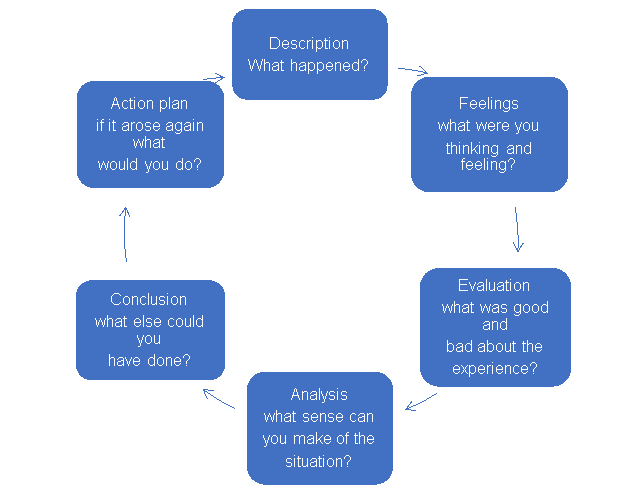
(1988) believes there are six stages of reflection, from description of the incident to action plan.

John (1995) has a five-stage model

, each stage has some cue questions that acts as a checklist. Reflection is when you experience a situation, you examine what happened to see if you could have done anything differently or repeat what was successful. Howatson -Jones (2013:6) defines reflection as ‘a way of examining your experience in order to look for the possibility of other explanations and alternative approaches to doing things’. It can also be described as ‘a window through which the practitioner can view and focus self within the context of her own lived experience …’ (Johns, 2010:35). Reflective practice in nursing is looking at the positives and negatives of past decision, learning from this to create a positive outcome in future situations (Japer, 2013).

Theories of reflection can be described as different questions which helps to clarify your knowledge. Models of reflective practice are questions that allows peoples experience to be evaluated by applying previous knowledge to your work. It can be argued that, the history of reflection in Nursing is not a recent phenomenon One of the first reflective theorists is an American psychologist Dewey (1938). He believed much of our learning is derived from our experiences and experimenting with ideas. Dewey (1938, cited in

Rolfe

, Jasper and Freshwater 2011:34) ‘we learn by doing and realising what came of what we did’. Dewey’s created the

model of reflective learning

, this consists of three stages. First, we experience the situation, secondly, we observe and reflect on it, thus we gain a better understanding of the event. Thirdly, the deep comprehension turns into knowledge. (see figure 1) Dewey defined reflection as (1933:9 cited in Bulman and Schutz 2013:2) ‘Active, persistent and careful consideration of any beliefs or supposed form of knowledge…’ He viewed reflection as a scientific process of thinking for a purpose, it requires focus on knowledge adjusting and experimenting with idea accordingly (Bulman and Schutz 2013:2).

Schön (1988) is another influential figure, in the history of reflection. His work was developed from Dewey’s idea, from this he created a two-stage theory: reflection- in- action and reflection- on -action.  Reflection-in-action means thinking about the action whist performing the task or procedure and actively amending one’s action accordingly. Schön emphasises that thinking on your feet, was key to producing the expert practitioner.  Schön (1983:163, cited in Johns 2017:7) ‘he shapes it and makes himself part of it’. Reflection-on- action is concerned with examining the experience in greater detail after it has happened, finding alternative ways to do something to achieve the best possible outcome (Jasper, 2013). A criticism of this model is that it is very vague, it does not offer any checklist questions to guide reflection. It relies on the individuals interpretation only, it can be argued that it is difficult to measure the effectiveness.

This section will compare 2 models of reflective practice in greater depth. Gibbs (1988) six stage

Reflective cycle

, is based on Dewey’s (1938) model. The first stage is the experience, this is where you recall the critical incident and analyse your reaction of the event. The second stage deals with the feeling, you discuss your emotions, in terms of what you were thinking and how you felt at the time. Next you analyse, by exploring what went well and what did not go as planned. Then you discover areas of improvement in your Skills, which the enables further learning. This leads on to the conclusion phase where you make a judgement with the information you have gathered on this exercise. These could be both success or failure from this, you develop an action plan, which is the last phase in this model.  (see figure 2). Gibbs believes that feelings and emotions significantly influence actions, therefore understanding self is key to reflective practice. The key strength of this model is that it is clear, concise and straight forward to use. It is suitable for both the novice and the experienced professional. One criticism of this model is that there are some nuances, between the evaluation and analysis steps. This is exemplified in the question, what was good or bad and what else can you make of this experience. This is essentially asking the same question, in different ways which could lead to confusion.

Johns developed Model of Structured reflection (MSR, 1995) based on Barbara Carper’s (1978)

fundamental patterns of knowing. Which contained

4 phases

: empiric (measurable actions), personal(self-awareness), ethical (moral knowledge) and aesthetics (whole picture).

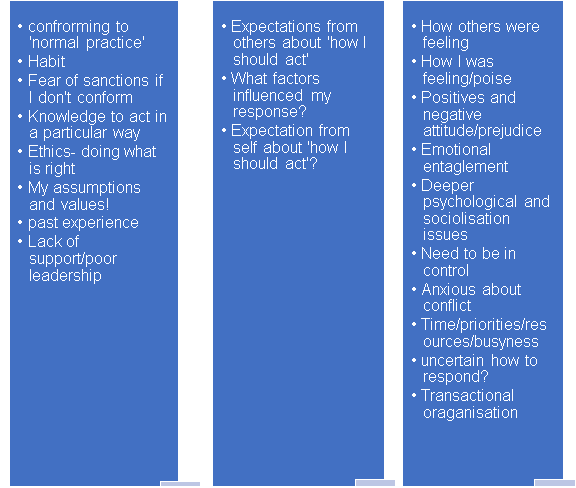
Johns MSR has five phases, with some cue questions together with the influence grid to enable greater analysis of each phase (see figure 3&4). He has since revised the MSR (2010 and 2015) in each occasion adding more clarity to the steps. The first phase is the preparatory, which he refers to as ‘bring the mind home’ this basically mean focus on the significant experience. Secondly, the focus then leads on to the descriptive phase, where you describe the experience and what issues were significant. Thirdly, the reflective phase asks you to consider the internal feeling and external influencing factor of the decisions, this considers your own and other people’s feelings. This is primarily trying to ascertain if your actions were influenced by others and if you acted differently because of this. The fourth phase is the anticipatory, which ask you to speculate how you would have changed the situation, if there was any constraint stopping you and how this might have affected the outcome. It also prompts you to evaluate the incidence retrospectively, the fifth phase is the insight, which concerned with what knowledge has been achieved as a result. Johns believes when reflecting on our performances, it is necessary to consider internal and external influencing factors (Jasper, 2013). And without this individual cannot transition to reflective practice. The strengths of this model are that the questions are very specific, this is exemplified in the question what you were trying to achieve, this can assist your reflection. Another positive is that it has been modified severally, which show the model is truly reflective. The main weakness with this model is that there too many questions to consider in each stage, this might lead to confusion, especially for the newly qualified practitioner, who might not have enough insight into own knowledge in order to analyse it extensively. The influence grid might also be distracting from real thoughts, therefore influencing your answers.

There are several similarities between Gibbs and Johns reflective models, the first is the learning outcome of the experience which is the analysis, the second point is what you will approach differently next time, known as the action plan. There are some important differences between Gibbs and Johns models. Johns MSR uses cue questions and an influence grid to prompt the Practitioner to include, external factors such as other people’s feelings, which might have influenced their decisions. Gibbs model in contrast uses an individualised approach, the focus is on the practitioner’s thoughts only, it is not concerned about other people’s influences. Another difference is that Gibbs ask you to evaluate your approach to work, however Johns is only concerned with what you have learnt from the experience or will change in future.

Reflective models can be applied in practice by utilising the strategies to support some of the key challenges facing nurses. For example, the rise in physical assault on nurses from service users. A recent report on (BBC, 2017) violence in the work place, identified that there were nearly 200 attacks on health care workers daily in England. Gibbs model can be used in this scenario, the professional will be able to spot the triggers in advance. He would communicate effectively with the patient to de-escalate and resolve the issues. Another problem in nursing is drug errors, a study by Westbrook et al (2010, cited in

Nursing standard

, 2018 vol33:59) identified that 25% of all medicines administration by nurses had one clinical error. The Nursing and Midwifery council (2007) nine rights of medicine Administration, together with Schön’s reflection -in -action- theory could be applied to this scenario (Schön, 1983, cited in Martin 2013) by having an action plan and clear strategies. The professional would actively double check the medication and any errors would be identified, rectified before administering to patient. NMC (2018), states that all nurses, must uphold professional standards know as ‘The code’: prioritise people, practise effectively, preserve safety, promote professionalism and trust. Johns MSR model (2015) can be utilised here to identify gaps in knowledge, generate an action plan to address these issues.  Reflective practice thus supports key principle of the National Health Service (NHS 2012), code of conduct known as the 6C’s: care, compassion, competence communication, courage and commitment.

Having emphasised the relationship between reflective theories and models been an essential tool to establish reflective practice. I am now going to reflect in this section on a critical incidence, applying the Gibbs model. I was waiting patiently in an open-air carpark queue. I had been waiting for just over twenty minutes, when I reached the front of the queue. I was feeling quite pleased that at last the wait would be over as I saw a shopper leaving a parking space. suddenly a car about few spaces behind the queue reversed, drove through a no entry route and manoeuvred into the space. I was feeling angry, shocked and annoyed that this woman can just jump the queue. I went over and told her calmly, that there was a queue system and that the space was mine. She pretended she could not understand what I was saying at first, then she claimed to have been approached by the previous driver to park there and did not see the queue. She refused to move, parked up and paid for her ticket. The negative part of this incidence was that I had to wait an additional ten minutes to find a space, another negative was that I kept seeing her round every shop I went into that afternoon. This ruined my shopping experience, because for majority of the time I felt uncomfortable even though I had been in the right. I had to accept that I could not change other people’s behaviour, I could only change mine. I can conclude from this experience that it was pointless trying to explain the situation as it did not achieve my main goal. My action plan would be, to avoid confrontation in the future but instead wait for another parking space or find another carpark.

This essay has examined the reflective theories of Dewey and Schon and the models of Gibbs and Johns. When comparing the theories and models it became obvious that each situation might determine the choice of reflection. For example, Schön’s theory might be suitable for the experienced nurse whilst Dewey’s could be appropriate for the novice. Johns model might be best for deeper analysis on the other hand Gibbs favours a straightforward approach. It remains clear that theories and models are useful, in the transition to professional behaviour in nursing practice. By identifying strengths and weakness and creating an action plan it can enable personal growth and competence in skills. It can Improve patient safety by preventing errors, promote person centred care, as self-awareness is a key element of reflection. Reflective practice also supports the 6C’s (NHS, 2012) and (NMC 2018) ‘the code’. It can be applied in different situation however it is relevant to remember to use them wisely and apply common sense. John (2017:36) reminds us that ‘models are not a prescription for reflection’.


References

  • BBC (2017) NHS Health check

    ‘most staff have been attacked

    ;

    doctor says’ available at https://www.bbc.co.uk/news/health-38917156 accessed

    19 December 2018.
  • Bulman, C .and Schutz, S

    . (2013) Reflective Practice in Nursing

    edn:2 Oxford: Willey-Blackwell.
  • Howatson-Jones, L. (2013)

    Reflective practice in Nursing

    edn:2 London: Learning Matters.
  • Jasper, M. (2013)

    Beginning reflectively practitioner

    edn:2 Andover: Cengage learning.
  • Johns, C. (2010)

    Guided reflection

    edn:2 Chichester: Wiley-Blackwell.
  • Johns, C. (2017)

    Becoming a reflective practitioner

    edn:5 Chichester: Wiley-Blackwell.
  • Johns, C. (2017)

    MSR

    fig3,

    influence grid

    fig.4, p.37-38.

    Becoming a reflective practitioner

    edn:5 Chichester: Wiley-Blackwell.
  • Martin, P. (2018)

    Coping and thriving in nursing London:

    Sage publication.
  • National Health Service (2012) ‘The 6C’s’ available at www.england.nhs.uk/leadingchange/6cs.
  • Nursing and Midwifery Council (2007)

    Standards for Medicine Management

    : London. Available at

    https://www.nmc.org.uk/standards-for-medicine-management

    Accessed 24 December 2018.
  • Nursing and Midwifery Council (2018) ‘The code’

    : professional standards of practice and behaviour for nurses, midwives and nursing associates

    : London available at https: www.nmc.org.uk/standards/ code. Accessed 24 December 2018.
  • Nursing standards

    Understanding the Human and System Factors involved in Medication errors

    vol (33) pp.59-61 September 2018.
  • Rolfe, G. Jasper. Freshwater, D. (2011)

    Critical reflection in practice

    edn:2 Basingstoke: Palgrave Macmillan.
  • Rolfe, G. Jasper. Freshwater, D. (2011) ‘Dewey’s model of reflective learning’ (1938)

    Critical reflection in practice

    edn:2 p.34 Basingstoke: Palgrave Macmillan.
  • Rolfe, G. Jasper. Freshwater, D. (2011) ‘Gibbs reflective framework’ (1988)

    Critical reflection in practice

    edn:2 p.35 Basingstoke: Palgrave Macmillan.
  • Siviter, B. (2013) The student nurse handbookedn:3 London: Elsevier.


Sourcefig.1: Rolfe, Jasper& Freshwater. 2011:33


Appendices


Appendices

Figure 1: Dewey’s model of reflective learning (1938)

Source: fig.2 Rolfe, Jasper & Freshwater 2011:34

Figure 3: Johns model for structured reflection (MSR) edition 17th.

Figure 2: Gibbs reflective framework


Reflective cue

Appendix 3 The

Source: Johns, 2017

Bring the mind home

Write a description of an experience

What in particular seems significant to pay attention to?

Why did I respond as I did?

Was I effective in terms of consequences for others and myself?

What factors influenced my response (see figure 4)

Given the situation again, what are my options for responding more effectively?

What are the potential consequences of responding differently?

How do those influencing factors need to shift so I can respond differently?

What tentative insight do I draw?

How does extant theory/ idea inform and deepen my insights?

How does exploring with guides and peers challenge my insight?

How do I feel now about the situation?

Source fig. 3: Johns 2017:37

Source Johns 2017:37

Appendices

Figure 4: Johns Influence Grid


Source Fig.4: Johns 2017:38

After viewing the documentary film Nurses: If Florence could see us now, write a one-page paper discussing the following: 1. What would Florence think about nursing today?

After viewing the documentary film Nurses: If Florence could see us now, write a one-page paper discussing the following:
1. What would Florence think about nursing today?

2. What has changed about nursing?
3. What has not changed about nursing?
4. What future changes do you predict for nursing?
1. Describe how Florence Nightingale’s contributions to nursing have affected your current nursing practice.
Paper should be typed using Times New Roman 12 (or similar) font (Word or Word-compatible document); remember to proofread your paper and correct errors in spelling and grammar.

Compare and contrast the U.S. healthcare system with that of another developed country. What aspects of open and closed systems are exhibited by the United States and by your selected country?

Compare and contrast the U.S. healthcare system with that of another developed country. What aspects of open and closed systems are exhibited by the United States and by your selected country?


Please use 2 references per question.1-Compare and contrast the U.S. healthcare system with that of another developed country. What aspects of open and closed systems are exhibited by the United States and by your selected country?2-Review the assigned article for tweek, Buerhaus, P. I. (2010). Healthcare payment reform: Implications for nurses. Nursing Economics, 28(1), 49?54. Answer the question belowAn emerging political issue is to change the way healthcare providers are compensated to control healthcare spending. Nurses are the largest group of healthcare providers and can make the greatest impact on the healthcare system. Compare and contrast two advantages versus the disadvantages of the policy to disentangle nursing costs from the patient room charges and/or organization charges. How can tpolicy affect your policy priority? Is there evidence?

Identify and give examples of five areas to assess when working with a person who has experienced abuse

Identify and give examples of five areas to assess when working with a person who has experienced abuse

• Discuss the importance of a safety plan and identify at least 4 important components.
• Identify at least five guidelines for nursing interventions related to sexual assault

Health Literacy: Diabetes Mellitus Type II in Adolescents


Health Literacy: Diabetes Mellitus Type II in Adolescents


A family nurse practitioner plays a key role in the facilitation of education to patients and families regarding many illnesses and diseases treated within the primary care setting. Type 2 Diabetes Mellitus (T2DM) is a commonly diagnosed and treated condition in primary care.  While type 2 diabetes has generally affected adults, there has been a 4.8 percent increase in rates of adolescents diagnosed in the years 2000 to 2012 (National Institutes of Health, 2017). Type 2 diabetes is linked with multiple comorbidities that can lead to life-long health complications and premature mortality (Temneanu, Trandafir, & Purcarea, 2016).  For this reason, it is necessary for early identification of patients at risk for T2DM so that a diagnosis can be made,  and treatment can be implemented. Proper education should be provided to patients and caregivers in an effort to prevent or reduce complications associated with this disease.

The purpose of this health literacy project is to assist patients and caregivers in the primary care setting with understanding the risks and diagnosis of type 2 diabetes mellitus through the use of educational materials.  The adolescent patient and caregiver are the targeted audience for this project. This paper will discuss the exploration of the evidence base for type 2 diabetes mellitus, the health literacy for patients and caregivers, provide an educational outline, and an educational pamphlet to be distributed to patients and caregivers in the primary care setting.


Exploration of the Evidence Base for Diabetes Mellitus Type 2 in Adolescents

The family nurse practitioner (FNP) plays a pivotal role in the assessment of risk, diagnosis, treatment, and education of adolescents with T2DM.  In order to properly provide care for these individuals, the nurse practitioner must have a full understanding of the disease. In this section the pathophysiology, clinical manifestations, and treatment of T2DM will be discussed. Type 2 diabetes mellitus currently affects about 25,000 adolescents, with an increased prevalence amongst children from a poor socioeconomic status and ethnic backgrounds (Nadeau et al., 2016).  The rates have continued to rise since the year 2000, placing an increased burden on the health system (Mayer-Davis et al., 2017), as many body systems play a role, and are affected by T2DM. As this threatening disease increases in children, so does the prevalence of chronic and long-term comorbidities. The earlier youth develop T2DM, the earlier damage can occur to other body systems (Kao & Sabin, 2016). This correlates with increased medical expenses among those diagnosed with T2DM (American Diabetes Association, 2018).  In an effort to reduce the onset of long-term health issues connected with the disease, education and treatment should be provided when risks for the patient become evident.


Pathophysiology

Type 2 diabetes is a multisystem metabolic disorder characterized by insulin resistance and reduced beta-cell function (McCance, Huether, Brashers, & Rote, 2019).  Several factors play a role in the development of insulin resistance including diet, lifestyle, genetics, environment, and obesity (Temneanu, Trandafir, & Purcarea, 2016).  Insulin resistance occurs as a result of insufficient insulin responses from the muscles, liver, and adipose tissues (McCance, Huether, Brashers, & Rote, 2019). Obesity is one of the most common contributors to T2DM in children as it affects many of the insulin pathways. White adipose tissue, associated with obesity, leads to increased levels of the hormone leptin and decreased levels of adiponectin, both of which result in insulin resistance (McCance, Huether, Brashers, & Rote, 2019).  Obesity further causes elevated levels of inflammatory cytokines in the body, promoting atherosclerosis and fatty liver (McCance, Huether, Brashers, & Rote, 2019). Obesity can occur for a number of reasons. Research points to poor diet, lack of exercise, stress, environment, and genetics as causes of obesity, thus contributing to T2DM (Temneanu, Trandafir, & Purcarea, 2016). While obesity plays a major role, other body systems contribute to hyperglycemia. Hyperglycemia is the term given for elevated blood glucose levels. Irregular function of the liver, digestive system, kidneys, pancreas, muscles, and brain  can be conducive to T2DM. Increased gluconeogenesis in the liver, decreased ghrelin secretion from the stomach, increased reabsorption of glucose from the kidneys, decreased insulin sensitivity from the muscles, increased secretion of glucagon from the pancreas along with decreased beta cell-function, and altered insulin- signaling pathways and dysfunction of neurotransmitters in the brain contribute to and result in hyperglycemia (McCance, Huether, Brashers, & Rote, 2019). Elevated blood glucose levels are indicative of insulin resistance and is a necessary criterion for the diagnosis of T2DM. The long-term effects of hyperglycemia lead to an abundance of comorbidities and health issues that can be detrimental to the patients’ overall health. Comorbidities associated with T2DM include neuropathy, retinopathy, heart disease, hypertension, liver disease, immunosuppression, increased infections, chronic kidney disease, and increased risks for stroke, myocardial infarction, and cancer (McCance, Huether, Brashers, & Rote, 2019).


Clinical Manifestations

With T2DM in youth, clinical manifestations and comorbidities are known to progress at an accelerated rate (Nadeau et al., 2016). Common clinical manifestations of type 2 diabetes mellitus include excessive urination (polyuria), excessive thirst (polydipsia), increased appetite/hunger, fatigue, blurred vision, rash, weakness, and headaches (McCance, Huether, Brashers, & Rote, 2019).  Patients may further experience delayed wound healing and increased infections due to immunosuppression (Zao & Sabin, 2016). These symptoms are a result of multiple body systems malfunctioning leading to hyperglycemia. An elevated fasting blood glucose level is generally noted when these symptoms are present. It is important to note that adolescents with diabetes may be asymptomatic, therefore suggesting an increased need to screen patients for risk factors (Temneanu, Trandafir, & Purcarea, 2016). The diagnosis of T2DM requires one of the following criteria: a hemoglobin A1c (HgA1c) greater than 6.5 percent,  a fasting plasma glucose (FPG) greater than 126 mg/dL, a two hour plasma glucose of greater than or equal to 200mg/dL, or a random plasma glucose above 200 mg/dL in any patient that exhibits the presence of a hyperglycemic crisis (McCance, Huether, Brashers, & Rote, 2019). Type 2 DM has disproportionately affected adolescents with an American Indian ethnicity, followed by Asians of the black race and individuals from Pacific islands (Temneanu, Trandafir, & Purcarea, 2016). Although rates have been lower among non-Hispanic whites, there is still an association of increased T2DM in individuals from a poor socioeconomic status. This plays a critical role in the management and treatment of T2DM in the primary care setting.


Management/Treatment

Management and treatment of children and adolescents with T2DM starts with identifying causative factors.  The family nurse practitioner needs to assess the patient for factors that play a role in the disease. One factor is a predisposed genetic factor, if diabetes runs in the family. Children with familial history of DM have a 10 to 15 percent increased risk of developing the disease (McCance, Huether, Brashers, & Rote, 2019).  Due to the major role of obesity among children with T2DM, lifestyle should be evaluated. A poor diet high in processed foods and fast foods coupled with lack of exercise promotes increased adipose tissue and obesity. Modifications to lifestyle are critical in the management and treatment of diabetes in youth (Kao & Sabin, 2016).  This is often the first step of treatment and can result in decreased blood glucose levels through a reduction in carbohydrates, empty calories, and exercise. Socioeconomic status should also be recognized as a contributing factor in DM among adolescents. Patients living in poverty may have difficulty eating healthier foods and obtaining needed medications. Individuals from a poor socioeconomic status  may have difficulty accessing adequate health care, further increasing the risk for health disparities. Medications may be needed to treat type 2 diabetes mellitus in children if diet and exercise are not enough to reduce elevated blood glucose levels (Zao & Sabin., 2016).

There are two main medications utilized in the treatment of T2DM for adolescents and children.  Metformin, also known as Glucophage, and insulin are the safest known medications for use in youth (St. Onge, Miller, Motycka, & DeBerry, 2015).  Metformin is known to promote insulin sensitivity and decrease the production of glucose from the liver (McCance, Huether, Brashers, & Rote, 2019).  Insulin can be rapid-acting, regular-acting, intermediate-acting, and long-acting. Insulin is generally utilized in combination with metformin to treat adolescent T2DM(St. Onge, Miller, Motycka, & DeBerry, 2015).  The use of insulin can result in other complications such as hypoglycemia. While there are many other medications presently used for the treatment of diabetes in adults, there have not been sufficient studies to assess risks to children resulting in the lack of use for adolescents (St. Onge, Miller, Motycka, & DeBerry, 2015).


Exploration of the Health Literacy in Patient and Caregiver

Education to both patients and caregivers is essential in reducing the risk for long-term health complications, comorbidities, and early death among adolescents with type 2 diabetes mellitus. It is important to include patients with their care as it promotes patient autonomy and could be beneficial to adolescents, improving their long-term compliance and health outcomes.  The family nurse practitioner should assess the ability of the patient and caregiver to understand information and education regarding the disease at a basic level, known as health literacy. Health literacy provides insight into the capability of the patient and caregiver to adequately make decisions regarding the patient’s care. In type 2 diabetes mellitus, the health literate patient or caregiver would need to be able to identify risk factors for the disease, understand the role of diet, exercise, and obesity, as well as medications. According to a recent study, about 30 percent of patients in the United States diagnosed with T2DM were not health literate (Abdullah, Liew, Salim, Ng, & Chinna, 2019).  Poor health literacy amongst parents of children with type 2 diabetes poses as a barrier to the management and treatment of the disease. Consequences of low health literacy regarding diabetes can lead to ineffective treatment, medication errors, poor diet, and increased risks for complications and hospitalizations (Morrison, Glick, & Yin, 2019). As noted above, the ability of patients and caregivers to properly identify risk factors for T2DM is important because some children can be asymptomatic for long periods of time, which could delay diagnosis and treatment (Temneanu, Trandafir, & Purcarea, 2016). This can inherently increase the risk for early progression of the disease and comorbidities. Early education, therefore, has the potential for reducing complications related to diabetes through increased adherence to behavior and lifestyle changes (Temneanu, Trandafir, & Purcarea, 2016).

Morrison, Glick, and Yin (2019) discussed ways in which health literacy can be improved through clear communication and adaptation to the patient and caregiver’s level of functional understanding.  There is further need to engage both the patient and caregiver in different methods of education that can stimulate learning to promote improved health-literacy. Communication is key between the practitioner, patient, and parents to promote optimal health of the adolescent (Morrison, Glick, & Yin, 2019).

Family nurse practitioners are uniquely poised to provide and promote education regarding T2DM to patients and caregivers. It is in primary care that nurse practitioners, in accordance with the scope of practice, can formulate a trusting relationship with patients and caregivers, obtaining a complete health history identifying health issues, comorbidities, family histories, and living environments that may affect patient care and adherence to treatment plans (American Association of Nurse Practitioners, 2019).  Because T2DM is complex and associated with many comorbidities, it is necessary for the FNP to deliver education materials that can easily be understood by both patient and caregivers in an effort to increase their health literacy. An educational outline should be utilized to facilitate patient and caregiver learning and include patient risks for T2DM, proper diet, exercise, weight loss, and medications used to treat the disease.


Educational Outline

Zhang and Chu (2018) studied a systematic health education model for patients with type 2 diabetes, noting that the approach resulted in increased adherence to treatment plans and reduced HbA1c. This system takes a multifaceted approach to education regarding T2DM. In this model, visual education materials are provided,  nutrition and exercise are addressed and programs for adherence are offered, patients and caregivers are educated regarding self-monitoring of blood glucose levels, and monthly visits to assess compliance and therapeutic effectiveness is encouraged (Zhang & Chu, 2018). While following this approach to educating patients with diabetes, it is also important for the nurse practitioner to communicate clearly with the patient and caregiver.

The presentation of educational material by the FNP to patients and caregivers can be done in the privacy of the exam room. If language barriers are present, the presence of an interpreter is necessary to facilitate adequate understanding.  Education of patients and caregivers should occur over several visits to ensure adequate health literacy. Prior to the start of education, it is important for the nurse practitioner to assess both the patient’s and caregiver’s current health literacy regarding T2DM. Goals should be predetermined, measurable, and appropriate to the diagnosis. During the first visit, and subsequent visits, the FNP should spend about 30 minutes providing education and allow time for questions and teach-back of material by patient and caregiver. An educational pamphlet should be provided that reinforces educational information and provides other community resources regarding T2DM. The FNP should take time to speak slowly, calmly, and directly at the persons being educated.  Education should be split up, and learners should have the opportunity to ask questions, clarify concerns, and request additional information if needed. Prior to the end of the visits, the nurse practitioner should identify any new issues, concerns, or decreased understanding of material taught. The patient should further be provided with ways to get in touch with the primary care office if questions or health issues arise outside of the office visit.


Conclusion

In conclusion, the current rising trend of type 2 diabetes mellitus among adolescents is alarming.  The complex and chronic disease affects many body systems and can lead to poor long-term health of the patient and early death.  With a noted accelerated progression of the disease among adolescents, it is necessary for early diagnosis and treatment in an effort to reduce complications associated with the disease. The family nurse practitioner, in the primary care setting, has a responsibility to address T2DM and preemptively combat it through adequate risk assessment, education, and treatment.  The FNP should assess health literacy of all patients and caregivers so that barriers to knowledge and care can be identified and reduced. The use of educational materials in a private setting is needed to enhance the health literacy of the patient and caregiver, as well as improve treatment compliance and health outcomes.


References

  • Abdullah, A. M., Liew, S. J., Salim, H. undefined, Ng, C. undefined, & Chinna, K. undefined. (2019). Prevalence of limited health literacy among patients with type 2 diabetes mellitus: A systematic review.

    PLOS ONE

    . Retrieved from https://doi.org/10.1371/journal.pone.0216402
  • American Association of Nurse Practitioners. (2019). Standards of Practice for Nurse Practitioners. Retrieved from https://www.aanp.org/advocacy/advocacy-resource/position-statements/standards-of-practice-for-nurse-practitioners.
  • American Diabetes Association. (2018). The Cost of Diabetes. Retrieved from https://www.diabetes.org/resources/statistics/cost-diabetes.
  • CDC. (2017). CDC features: Prevent type 2 diabetes in kids. Retrieved from https://www.cdc.gov/features/prevent-diabetes-kids/index.html.
  • Kao, K.-T., & Sabin, M. A. (2016). Type 2 diabetes mellitus in children and adolescents.

    Australian Family Physician

    ,

    45

    (6), 401–406. Retrieved from https://www.racgp.org.au/afp/2016/june/type-2-diabetes-mellitus-in-children-and-adolescents/
  • Mayer-Davis, E. J., Lawrence, J. M., Dabelea, D., Divers, J., Isom, S., Dolan, L., … Wagenknecht, L. (2017). Incidence trends of type 1 and Type 2 diabetes among youths, 2002–2012.

    The New England Journal of Medicine

    ,

    376

    , 1419–1429. doi: 10.1056/NEJMoa1610187
  • McCance, K. L., Huether, S. E., Brashers, V. L., & Rote, N. S. (2019).

    Pathophysiology: the biologic basis for disease in adults and children

    (8th ed.). St. Louis: Elsevier.
  • Morrison, A. K., Glick, A., & Yin, H. S. (2019). Health literacy: Implications for child health.

    Pediatrics in Review

    ,

    40

    (6), 263–277. Retrieved from https://doi.org/10.1542/pir.2018-0027
  • Nadeau, K. J., Anderson, B. J., Berg, E. G., Chiang, J. L., Chou, H., Copeland, K. C., … Zeitler, P. (2016). Youth-onset type 2 diabetes consensus report: Current status, challenges, and priorities.

    Diabetes Care

    ,

    39

    (9), 1635–1642. Retrieved from https://doi.org/10.2337/dc16-1066
  • National Institutes of Health. (2017). Rates of new diagnosed cases of type 1 and type 2 diabetes on the rise among children, teens. Retrieved from https://www.nih.gov/news-events/news-releases/rates-new-diagnosed-cases-type-1-type-2-diabetes-rise-among-children-teens.
  • St. Onge, E., Miller, S. A., Motycka, C., & DeBerry, A. (2015). A review of the treatment of type 2 diabetes in children.

    The Journal of Pediatric Pharmacology and Therapeutics

    ,

    20

    (1), 4–16. doi: 10.5863/1551-6776-20.1.4
  • Temneanu, O. M., Trandafir, L. M., & Purcarea, M. R. (2016). Type 2 diabetes mellitus in children and adolescents: a relatively new clinical problem within pediatric practice.

    Journal of Medicine and Life

    ,

    9

    (3), 235–239. Retrieved from https://www.ncbi.nlm.nih.gov/pmc/articles/PMC5154306/
  • Zhang, Y., & Chu, L. (2018). Effectiveness of systematic health education model for type 2 diabetes patients.

    International Journal of Endocrinology

    ,

    2018

    . doi: 10.1155/2018/6530607