The Health Effects of Smoking to Maori and Non-Maori Clients


INTRODUCTION:

The top leading cause of death for Maori and Non-Maori according to the Ministry of Health are Ischemic Heart Disease, Lung Cancer, Cerebrovascular Disease, and Diabetes. (“Major causes of death (all ages) | Ministry of Health NZ,” n.d.)

The leading cause of Lung Cancer is smoking with an 80-90 percent ratio. This is an important topic to investigate for me because this is a life-threatening matter that only one can control, with the help of the family, friends and the organization, New Zealand can be a smoking free environment. Being the top 2 leading cause of death to Maori ethnic, it is a calling for me to focus on this paper by educating them on this matter. This paper primarily aims to decrease the mortality rate of lung cancer by improving the health awareness of the effects of smoking in the body, raise awareness of lung cancer and its symptoms, what are the Maori perception towards smoking, how to overcome the bad habit of smoking and to be aware of what the programs are that the government has to offer with regards to minimizing smoking.

  1. Health Effects of Smoking

1. Lung Cancer

2. Smoking is either the direct cause or a contributing factor in 30% Cancer:

  • Esophageal Cancer
  • Head and Neck Cancer
  • Cervical, Ovarian, Breast Cancer
  • Prostate Cancer

3. The effects of a second hand smoking

B. The different insights of the Maori and Non Maori towards smoking, origin as to why Maori smoke

C. Different programs to stop smoking

1. Nicotine Replacement Therapy

2. Practice Relaxation Techniques

3. Call for Reinforcements

4. Go online for Supports

D. Smoke Free by 2025

A. Health Effects of Smoking

1. The usual questions that we are running at the back of our mind are questions like how do we get lung cancer or why is it the top 5 leading cause of death to Maori and non Maori people? We all know that cancer can be genetic and can also be acquired if we have bad habits like eating carcinogenic foods and with lung cancer the risk factors would be smoking and air pollution. I have asked some people as to why do they smoke and their usual answers are smoking helps them cope up with the stressful life they have, may it be from work or at home, smoking for some others would make them relieve and relax. Sometimes youth experienced peer pressure or out of curiosity they’ll do it. But the harmful effects that the chemicals inside a cigarette are obviously not being mind. When we play with fire and our hand got burn, we will actually put away our hand from the fire and perhaps put the fire off unlike smoking it will affect our body in a long term process but once it will scar our lungs that would be irreversible to cure. Our body would be experiencing a lot of physical reactions to every smoke we puff. This chemical highly affects the blood pressure, and increases pulse rate which can lead to palpitations and heart burns thus leads to disturbance in the entire body. There are over 4000 chemical compounds present in cigarette smoke at around 40 plus chemicals are known to be carcinogenic while 200 of it are poisonous ones. Examples of these compounds are carcinogens, benzene, formaldehyde, pesticides, TSNAs, vinyl chloride, toxic metals, arsenic, and cadmium. These chemicals are very toxic which can cause cancer cells. Lung Cancer is the uncontrolled abnormal cell growths that start on attacking one lung or both lungs. The abnormal cells don’t convert to normal cells but rather they rapidly divide and formed into tumor cells. A Passivesmokingmeans you inhale the smoke of one person that smoke which leads to air pollution and increases the risk of lung cancer, but it is still much less percentage than if you smoke yourself. The effect to reduce lung cancer is through prevention, early detection and treatment.

2. Smoking is one risk factor that causes head, neck, esophageal, breast, cervical, ovarian and prostate cancer. According to the American Cancer Society, “smoking a pack a day doubles your risk factor for cancer.” DNA cells will be damage when smoke is inhaled in the body. My grandfather died of tongue cancer and he actually smoke like a pack of cigarettes each day. And before he died when he was still in the hospital he told my dad who was a smoker before that “if you love yourself and love my daughter (which is my mom) you need to quit smoking” so right there and then my dad never smoke again. Eighty-five percent of head and neck cancers are linked to tobacco use. Smoking can accelerate cancerous changes in the cervix due to

HPV

. While women who smoked for 25 years or more and were still smoking had twice the risk of developing ovarian cancer as those who never smoked. Fatty tissues in your breast can be the resting place of carcinogenic compounds who smoke thus links smoking triggers breast cancer. Prostate cancer is simply the uncontrolled and abnormal growth of cells in the prostate which cigarettes has carcinogenic compounds that triggers cancer cells and attacks any part of the body that are weak. (Eldridge,L. (n.d.). Health Effects
https://encrypted-tbn0.gstatic.com/images?q=tbn:ANd9GcTPxldp-HeGdoPfBRXezMvnvl4FQXrVnhmI4JS4hEja4LQXXHoF
of Smoking). This are the symptoms that you should watch out for and go direct consult your GP.

3. Passive smoking is the process where you breathe other people’s smoke or when you inhale somebody’s smoke. Back in the Philippines I myself have experienced this situation were all our neighbors are a chain smokers and I kept on telling them to smoke a little bit farther because my baby and I can smell the smoke. We have one of the worst air pollution back in our country thus leads to several of diseases like PTB, COPD, Lung cancer and Pneumonia. As an emergency nurse, I have witnessed a lot of patience who suffered from shortness of breath, coughing or vomiting blood and when I have assessed their habits one thing are common they are active smokers or victim of second hand smokers. That is why when I first step in New Zealand I fell in love with it not just because of its nature but it has a clean fresh air. Lung cancer and second hand smoking has been scientifically connected and linked since mid-1980s and the studies shows that there is a 20 percent increased risk of developing lung cancer to non-smoker who is exposed to second hand smoking. Just 30 minutes of exposure is enough to decrease blood flow to the heart. Around 350 New Zealanders are killed by others peoples tobacco smoke each year. Second hand smoke has been the cause of coronary heart disease, lung cancer, acute stroke, nasal sinus cancer, eye and nasal irritation. An adult who have never tried smoking and is living with a smoker has a 15 percent higher risk of death than those who are living in a smoke free household. Maori children are exposed greatly to second hand smoke than non Maori children.

  1. It was Captain James Cook who introduced smoking to Maori in the late 1700s. The Maori thought of him as a demon because his face was smoking and with fire so they poured water on him to check if the fire would go out and if not then he is a demon that needs to be killed. Tobacco is not a Maori tradition, but they became a heavy smoker when they adopted what was introduced to them. Compare to other ethnic groups in New Zealand, smoking to Moari is common most especially to areas in deprivation. In the 19

    th

    century most Maori women were painted or photograph with a pipe at hand while Pakeha women is seen with tobacco is unacceptable. In 1899 the Māori newspaperTe Puke ki Hikurangi, the smoke products are used by men, women and the youth for Maori while the Pakeha rule only older men are allowed to smoke while women and young women are not allowed at all. (Māori use of tobacco – Māori smoking, alcohol and drugs – tÅ«peka, waipiro me te tarukino – Te Ara Encyclopedia of New Zealand. (n.d.).

Around 800 Maori dies each year because of the different diseases caused by smoking tobacco. There has been a 10 percent health gap inequality between Maori and non-Maori due to smoking. The Maori ethnic group actually spends around $260 million in cigarette taxes each year. The Moari leaders are straight forward although the community still control there decision or has a final say to their destiny. But the Maori principle will need mass mobilization and support to realize the benefits from such a commitment. (The Issues – Health – Secondhand Smoke – CanTobacco. (n.d.).

  1. Programs to help stop Smoking are:
  1. Nicotine Replacement Therapy- it is an invaluable aid to help people to quit smoking. If you are a heavy smoker and wanted to quit, NRT is an helpful material because it gives a cessation somewhat like when you’re smoking. It includes a patch, gum, lozenges which the government of New Zealand offers low cost of NRT. Nicotine replacement therapy (NRT) is a proven efficacious and safe aid for smoking cessation. However, initiation of NRT use remains low, and among those who do use the products insufficient dosages and early termination is common.
  2. Practice Relaxation Techniques- Cardio exercises helps you relax and divert yourself from the cravings you are feeling and you must also give your mouth something to chew on like sugarless gum, or hard candy, raw carrots, or celery nuts or something crunchy and satisfying.
  3. Calls for reinforcements- this is a program were you ask counseling or someone’s help for moral support most especially from your family, friends and a support group. A chat on the phone or face to face conversation and talk about your cravings or other good things to laugh about.
  4. Go for online supports- there are a lot of online sites that would assist an individual who wants to quit smoking. Reading blogs and other successful stories of people who successfully finished the programs would help uplift the spirit of a beginner. Some sites are

    www.orakeihealth.com

    , ngati hine health trust in whangarei, koriri marae hauora in wellington and many more. Expressing yourself to others and reading articles to other story relaxes you and can encourage you push through the program process. A motivation to push forward for a better health.
  1. Smoke free environment by 2025 is the government programs and their goals are not to ban the cigarettes but tobacco will be difficult to sell and supply. They will increase the tobacco tax per annum. Extend smoke free areas like inside the cars with children, parks and sport fields, bus stops and other transport settings. This will protect the people from the exposure of the second hand smoking. The goal is attainable if everyone would cooperate in attending smoke free events, encouraging and supporting more people to quit, reaching out and giving education to family, school, community and organizations. Tell Maori and Non Moari to not smoke around children and teach children that smoking is harmful to the body. (Smokefree 2025 | Smokefree. (n.d.).


Conclusion:

The Maori ethnic has the highest incident rate of lung cancer and other diseases caused by smoking because majority of them have embraced smoking as part of their culture when introduced by the British colony. They have been living as a group or tribe in ancient days and today they’re living in an extended form family therefore if one family member is smoking it highly affects the smoker and the family member in a way of second had smoking and children seeing their family member smoke would think that smoking is acceptable and healthy. As a healthcare manager I would highly suggest that health education would be implemented to every facility or company twice a year. This would help the community reach out to each and everyone with no exception to its race, gender, age and social status. Health awareness would slowly help Maori individual accept and adopt that smoking is dangerous to our health. There has been an equal and fair treatment with regards to health care programs as far as I have researched. May it be a citizen or resident of New Zealand, a Maori or non Maori the service has been made for their convenience. Some facilities have even interpreters to help cater the needs of individual. I have observed that some bus stops, train stations don’t have no smoking signs which the public can smoke freely and that can harm other people. To help achieve the governments program of Smokefree by 2025 as an individual we should help our family members, friends, and colleagues educate them and help them go through the program on quitting smoking.

References:

  1. Major Causes of Death (all ages). (n.d.). RetrievedOctober2014, from

    http://www.health.govt.nz/nz-health-statistics/health-statistics-and-data-sets/maori-health-data-and-stats/tatau-kahukura-maori-health-chart-book/nga-mana-hauora-tutohu-health-status-indicators/major-causes-death-all-ages
  2. Eldridge,L. (n.d.). Health Effects of Smoking. Retrieved from

    http://http://lungcancer.about.com/od/causesoflungcance1/a/effectsofsmoking.htm
  3. The Issues – Health – Secondhand Smoke – CanTobacco. (n.d.). Retrieved from

    http://www.cantobacco.org.nz/the-issues/health/secondhand-smoke
  4. Māori use of tobacco – Māori smoking, alcohol and drugs – tÅ«peka, waipiro me te tarukino – Te Ara Encyclopedia of New Zealand. (n.d.). InTe Ara Encyclopedia of New Zealand – Te Ara – The Encyclopedia of New Zealand is building a comprehensive guide to our peoples, natural environment, history, culture, economy and society. Retrieved from

    http://www.teara.govt.nz/en/maori-smoking-alcohol-and-drugs-tupeka-waipiro-me-te-tarukino/page-1
  5. Smokefree 2025 | Smokefree. (n.d.). Retrieved from

    http://smokefree.org.nz/smokefree-2025
Animation assignment due in 6 hrs

I. Purpose

The purpose of this assignment is to demonstrate your ability to use the various features and

functions in Adobe Animate to create a commercial for your fictional company/organization.

This assignment is an opportunity to utilize the animation authoring skills that you have learned

to develop a creative and original 10-second non-looping animation to deliver a message about

your company/organization.

II. Steps

1. You must use Adobe Animate to create your commercial. Your animation must meet the

following requirements:

 Document Setting:

 Dimension: CAN NOT exceed 800 pixel width and 600 pixel height

 Frames per second MUST be set to 12

 Platform/Playback Type:

 HTML5 Canvas (preferred) or ActionScript 3.0

 Accessibility Setting (ActionScript 3.0):

 The Accessibility Panel (Window > Properties > Accessibility) must be

activated

 For the movie:

o Select the “Make Movie Accessible” option

o Provide an alternative equivalent in the “Name” and “Description” fields

 For each object (e.g., button)

o Select the “Make Object Accessible” option

o Provide an alternative equivalent in the “Name” and “Description” fields

 Ensure that no component of the content flashes more than three times in

any 1-second period

 Requirements (The animation should play in the following order):

 Preloader:

 Select a background color; Create a text box, aligned at the horizontal

center of the stage and type in 'Loading' in the text box; Create 5 small

white squares and align them as shown.

 Create a preloader animation so that the squares sequentially turn to

black squares for 0.5 second each, moving from left to right.

 Motion Tween (all of the following):

 Resulting in a color change of any object

 Resulting in a position change of any object (movement)

 Resulting in a transformation change of any object (scale, rotation)

2

 Shape Tween:

 Resulting in a shape change (morphing)

 Button:

 Insert a square and convert it into a button symbol

 Set the following states for the button:

o Up State: Create a text box on top of the square, with the text

‘End’ and align the square and text to look good.

o Over State: Change the color of the text ‘End’.

o Down State: Change the color of the text ‘End’.

 Ending (JavaScript or ActionScript 3.0):

 Create a new key frame after the frame on which the button is created.

Delete the button from this frame. Import the Image.gif file to your

library and drag an instance of it to this layer.

 Set the Actions to the button/frame so that the animation stops when the

button appears, and the animation continues to play the imported

Image.gif animation when the user clicks on the button.

 The imported Image.gif animation must run at least once completely

without looping.

 File Type:

 FLA (.fla)

 Time Length:

 At least 10 seconds (non-looping)

2. Submit your FLA file via Blackboard using the Assignments Tool (“Course Tools” 

“Assignments” follow the “Project 2: Animation Commercial” link).

3

III. Grading

Description Points

File Format:

 File does not exceed 800×600 in dimension.

 File format is FLA.

 FPS is 12.

 Platform/Playback type is HTML5 Canvas (preferred) or ActionScript 3.0

 Duration is at least 10 seconds.

1-25

Accessibility (only for ActionScript 3.0 documents)

 Create the animation with the Accessibility Panel activated

 Select the “Make Movie/Object Accessible” option on movie or individual

objects

 Provide an alternative equivalent in the Name and Description fields

 No component of the content flashes more than three times in any 1-second

period

1-25

Preloader

 Select a background color; Create a “loading” text box and 5 small white

squares (3 point)

 Create a preloader animation (squares sequentially turn to black squares for 0.5

second each, moving from left to right (3 points)

6

Motion Tween

 Resulting in a color change of any object (2 points)

 Resulting in a position change of any object (2 points)

 Resulting in a transformation change of any object (scale, rotation)(2 points)

6

Shape Tween

 Resulting in a shape change (2 points)

2

Button

 Create a button symbol (1 point)

 Set the following states for the button: (3 points)

o Upstate: Create a text box on top of the square with the text ‘End’

o Over State: Change the color of the text ‘End’.

o Down State: Change the color of the text ‘End’.

4

Ending (JavaScript or ActionScript 3.0)

 Import the Image.gif file (1 point)

 The animation stops when the button appears (to let the user click on the

button) (2 points)

 The animation continues to play the imported Image.gif movie when the user

clicks on the button. (2 points)

 The imported Image.gif file must run at least once completely without looping

(2 point)

7

TOTAL 25

Discuss two implications for nursing.

Discuss two implications for nursing.

During your practicum, determine what clinical problem or issue the organization is facing. Discuss two implications for nursing.

Importance of Lifelong Learning and Evidence-Based Practice in Nursing


With reference to current relevant literature, discuss the importance of both lifelong learning and the ability to use evidence/research-based practice in your professional development as a nurse.

Professional nurses obtain their qualification and their registration as evidence of competence, knowledge, skills and ability to render safe and effective nursing or health care thus certified fit to practice. However, there are many challenges due to advancing technology, economics situations and multifaceted nature of the health care system which require competent, dedicated and motivated workers. Nurses must therefore avail themselves to the learning opportunities to meet up with the current standards through lifelong learning (McMaster et al, 2018). In fact, nursing is part of the professions changing rapidly in complexity and technology (HealthStream, 2017) a habit of lifelong learning for nurses is therefore necessary (IOM, 2011). An experienced nurse must be ready to move her traditional practice to one that is steeped in current evidenced based practice. Evidence based practice involves steps which are easy to learn and teach but could be challenging (McFadden, 2009). Nursing is a profession that entails great skills and close contact with the patients in a rapid changing technology. In view of the delicate position occupied by the nurse one cannot afford dealing without knowing and updating himself with the rapid transformation and renovation that go on every time. Therefore, a nurse must endeavour to keep abreast of these development by regularly updating himself to be current and relevant in the profession. Therefore, the aim of this essay is to discuss the importance of lifelong learning and the ability to use evidence-based practice in my professional development as a nurse. Likewise, to be discussed is my preferred learning style according to Peter Honey and Alan Mumford (1968), by assessing my strengths and weaknesses. Patients management has gone beyond the routine administration of tradition techniques and general practice to individualization of treatment based on evidence-based practice. Issues in patient’s management can be resolved by inquiry through information technology. Development and acquisition of new skills and knowledge is possible through lifelong learning of evidence-based practices. Yet, because of the flexibility of human nature, what may have worked for patient A may not be applicable to patient B occasionally which may be due to patient’s desire or the expertise of the nurse. This brings about some limitation in application of some evidence-based practice in all cases as many factors may have to be considered. One must be aware what evidence-based practice is not as he goes on in the profession and the ethical issues in its application. Yet, there are many benefits of lifelong learning and evidence-based practices achieving better outcome in patient’s management when combined with the nurse’s experience and the patients desire. Nurses must continually get involved in continuing education which can be in various forms either as in-service learning, self-directed learning, attending professional courses and conferences despite the tight schedule of the profession. These again are affected or influenced by the individual skills and some factors like ambition and career goals.

According to Salcido (2013), lifelong learning has been described as continuous, voluntary, and motivated by personal desire for knowledge for professional or personal reasons, mainly for personal and professional development, but also competitiveness and employability. Lifelong learning is defined by the three key components which are an understanding of evidence-based health care and critical appraisal, good knowledge of informatics and literature search and retrieval strategies, practice-based learning and improvement methods, self-evaluation which are knowledge driven (Macy Foundation, 2010). The main goal of lifelong learning is to enable health professionals to be up to date with the rapid development of evidence-based information. Lifelong learning is an essential part of professionalism for health care professionals (Novak et al., 2014). Lifelong learning entails the ability to deal with issues through inquiry, seeking resources, and independent/continual assessment of one’s own learning needs. Lifelong learning is significant to acquiring and building up knowledge and skills in nursing. Continuous learning is essential in nursing to remain current on trends, practices, and the newest treatments. There must be an environment to support and promote the educational growth for advancement in the nursing profession. Nursing expertise is basically rooted on evidence-based practice. In clinical practice of nursing, success in research and experience depend on evidence-based practice and lifelong learning both of which are essential tools in health care service delivery (Eason T, 2010).

Learning is behavioural change that occurs through action or experience according to behavioural theory. It is also a series of activities in which one relates new thought or idea to his previous experiences to have insight as defined by the cognitive theory (Tummons,2014). According to Laal, there are various forms of learning which include formal learning occurring in an organized structure that may be formally recognized. Non-formal learning occurring mostly in workplaces acquired as skills but not actually designated as learning. Then, the informal learning occurring from daily activities gained as experiences. To be a good learner you must be dynamic in research, knowledge seeking and communication. (Laal, 2011). Learning has two main conceptions. The first projects learning as an essential continuous process that may not have an objective, but it is useful. The second projects learning as functional for specific purpose in a disciplined structured pattern (UNESCO, 2016). This was re-emphasized by Alsop that learning occurs in two forms; incidental learning experience and the learner having a structured educational experience which can be by formal or informal approach (Alsop, 2013). One of the driving forces in lifelong learning is to appreciate learning and achieve one’s desired goals. The desired result is to improve oneself and gain the trust of the society. However, the process is hindered by inadequate time, stress and fatigue and routine activities (Qalehsari, 2017). They also noted that some notions which influence lifelong learning include the person’s intelligence, spirituality, the physical and mental capability. Essential attributes that a learner must have include an inquisitive mind, taking new initiatives, good interpersonal and group relationship and skills (Candy, 2000 in Alsop, 2013).

There are different and sometimes unique way by which students learn and these affect their performances. These are what the different learning theories try to explain. The behavioural theory promoted by Pavlov and Watson (1927). They emphasized classical conditioning in which the person reacts to the environment as demonstrated by his dog experiment. Skimmer on the other hand emphasized operant conditioning. Learning through this theory is brought about by reinforcement or repeated action (Gould, 2009). Motivators that improve behaviourism could be extrinsic like promotion, salary increase or social like wide acceptance or approval by colleagues and admiration. The fear of punishment is another factor. The changes that come about in behaviour due to the extrinsic motivator may be temporary or short lived once the reward has been obtained. This may not be too good in a nursing in a nursing profession as the experienced gained must not be forgotten in one’s lifestyle. Yet a nurse learns by repeated actions reinforced by one’s experience over time.

The cognitive theory on the other hand uses head reasoning. Learning is achieved by processing information through organization and assessing relationship between different pieces of information. For an action to be carried out, the information must be interpreted and processed. Therefore, previous experience must call to play. Learning from the cognitive approach is a change in the way events are perceived, organised from experiences to have an understanding. Learning is achieved through insight. Kochler emphasized this through his “Sultan the chimpanzee” experiment on retrieving banana outside its cage with a stick. He demonstrated that the material to solve the problem has always been present but not recognised until the relationship was established. Motivation is derived intrinsically through self-satisfaction. Bruner and Ausubel (1963) built on the work of Piaget that new learning develops on previous learning with understanding and meaning. Knowledge therefore must be structured and organised. This kind of knowledge can easily be retained and applied as personal efforts have been put into it. Ausubel emphasised meaningful reception learning which means one acquires new knowledge which is linked to existing knowledge that can easily be retained and applied. Bruner on the other hand emphasised on discovery learning in which the learner discovers information and its relationship himself. This allows him to remember the information for a longer period and better heart application of the new knowledge. He also explain sequence in learning from enactive in which learning is based around object or actions iconic in which learning is based around images too symbolic in which learning is based around abstract object.

Evidence based practice is defined by Sackett 2000 (Lipscomb, 2015) as unifying best research evidence with clinical experience and patients desire to make clinical decision. By this, the effective patient’s care is given. Research which is one form of and the strongest of the evidence-based practice can mislead if taken out of context. Nursing research is a scientific way of validating and upgrading previous knowledge to generate new knowledge that influences clinical practice either directly or indirectly (Grove, 2014). Evidence based practice allows the nurse to be well informed as her patient for a good clinical decision. Embracing this practice results in cost-effective practice, improved clinical outcome and better job satisfaction. The cost effectiveness affects the patient, family members, the health care provider and the entire system. A nurse practitioner who wants to be relevant seeks up to date and best evidence associated with a case, reflects on her experiences and expertise and in combination with the patient’s preference makes decisions about care. A nurse can make positive impact by her potential to make change from best evidence. Barriers to implementing evidence-based practice are inadequate knowledge in identifying and critic research outcomes, misconception and wrong approach to research and evidence-based care, large number of patients and lack of adequate time to search for evidence, pressure from colleagues to follow traditional methods and patient’s preference for some types of care (Hopp, 2012). Now in the UK, NMC 2015 makes sure that qualified nurses are responsible and accountable to provide safe, personalised, evidence-based care. Knowing the best outcome research and guidelines without paying attention to the clinical expertise nor the patient desire is not evidence-based practice. It is also not just asking a colleague’s opinions about an appropriate care (McFadden, 2009). It was through evidence-based research that the best route of administration of medications were established. One will as a nurse impact the newest ways of patient’s management when one gives adequate attention to research.

In conclusion, because of the nursing profession which is more dynamic and practical in its approach, a nurse must regularly develop herself through lifelong learning and apply evidence-based practise to be relevant in the profession. Though there may be many challenges because of the nature of the work, determination with availability of resources will make good success of one’s career as a nurse.

References:

  • Chiang. V. C. L. et al (2013). Building lifelong learning capacity in undergraduate nursing freshmen within an integrative and small group learning context. Nurse Education Today, 33(10), 1184-1191. doi: 10 1016/j.nedt 2012.05.009
  • Josiah Macy Foundation, American Association of College of Nursing (AACN) and the Association of American Medical Colleges (AAMC), ‘Lifelong Learning in Medicine and Nursing Final Conference Report.’2010
  • John, J. M., & Lisa, J. T. (2009). Evidence-Based practice for long-life learning, Journal of Infection control – evidence based 77(6), 423-426
  • Salcido, R. (2013). Lifelong learning. Advances in skin and wound care, 26(10), 440-440.doi: 10.1097/01.ASW,0000434952.89478.e0.
  • Tummons, J., & Powell, S. (2014). A-Z of lifelong learning. Maidenhead: MC Graw- Hill Education.
  • Rose McMaster, Violeta Lopez, Michelle Cleary. Lifelong learning and Professional Practice. Nurse Health Sci. 2018; 20:1-3
  • Barbara L. Nichols et al. The Future of Nursing: Leading Change, Advancing Health. Institute of Medicine.National Academies Press (US); 2011.
  • John McFadden, Lisa Thiemann. Evidence-based Practice for Lifelong Learning. AANA Journal 2009;77(6):423-426
  • Marjan Laal. Lifelong learning: What does it mean? Procedia – Social and Behavioral Sciences. 2011; 28:470-474
  • Mojtaba Qanbari

    Qalehsari

    , Morteza Khaghanizadeh, Abbas Ebadi. Lifelong learning strategies in nursing: A systematic review. Electronic Physician (2017) 9:10;5541-5550
  • Novak, Malorie Kosht, PT, PhD, DPT, et al., “Measuring Health Professions Students’ Orientation Toward Lifelong Learning,” Journal of Allied Health, 2014; 43(3): 446-449.
  • UNESCO Institute for Lifelong Learning 2016. Conceptions and realities of lifelong learning. https://unesdoc.unesco.org/ark:/48223/pf0000245626
  • Gould, J. (2010;2009;). Learning theory and classroom practice in the lifelong learning sector. Exeter: Learning Matters.
  • Easton T. Lifelong Learning: Fostering a Culture of Curiosity. Creative Nursing. 2010; 16(4):
  • Lifelong Learning is a Vital Effort for Nurses.

    https://www.healthstream.com/resources/blog/blog/2017/05/23
  • Alsop, A. (2013). Continuing professional development in health and social care : strategies for lifelong learning. Retrieved from

    https://ebookcentral.proquest.com
  • Lipscomb, M. (2016;2015;). Exploring evidence-based practice: Debates and challenges in nursing. London: Routledge. doi:10.4324/9781315764559
  • Hopp, L., & Rittenmeyer, L. (2012). Introduction to evidence-based practice: A practical guide for nursing. Philadelphia: F. A. Davis Company.
  • Grove, S. K., Gray, J. R., & Burns, N. (2014;2015;). Understanding nursing research: Building an evidence-based practice (6th; Sixth; ed.). Saint Louis: Elsevier Health Sciences.

Development of Care Plan for Person with Dementia


Specific Needs of the Older Person

Introduction

Dementia is characterized by cognitive decline or behavioral (neuropsychiatric) changes in relation to a previous level of performance that causes loss of independence for activities of daily living. Alzheimer’s disease and vascular dementia are the main forms of dementia in the elderly, accounting for about 80% to 90% of the causes. Cognitive decline identification aims to intervene early in secondary and reversible causes, as well as to plan the care of patients with dementia (SUS, 2017).

1 What is dementia? What are the physiological and psychological changes that occur for the older person with Dementia?

1.1 What is dementia?

Dementia is a disease characterized by slow and progressive loss of memory, concentration and learning ability, usually affecting people over 65 years of age. This disease may occur suddenly in young individuals when there is a serious injury, disease or due to certain toxic substances, such as carbon monoxide, responsible for destroying nerve cells. As a person ages, the brain changes generate a relative loss of memory, especially that of recent events, as well as a deterioration in learning ability. These changes do not affect normal functions. Lack of memory in older people is called benign senile memory loss, which does not necessarily mean that it is a sign of dementia or an early indication of Alzheimer’s disease (Marzanski, 2000).

1.2 Common types of dementia:

There are several types of dementia, and all share a common presentation of symptoms and are identified and classified based on the etiology. Some examples include: Dementia in Alzheimer’s Disease, Acute Onset Vascular Dementia, Multiple Infarct Dementia, Subcortical Vascular Dementia, Mixed Cortical and Subcortical Vascular Dementia, Dementia in Pick’s Disease, Dementia in Creutzfeldt-Jakob Disease, Dementia in Huntington’s Disease, Dementia in Parkinson’s disease, Dementia in disease caused by human immunodeficiency virus (HIV), Dementia due to neurosyphilis (Buchanan, et al., 2001).

1.3 Number of people with dementia in the world and Ireland

Every three seconds, a person is diagnosed with dementia in the world. Today, 47 million people suffer from this disease, but this number should be three times greater in 2050. Currently there are almost 55,000 people living with dementia in Ireland; 19,800 men and 35,650 women 4,000 of these people are under 65 and are classified as having younger onset dementia (Trépel, 2011). It is estimated that the number of people living with dementia will rise to 153,157 by 2046 due to population aging. Approximately 4,000 cases of dementia are identified in Ireland each year, there are approximately 50,000 family carers caring for someone with dementia for each person diagnosed with dementia there were at least three family members directly affected (Ireland, 2018).

1.3 Psychological changes

The psychological and behavioral symptoms of dementia are a term used to describe a variety of psychological and behavioral reactions that occur in people with dementia of any etiology. It can also be called non-cognitive aspects of dementia, since such terminology refers specifically to the behavior of the inherent subject to the symptom that causes pathologies. The psychological aspects of dementia constitute a psychopathological disorder other disorders of the third age and can be found in the varied etiological forms insanity. It ranges from psychotic symptoms (delusions and hallucinations), depression, insomnia, apathy and agitation, aggression, hypersexuality and wandering behavior.

In relation to the psychological aspects, the hallucinations produce changes of thought such as: Objects, people, animals and lights that do not fit into reality and that only the individual perceives. Delusions are mistaken beliefs, but held with great conviction and that usually manifests itself in dementia, we can use as an example: The delusions religious, megalomania, erotomania, paranoia and pathological jealousy. Depression is demonstrated by its apparent emotional aspect, one perceives sadness, anguish, dissatisfaction, lack pleasure in previously enjoyable activities, feelings of guilt and low self-esteem, there is also loss of energy and changes in sleep and appetite. Apathy is characterized by a lack of of initiative and indifference towards all aspects of life. The patient with this symptom refers more often to a certain neutrality about its own existence.

On the other hand, the behavioral aspects, such as agitation, the patient becomes restless, the every minute that he wanders, the patient of attention, commits himself physically because he/she has resistance to acceptance of care. In the aggression, it becomes hostile, being a danger to the physical and subjectivity and the collective, is prone to inadequate speech with clumsy language and Depreciative hypersexuality manifests itself in sexual behaviors (masturbation and display of genitalia), vocabulary with sexual connotation, attempted intercourse intense and fast sexual harassment.

Alzheimer’s disease presents all the symptoms mentioned above and this is therefore a general framework inherent in all forms of dementia. In addition, Alzheimer’s shows other symptoms that influence the individual’s life, such as ability to perform daily activities autonomously, which compromises the quality of life making it more and more dependent. Verbal behavior is deficient with difficulties find words, complete ideas or even follow instructions.

The thinking becomes obscure, forgetting, disorganized ideas, difficulty in learning new things, relationships with new experiences, reading and writing are outdated. In its most severe condition, the need for permanent patient care is generated by without motor control, fecal and urinary incontinence. In this sense, Alzheimer’s develops several psychosocial factors that only the life of the individual, but also of the family, leading to fatigue, anxiety, emotional and psychological stress for the limbs (Cerejeira, et al., 2012).

1.3 Physiological changes

The physiology of aging shows how the progressive decline of all the physiological processes of the human body occurs. Its purpose is to study the biological, physiological and anatomical variations and changes that the human being suffers over the years. Aging can be different from one individual to another. It is an individual process that fulfills its own rhythm, being gradual for some and faster for others. In it, there are many factors influencing, such as genetic load, lifestyle, socioeconomic conditions and chronic diseases.

Aging is a natural physiological process; however, it is possible to delay it from advances provided by science and preventive medicine. Physiological aging affects all human beings. It is characterized as a dynamic, progressive and irreversible process. In addition, it is a highly individualized process, which presents many differences between the subjects and between the associated functions, both biologically, psychologically and culturally. Its definition can be understood from three phases. Primary Aging: Primary aging is also known as “normal aging or senescence.” It reaches the body gradually and progressively, presenting cumulative effect.

We can say that senescence is a metabolic process of aging at the cellular level. To best exemplify, over time senescence cells lose proliferative capacity after a given number of divisions. Secondary Aging: Secondary or pathological aging is linked to the effect of disease and the environment on the body. It can be reversible or the target of a preventive intervention, for example: changes in the habits of life. Tertiary Aging: Associated with physical and cognitive losses.

It usually manifests itself in the advanced stage of old age. In addition, it presents rapid and abrupt decline, with deficiencies in the biological, immunological and psychological systems. Within the human aging process, there are some reduced physiological changes and capacities hearing capacity is reduced from 75 years of age.

Morphologically the tympanum tends to become thicker with age visual ability is reduced with greater difficulty in focusing on nearby objects and adapting to different brightness. Reduced taste capacity is observed with decreased taste, it also has a decrease in the production of saliva and a tendency to loss of teeth. Among the main physiological changes, we can also highlight the reduction of total body water (from 70% in children to 52% in the elderly), decrease in weight and height, changes in skin (senile stains, decrease in elastic fibers) and muscle tone, decreased respiratory capacity, cardiovascular and renal problems, among others.

These physiological changes are cumulative and progressively reduce the functional reserve of the individual. In this sense, there is a compromise of adaptive capacities and thus the individual becomes more susceptible to the development of diseases, functional reduction varies from person to person and from organ to organ (Nigam, et al., 2012).

2 Explore the person needs in relation to the condition

2.1 Maslow Hierarchy of Needs

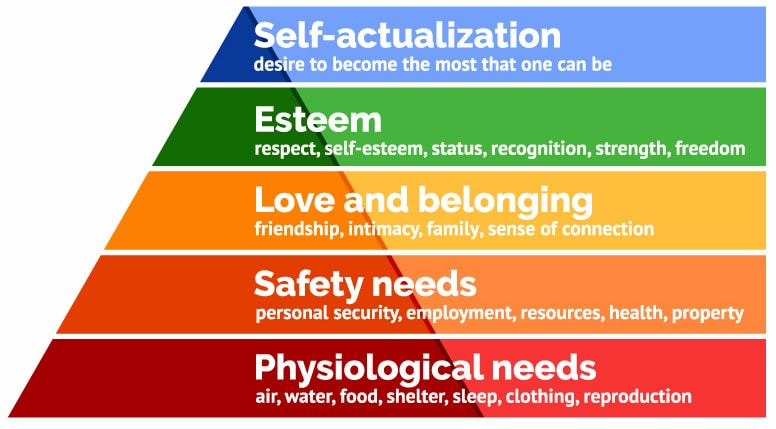
Maslow’s famous hierarchy of needs, proposed by the American psychologist Abraham H. Maslow, is based on the idea that every human being strives hard to meet his personal and professional needs. It is a scheme that presents a hierarchical division in which the needs considered of lower level must be satisfied before the needs of higher level. According to this theory, each individual has to perform a hierarchical “escalation” of needs to achieve his full self-realization. For this, Maslow defined a series of five needs of being, arranged in the pyramid below and explained one by one:


Figure 1- Maslow Hierarchy Needs

Where there are the primary (basic) needs that are the physiological and the safety needs and the secondary needs, which are the social, esteem and self-realization. Below is an explanation of each one:

2.2 Physiological needs

They are those that relate to the human being as a biological being. The most important are: the need to stay alive, to breathe, to eat, to rest, to drink, to sleep, to have sex, etc. At work: Need flexible hours, physical comfort, work intervals etc.

2.2 Safety needs:

Are those that are linked to the need to feel safe: without danger, orderly, safely, to save jobs, etc. At work: stable employment, health insurance, life insurance, etc. At work: Need for job stability, good pay, safe working conditions, etc.

2.3 Social needs:

They need to maintain human relationships with harmony: to feel part of a group, to be a member of a club, to receive affection and affection from family members, friends and people of the opposite sex. At work: Need to win friendships, maintain good relationships, have superiors, etc.

2.4 Needs of esteem:

There are two types: the recognition of our abilities for ourselves and the recognition of others of our capacity for adequacy. In general it is the need to feel dignified, respected by you and by others, with prestige and recognition, power, pride, and so on. Self-esteem needs are also included. At work: Responsibility for results, recognition by all, promotions throughout the career, feedback etc.

2.5 Self-realization needs:

Also known as growth needs. They include achievement, harnessing all of one’s potential, being what one can be, doing what one likes and is able to achieve. Relates to the needs of esteem: autonomy, independence and self-control. At work: Challenges at work, need to influence decisions, autonomy, etc (Lester, 2013)


3 What is the role of the carer and multidisciplinary team in assisting the person with dementia, what practices need to be implemented, what care settings are available?

The multiprofessional team plays a fundamental role in the orientation of the family, institutional caregiver or contracted because it is the team’s role to guide patients and family members about appropriate care with to patient and caregiver health quality standards. Thus, as health educators, professionals should also offer subsidies lay caregivers to choose the alternatives during the care they take without this function harming their health. In this context, the caregiver and the family are fundamental for the care of elderly people with Alzheimer’s disease in the home environment.

Whereas in its majority of the family members are neither physically prepared nor psychologically to live and take care of these older people, access to information on pathology and how to develop home care, which requires the follow-up of a multiprofessional team to provide the support and guidance from the implementation of programs with groups to support family members who take on the role of caring of the elderly with Alzheimer’s disease.

The multiprofessional team has the role of facilitating transmission of diagnosis, acceptance of treatments, relief of side effects, changes positive results in the patient’s lifestyle and his family, in addition to the professional approach with the social and emotional aspects of the patient, enabling a practical learning about the integrity and humanization of care. The diagnosis of Alzheimer’s disease for the family it is a moment of impact in the face of reality which highlights the need to tackle a new family situation (Australia, 2018).

Thereafter, they arise for the family caregiver difficulties such as loneliness, and, often, the lack of the necessary support of the other members of the family. With the support of health professionals, caregivers get to live better with their limitations in the care of the elderly with Alzheimer’s disease, group of caregivers, it is possible to share experi-difficulties, fears and conflicts with people who live similar situations.

The care of a person with dementia is important to their emotional well-being. However, people with Dementia generally are not able to start activities or entertain themselves. Here are some suggestions that may be helpful:

3.1 Develop a flexible attitude:

Everyone has days when feel very or very low energy and your friend or family member may be tired the day you visit. When things do not go as planned, remember that your visit continues to be important, both for you and the person you are visiting .

3.2 Be gentle with yourself:

Visiting a person with Dementia can sometimes be sad and difficult, so you may need support. Maybe you can take a supportive friend with you or plan to do something nice for yourself on the way home.

3.3 Take something with you:

It can stimulate the involvement of the person you are visiting, taking with you a magazine or newspaper. Together, you can read interesting articles or take a quiz. Carry flowers, candy or old photographs / postcards. These can become an activity that helps stimulation and reminiscence.

3.4 Establish a visitation ritual:

On all visits, say and do the same things on arrival and departure. This will help your relative or friend. Introduce yourself upon arrival. For example, say, “Hi, Mom, it’s me, Elisabete, your daughter.” Remembering your name and your kinship reduces the anxiety of your friend or relative. Do not make him guess.

3.5 Write letters and postcards:

Write together a letter to an ordinary or family friend. This can promote and maintain important connections in the person’s life with Dementia.

3.6 Introduce yourself to the team:

If you visit a residential care unit, introduce yourself and report your degree of relationship to the person you are visiting.

3.7 Silence is not a negative thing:

Try to learn to enjoy the moments of tranquility.

3.8 Provide a drink:

Will a cup of coffee, tea, or a glass of water help your friend or family member drink liquids, socialize, and keep the “old ones”? standards of hospitality.

3.9 Talking is not everything:

Embrace, massage hands and neck and shake hands, can replace or complement the conversation.

3.10 Start making a book of important things to remember:

This can be written and read by all visitors and function as a stimulant of the memory of your friend or relative.

3.11 Make a book of life:

This is a great way to validate the life of your friend or family member and remember ancient deeds. Build it during the visits. This project can make your time together even more enjoyable and special.

3.12 Consider performing tasks:

Sew labels on clothing, help at mealtimes, or take the person you are visiting for a walk. This in addition to benefiting the person, will maintain their vital role and help you feel useful and important. It will also assist the team of the residential unit.

3.13 Play an instrument or sing:

If you are a musician, consider playing an instrument or singing to your friend or family member. The music promotes relaxation, the return of pleasant memories and feelings of tranquility and security.

3.14 Carry an animal or your pet with you:

Visiting a beloved pet can improve the emotional health and well-being of your friend or relative. If the visit takes place in a residential home, talk to the team before taking the animal with you.

3.15 Know that your visit makes a difference:

People who live in residential homes need emotional support for their well-being and when they have regular weekly visits they are less likely to be depressed.

3.16 If necessary, talk to someone:

There are many issues around changing roles and the sadness that affects the families, friends, and caregivers of people with Dementia. It is very important to take care of yourself (Monahan, 1993).

Conclusion

4 State the current approaches towars developing quality services for people with dementia.

According to ADI (2013) the National Dementia Plans are the most powerful tool in transformation of national dementia support and treatment. Plans help governments to ensure that social and health care systems are well structured and adequately funded to ensure high quality support and treatment available to people living with dementia today and in the future. According to the same report, in October 2013, 19 countries had national strategies outlined for the insanity. Since some of the plans are already in their 3rd edition, which means that they were implemented, evaluated and updated.

For the construction of this framework, all the National Plans for the found in English. After this selection a according to the criteria proposed by Alzheimer Disesase International (ADI). National Plans for dementia raise awareness of stigma reduction; specific training in dementia for health care professionals and family caregivers and timely access to diagnosis and treatment. Access to diagnosis is particularly relevant in view of the account that, overall, people are under-diagnosed., (Alzheimer’s Disease International, 2015)

There are few countries that do not explicit the care philosophy that informs the plan and almost all, in a more or less explicit way, present the Person-Centered Approach with dementia as the following resolutions: Resolution nº133 / 2010 – Recommends recognition of dementia as a national priority and the creation of a National Dementia Program. Resolution 134/2010 – Recommends that the dementia approach be considered priority, a national intervention plan for dementias and necessary measures to provide adequate support to patients and their families (Davison, et al., 2012).

References

  • Australia, D., 2018.

    Dementia Australia.

    [Online]
    Available at:

    https://www.dementia.org.au/

    [Acesso em 07 January 2019].

  • Buchanan, R. J., Wang, S. & Huang, C., 2001. Analyses of nursing home residents with HIV and dementia using the minimum data set..

    Journal of Acquired Immune Deficiency Syndromes,

    , 26(3), pp. 246-255.
  • Cerejeira, J., Lagarto, L. & Mukaetova-Ladinska, E. B., 2012. Behavioral and Psychological Symptoms of Dementia.

    Frontiers in Neurology,

    , 3(), pp. 73-73.
  • Davison, T. E. et al., 2012. An evaluation of a national program to implement the Cornell Scale for Depression in Dementia into routine practice in aged care facilities..

    International Psychogeriatrics,

    , 24(4), pp. 631-641.
  • Ireland, T. A. S. o., 2018.

    Information for the Media.

    [Online]
    Available at:

    https://www.alzheimer.ie/About-Us/News-and-Media.aspx

    [Acesso em 07 January 2019].

  • Lester, D., 2013. Measuring Maslow’s Hierarchy of Needs.

    Psychological Reports,

    , 113(1), pp. 15-17.
  • Marzanski, M., 2000. On telling the truth to patients with dementia.

    Western Journal of Medicine,

    , 173(5), pp. 318-323.
  • Monahan, D. J., 1993. Assessment of Dementia Patients and their Families: An Ecological-Family-Centered Approach.

    Health & Social Work,

    , 18(2), pp. 123-131.
  • Nigam, Y., Knight, J., Bhattacharya, S. & Bayer, A., 2012. Physiological Changes Associated with Aging and Immobility.

    Journal of Aging Research,

    , 2012(), pp. 1-2.
  • SUS, 2017. Clinical Review – Dementia.

    RegulaSus,

    1(1), p. 11.
  • Trépel, D., 2011. Informal Cost of Dementia Care – A Proxy-Good Valuation in Ireland.

    Economic and Social Review,

    , 42(4), pp. 479-503.

The Development of the Social Model of Disability

“In recent years there has been … a significant shift in the definition of disability from a medical orientation … to a socio-political perspective” (Hahn 1997, 172). In a context of equality, describe and evaluate significant differences between medical and social models of disabilities.

In my essay I will discuss the movement from the medical model of disability to the social model of disability and how it has moved from an individual perspective to an environment/socio political perspective.

I shall first give a description of what both models entail and consist of. I will be looking at certain readings from the course to do so, including the papers from Mike Oliver, Colin Cameron, John Swain and Sally French, Jenny Morris and Shelley Tremain’s paper on Foucault’s Governmentality, and critical disability theory.

Firstly I will describe what both models entail. I shall then evaluate the major differences and major implications both models have on society, by looking at the differences between them, in the way that they evolved. I shall also look at how the affirmation model has a crucial role to play in the development of the social model. These models of disabilities are particular understandings of disabilities, within the period of time that they were made. The relationship between disability and society has been ever changing over time. It has been different in the past, it is different today and it will be different again in the future. Why is this though? Foucault thinks that it was society’s ways of managing a problematic element of society. So these changes that we see within our theories of disabilities, is perhaps more a reflection on the way in which society is managing these problem elements of society.


Medical Model

The medical model of disability quintessentially states that the disability lies with the individual. “Any economic or social deprivation encountered by disabled people was located within the individual and their impairment.” (Swain, French, 2003).

It is inherent in the person. This illness or “disability” effects the person in their day to day lives, leading to a diminished quality of life, and may cause serious implications to how one is to lead a “normal” life and the disadvantages that this may cause the individual.  The medical model believes that the way to approach disability or illness is to identify the illness or disability within the individual and then look for a way to “cure or treat” it. It is done by the use of medical professionals, who are trained to deal with such “disabilities”. Foucault speaks of the “psy” sciences and how their influence somewhat shows how the medical model approaches the matter of disability. It is/was seen as a compassionate outlook that with better funding and training of these experts would lead to a more profound view of these individuals needs and there for, be advantageous in helping them have a more “normal” life. The medical professionals are seen within this model as the fundamental responsibility in the area of disability. Off course this was the first model written up and there have been advancements and different outlooks as to what disability actually is or the way it is portrayed. This I will look at later. However staying with the medical model, I would like to look at some of the advantages of this first before we look at any other models.

Although there is a huge critique to the medical model and it is undoubtedly outdated, there are some positives from it. It does provide support to the individual or “disabled” person who needs help.  It gives the individual a better understanding of their impairment and in doing so provide the tools to be pro active in their daily lives. Chatting to medical professionals would inspire a positive reaction, as it makes their situation more “normal” and acceptable to the person. It helps create a better understanding to the individuals needs, and to use the term loosely “normalise” their situation somewhat. However the implication of a “cure” being the only solution has many more negative responses than it does positives. However I do feel it important to point out, that this model was the first significant shift in support to those that needed it. It was the first small step in the conversation of what disability actually is. However dated it is, it still provides the foundation and promotion in awareness to a field which is evolving every second. Our awareness and knowledge has vastly improved and will continue to do so with more open conversation.


Social Model

A change in the way we understand disability and society.

This denies anything to do with personal characteristics or flaws.

Disability is the outcome or a product of the relationship between the individual and the society which they live in. This society creates barriers which exclude people, and it is these barriers that create disability. Disability is therefore not a personal characteristic; it’s a social or a political product. As Mike Oliver says, what produce’s a disability is the barriers presented within society. This can be a number of things, handles on doors too high, doors wrong size etc. It is basically a form of discrimination. The social model encourages us to think about disability as a question of equality that will produce a different mindset, in to how we approach researching the matter.

The social model evolves in a way where governmental issues are not just to provide financial support or assistance to those who need it, but to improve the civil rights of these individuals. The “disability” is a social construction of environmental matters. This can be broadened to include attitudes within society or social behaviours. These behaviours are a result of the attitudes of the institutions that exist within our society and the values in which they reflect. This influences the way in which society as a whole views what disability is, and what is normal in the range of the functionality of human beings.

“All disabled people experience disability as social restriction, whether those restrictions occur as a consequence of inaccessibly built environments, questionable notions of intelligence and social competence, the inability of the general population to use sign language, the lack of reading material in Braille or hostile public attitudes to people with non-visible disabilities”. (Oliver, 1990)

This model approaches the matter of “disability” in a way that other minority groups are stigmatized. The “disabled” are also a minority group, within these social and political structures in place. These structures restrict and limit opportunities for the individual as a result of the institutional values and legal constraints that exist within our modern day society. This restricts and almost victimises the individual, limiting their opportunities to live a “normal” life. The problem exists within the socio-political framework and how people with impairments are seen. This model brings a new found attentiveness on the deeper issues that are seen in what disability is. Foucault’s idea on governmentality has been related directly to these factors within disability. He speaks of the social constructs in place within society and their affect on it. How this minority group, “disabled” have suffered from the medical model protocol and how their “subjectification” has been the ramifications of this. These are a direct result of his ideas of governmentality, through what he calls “bio-power” or “bio-medicine”. Perhaps it is important to point out that Foucault didn’t write specifically about disability. His first major work did explore what he called madness and that could be construed to what disability is, however I’m more interested in his ideas of governmentality and how it relates to the idea of what disability is today. He was not directly talking about disability. But these ideas heavily influence the evolution within the subject disability and equality.


Focault

Foucault’s works helped in the shift from the medical to the social model, and are influential in how we evolve even further to our understanding of what disability is.

So how do we relate Foucault in relation to evaluating the differences between the medical and social models?

Shelly Tremain says in her article,” politicized conceptions of disability and the increasing consolidation and visibility of the social movement, that spawn have predicated significant social change.” (Tremain, 2005)

By this she means the “normalisation” of what disability is, and how Foucault’s idea of governmantality, especially to do with bio power has led to this new found understanding of what disability is.

I will focus on Foucault’s ideas as they now can be used as critical reflections on existing practices in regards to how disability is perceived. Foucault speaks of subjectivication and how human beings are been made subjects of, by the very institutional practices that exist in our society. By this I mean his object is to create a history of different modes by which our culture have been made into subjects. It can be said that it is like objectivication, which is a process of turning people into subjects by a process of domination, like those of the institutional practices we have today. There are three ways of doing so according to Foucault; dividing practices, scientific classification and self formation.

Foucault is interested in the relationship between knowledge and power. There is no distinguishing element between them, because as he sees it, they are two sides of the same coin.

“Power must be analysed as something which circulates, or rather as something which only functions in the form of a chain. It is never localised here or there, never in anybody’s hands, never appropriated as a commodity or piece of wealth. Power is employed and exercised through a net-like organisation. And not only do individuals circulate between its threads; they are always in the position of simultaneously undergoing and exercising this power”. (Foucault, 1980).

Disciplinary power or bio-power as he more commonly phrases it has a huge relationship as to how we see the relationship between disability and society. It is operated through surveillance and this is the key factor to managing people’s behaviour, which focuses on the human body. This surveillance permits knowledge and thus power in the management of these groups. It creates a sort of ranking order as to where people exist within the “norm”.  This circulating power can be seen in our schools, hospitals and many other institutions that exist within western society. But the surveillance Foucault talks off has become softer, in the sense that we now cannot see who is doing the surveillance. It has now taken a somewhat invisible form through modern technology in the use of CCTV, smart-phones, credit cards etc. So the subject is visible at all times through these mechanisms. You are unaware that you are been incorporated in power, within this mode of disciplinary power, like keeping to timetables at work or schools. It creates a kind of docile body and in doing so regulates the subjects in question. Those who are incarcerated within different types of institutions are more subject to these practices through power and knowledge. It is easier to gather information on them. These institutions support these practices. The purpose of this disciplinary power is to produce these efficient docile bodies, because the more docile they become, the more use they have for them within society.

The dividing practices that exist within these practices of power and knowledge are fundamental in linking how disability is perceived and how it leads to inequality. Those individuals who are earmarked as been problematic are then segregated from the “normal” society. Many examples are still seen today like hospitals or prisons. But there are also less direct ways incorporated. Through what Foucault calls, scientific classification, or with the use of the, “psy’s” . He notes that medicine operates on two strands; one focusing on the individual (disciplinary power) and one focussing on the population as a whole or groups of the population (Bio-power). These scientific disciplines emerged and developed their own individual classifications based on the knowledge of each of the disciplines involved. Along with these institutions, they developed a “panoptic practice”, something which Foucault says guarantees order. The use of the word panoptic is a metaphor for the relationship of these institutions in social control and the power/knowledge concept, and how through this invisible surveillance people became subject to what the social norm is. These people were ignorant of what constituted their best interests, especially in relation to mental health and so these institutions were designed to relieve people of these flaws.

A leading example is that of our primary school system. These were set up to defuse flaws that existed with its subjects. Impaired ambition, impaired in ways with loyalty to the state could be some examples. This regulation of people through disciplinary power is the governmentality that Foucault speaks of. It is a process of identification, then institutions are created in order to set up surveillance, then social order than be controlled. This incites a reflection on the role of the human sciences in organising and identifying and then justifying a response to these perceived impairments. There is a knock on effect in this type of regulation, as the policies and services that are provided and created are more about the regulation and management of these potentially troublesome populations, rather than providing equal access to services, to the population as a whole.

Foucault’s work has been used as a critical reflection on the medical model, and how disability is not what it is portrayed in it; as an individual problem. Rather the stepping stone of the social-political model is a result of this critical thinking in regards to how we view disability and to what is a perceived impairment. These questions need to be asked in regards to social policy making and decision making in the field of disability. The findings have been crucial in the progress of disability studies, and the formation of the social model is proof of this.  I will take a look now at works from both French and Cameron in their critique of the social model and how perhaps a newer model would lessen the gap of inequalities within the field of disability.


The Affirmation Model and beyond

The social model has had many people criticising it. Mike Oliver who was its founding father, in his defence does claim that it is not the absolute answer to lessening the gap of the inequalities we see.

“I have never seen the social model as anything more than to improve peoples lives, and I am happy to agree that it does not do many of the things it opponents criticise it for not doing”.(Oliver 2013).

I would like to look at the idea of the affirmation model proposed by swain and French and how it can help lessen the gap between disability and the inequalities which exists in our culture. They claim that if a more personal experience was incorporated in non catastrophic way, a better understanding may be pooled.

“It is essentially a non-tragic view of disability and impairment which encompasses positive social identities, both individual and collective, for disabled people grounded in the benefits of lifestyle and life experience of being impaired and disabled”.(Swain and French 2000).

The proposal of the affirmation model is not a complete critique on the social model, rather it is a stepping stone to “normalise” what it is to be disabled or to have impairment.  The main critique is however that the social model disassociates impairment from disability. It states to claim that having a perceived impairment is not a tragedy and that there are benefits from having impairments too. Also it points out that certain “impairments” are not addressed in the social model. They say that pain and chronic illness have not been addressed by the social model. These are not only restricted to disabled people, as non-disabled people experience both of these things too. Jenny Morris also criticises the social model in so far as it predominantly looks at the social barriers in society and it fails to take a look at personal experiences of disability. “There is a tendency in the social model theory to deny the experiences of our own bodies”. She argues that because disability is seen as mainly a social and political issue, a barrier has been placed to the acknowledgment of the effects that having a perceived impairment can have on an individual.

The affirmation models main progression from the social model is that it brings to light personal experiences to those individuals with “impairments”. These experiences have shed some light on how they feel; that their “impairment” has actually made their lives better and less complicated than if they didn’t have. Examples given are for women in society to form relationships, have kids etc. Those with perceived impairments are not under the scrutiny and pressure of society’s norms. They are left to their own devices, and to actually live a life which they want to live, not under the watch of our society’s invisible protocol of behaviour. Swain and French also discuss how being born with an impairment can give a clarity or perspective on life that one would not have being non-disabled. I think there is a lot of power within this statement. In its essence it means that whatever way you enter the world, maybe its through poverty, having an impairment or having no family or support network; all these things

can

present a problem in how we view what normal is in our society. It is up to the individual to live the way they want to live. Whatever social structures or barriers that might be in place, having perspective can always make you overcome any obstacle. I feel this is the main thought of disabled people. Life to them is normal. Their impairment is just part of their existence and who they are. Just like those who came from poverty. It is part of your identity and nothing can change that; being true to who you are and proud of it is the key to a life of fulfilment. The problem lies again in what Foucault says about regulation or defining the norm. And once this exists, there will always be barriers in place in society and hinder the prospect of collectively embracing every person as unique. This is why the affirmation model is fundamental to breaking down these societal “norms” through shared experiences of those with impairments, both collectively and individually. It will only help unify the disabled world with the non disabled world. Also with the development of the affirmative model, it signifies an ownership with impairment. This will help bring us further away from the medical model,  with new awareness of what medical intervention is actually doing to our bodies, and if we choose to accept it.

Cameron builds on the affirmation in his paper by suggesting that impairment is not a problem for those with impairments, but rather it is manufactured by those around them. They only become aware of their impairment when in a social situation, i.e. someone else’s awkwardness in their company. This social awkwardness makes impairment more relevant to those who have it. They become negatively aware of their own bodies because of these types of situations. He feels that because of these barriers that exist, that those who don’t have impairments struggle to deal with situations like this. They almost have a pitiful remorse in these types of situations. This is not that persons fault however; it is just another element of the difficulties faced with breaking down the barriers that exist between the disabled and the non disabled world. Because of the governmentalty that Foucault speaks of, we have been alienated into different groups, and this divide has created a social tension which exists in these types of situations.

“When he became aware of the gaze of the waiter standing behind him however his mode of awareness changed. He became an object for the other, and aware of himself as an object of scrutiny, fascination and perplexity. In other words he became aware of himself as a disabled person”. (Cameron, 2015)

Cameron relays on Foucault’s ideas when he talks of industrialisation and that before it was introduced, people with perceived impairments were included within community life. However post industrialisation, a divide made it self present as to what normal behaviour was, in relation to the factory setting. This element of capitalism cast aside those who were not fit to keep up with these production norms, and so the normal standard of behaviour was redefined by this movement. This was the catalyst for them to be” medicalised”. I find this point he makes very interesting. We have seen a transcending plot through how institutionalisation has been the founding father of what defining the norm is. However at the root of all this is the capitalist society in which we all partake in. Money breeds power. Almost like what Foucault resonates, that knowledge and power are two sides of the same coin. The element of money is a contributory factor to power, and holds a big grip on society today. Social structures today are set up in allegiance with how capitalism operates. It casts aside those who they feel cannot maintain a normal input to its mode.

The affirmation model is the next step into breaking down the social relationship that exists in the field of disability. Education and awareness within the population as a whole is the only way these barriers can be removed.

I have hoped to show that with the evolution of these models, steps are being made toward a greater understanding to what disability is and how it is portrayed in the world today. The stare of the medical model still lies in the root of the division and social awkwardness and constraints that still exists. Oliver’s social model is the stepping stone in a new found awareness of what disability actually is. It is a social construct of Foucault’s work on governmentality or more specifically bio-power.  The social-political model brings light to the structural barriers that must be overcome to lessen the divide between disability and inequality. These barriers are the foundations of the oppression that exists within the disability world. With this new found understanding, Swain and French’s Affirmative model came about. It sheds more light on what it is to have a perceived impairment. Its main critique of the social model is that it disassociates impairment from disability. Its main objective is to get into the nuances of what living with a perceived impairment is like, looking at personal experiences. It takes into account what is like to live with a perceived impairment and not simply shove the issue to one side. Taking these accounts into consideration can only bring about a more non tragic notion to what disability is. Cameron builds on this again and that the non-disabled world are guilty of making disabled person more aware of their impairments through socially awkward behaviour.  So it must be a collective movement in order to eliminate this crazy divide in our population in which social and political structures have put in place.  The regulation that Foucault spoke of is at the epicentre of this inequality that exists. We are all living and breathing human beings, sharing a space on this planet, in order to live. What is it to be normal or abnormal? How can we express our true feelings in a society which is set up to repress that? New found awareness and open conversation is vital to breaking down these social constraints of which society employs. I think it only right to let Foucault have the last word.

“Maybe the target nowadays is not to discover what we are, but to refuse what we are…the conclusion or would be that the political, ethical, social, philosophical problems of our day is not to try and liberate the individual from the state, and from the state’s institutions, but to liberate us birth from the state and type of individualization which is linked to the state”. ( Foucault,1982)


Bibliography

  • Cameron, C. (2015). Turning experience into theory: The affirmation model as a tool for critical Praxis.

    Social Work and Social Sciences Review

    ,

    17

    (3), 108-121.
  • Essays, UK. (November 2018). Linking Foucault To Critical Disability Theory. Retrieved from https://www.ukessays.com/essays/politics/linking-foucauldian-theories-to-critical-disability-theory-politics-essay.php?vref=1
  • Foucault, M. (1982). The Subject and Power.

    Critical Inquiry,


    8

    (4), 777-795
  • Foucault, Michel & Gordon, Colin (1980). _Power/Knowledge Selected Interviews and Other Writings, 1972-1977_.
  • Oliver, M. (2013). The social model of disability: Thirty years on.

    Disability & society

    ,

    28

    (7), 1024-1026.
  • Oliver, M. (1990).

    Politics of disablement

    . Macmillan International Higher Education.
  • Morris, Jenny, Pride Against Prejudice, The Women’s Press, London, 1993, p. 10
  • Scotch, Richard K, Models of Disability and the Americans with Disabilities Act, 21 Berkeley J. Emp. & Lab. L. 213 (2000).
  • Swain, John & French, Sally. (2000). Towards an Affirmation Model of Disability. Disability & Society – DISABIL SOC. 15. 569-582. 10.1080/09687590050058189.
  • Swain, J., French, S., & Cameron, C. (2003).

    Controversial issues in a disabling society

    . McGraw-Hill Education (UK).
  • Tremain, S. (2005). Foucault, governmentality, and critical disability theory: An introduction.

strategic management action plan (MAP)

strategic management action plan (MAP)

Here are a list of some suggested health care topics include the following:

‹?ú Nursing Recruitment and Retention in Health Care

‹?ú Continuing Education Challenges

‹?ú Patient Care Technology

‹?ú Staff Safety on Duty

‹?ú Patient Safety in Hospitals

‹?ú Stakeholder Relationships

‹?ú Community Education Programs

‹?ú Disaster Preparedness

‹?ú Medical Director Involvement

‹?ú Quality Improvement Program for Health Care

‹?ú Patient Satisfaction

‹?ú Rural Health Issues

‹?ú Funding for Hospital Programs

‹?ú Neonatal/Pediatric Services.

Whose Prescription Pad Is It Direct-to-Consumer Pharmaceutical Advertising Explained


Whose Prescription Pad Is It? Direct-to-Consumer Pharmaceutical Advertising Explained


Introduction

Direct-to-consumer pharmaceutical advertising (DTCPA) is the industry that advertises directly to patients by pharmaceutical companies. Over the past few decades, this form of health communication has taken off and is now labeled to be the utmost prominent form of advertisement. These companies claim their goal is to educate patients and motivate them to take responsibility for their health. With the help of the media, pharmaceutical companies are able to infiltrate the homes of the average American and suggest a prescription medicine.

This report will touch on five main topics: policies in foreign countries regarding DTCPA, the rules and regulations applied in America, the link to the opioid crisis, the annual cost of advertising, and the potential effects on the public.


Data Section


Policies in Foreign Countries

DTCPA is forbidden in Europe. The European Union argues that bypassing qualified healthcare professionals and communicating directly to patients is an unethical practice for pharmaceutical companies to partake in. In the European Community, abolishing the ban is a controversial issue as the pharmaceutical industry continues to grow. Those in support of abolishing the ban argue that DTCPA is an exceedingly effective marketing strategy (PMC). The European Parliament last met to discuss modifying the prohibition in 2007 but stuck with their decision that direct advertisement is not appropriate.

Currently, DTCPA is accepted as a legal form of advertising in only two countries, New Zealand and the United States. In New Zealand, however, general practitioners have recently come forward and demand they be banned, as they “are particularly upset by the misleading content of many of the advertisements and the commercial pressure this puts them under to prescribe advertised drugs, even when they’re no better than existing alternatives or are not suitable for the patient” (PubMed).

Canada allows advertisements that either address a medical condition and encourage people to talk to their doctor regarding possible treatments, or they can name the product, include details on strength, dose, and cost, but cannot guarantee effectiveness. They can do simply one or the other, but not both (Open Medicine).


Rules and Regulations in America

Direct to consumer advertising is regulated by the Food and Drug Administration (FDA). In 1938, the Federal Food, Drug, and Cosmetic Act was passed, authorizing the FDA to approve pharmaceutical products for advertisement in the U.S. Later, the FDA was granted the power to regulate the labeling and marketing of prescription drugs by Congress. After a discussion in 1969, the final regulations placed on these advertisements included: must not be false or misleading, must present an equal balance of information explaining both the benefits and risks, must provide relevant details, and include a brief summary of every risk present on the medication’s label (NEJM).

In 1997, the FDA issued a regulation stating that advertisements could include just the major risks to meet the requirement of a summary and direct viewers to obtain a full summary elsewhere, such as a toll-free number, their healthcare provider, or from the internet. In 2004, the FDA eased the rules a little more and stated companies just needed to provide a simplified brief summary, this change allowed companies to just touch on the major risks in simpler terms that would be easier for the average viewer to understand (PubMed). Today, Americans argue that the regulations placed on these ads are too relaxed, resulting in the amount of pharmaceutical advertisements on television (Journal of Ethics).


Link to the Opioid Crisis

The opioid crisis is a term used to group the mass increase and abuse of prescription drugs and Opium derived substances. The number of deaths caused by opioid abuse in America tripled between the years 1990-2007. Ensuing around the time DTCPA began to skyrocket, most looked to prescription drug ads as the cause.

Evidence points to this being a cause of increased population drug-use rates, as the advertisement of a pain reducing medicine appealed to consumers (OpenMedicine). These advertisements for medications that claimed to be anti-inflammatories and reduce pain were being seen everywhere and patients began requesting the prescriptions by their name. This was demonstrated in a recent survey in which more than one-third of respondents reported requesting information from their physicians about a drug they had seen or heard advertised, and nearly three quarters of patients directly requested the drug by brand name (Emerald).


The Annual Cost of Advertising

Direct-to-consumer advertisements have shown the fastest growth from 1996 to 2016 in terms of medical marketing. The expenses of DTCA were reported to be at $2.1 billion in 1997, representing 11.9 percent of the nation’s spending. In 2016, $9.6 billion was invested in DTCA, reflecting 32 percent of total spending (JAMA). Before 2005, DTCPA was estimated to be growing by 20 percent per year, raising the price of every dollar spent on DTCPA by an approximated $2.20 to $4.20 (PubMed).

It was reported in 2018 that pharmaceutical companies spent over $64 billion on advertising, a 4.8% increase from the year before. The well-known anti-inflammatory Humira, came out on top with having spent $487 million on media advertisements, a 13 percent increase from 2017. In second place was Lyrica, at $272 million. Following Lyrica was Xeljanz, spending $257 million. Spending for Lyrica is expected to decrease dramatically in the next year, as it lost patent protection. Since being approved by the FDA in 2004, Lyrica was deemed to be a best-selling product, bringing in sales of $3.46 billion (Kantar).


Effects on the Public

While DTCPA is a controversial issue in America, there are well-balanced arguments for the benefits and risks. Those who support DTCA claim these advertisements educate consumers and encourage them to take responsibility for their wellbeing and become aware of possible treatments (PubMed). Supporters also argue that it urges patients to contact their physician.

A 2004 FDA survey revealed that 27 percent of Americans had made an appointment with their doctor to discuss a condition they had not previously mentioned after seeing a drug advertisement (Annals of Family Medicine). Those against DTCPA claim that patients are often misinformed by these advertisements. A point often made debates that important information is omitted from the ads.

In one report, 82 percent of DTCPA advertisements made factual claims for the marketed drug; however, only 26 percent of ads identified the risks or causes of the disease (PubMed). Another argument is that the ads over emphasize the benefits. A study conducted in 2007 proved that television commercials promoting a drug spend more time on the benefits that the risks (ProQuest).

New Zealand associate professor at the Christchurch School of Medicine and Health Sciences, Dr. Dee Mangin, is a critic of DTCPA and argues that, “The truth is direct-to-consumer advertising is used to drive choice rather than inform it,” most commonly seen in expensive name-brand companies. In addition, these big pharma companies are enticing doctors to prescribe their product.  Surveys carried out in New Zealand and in the USA show that when a patient asks for a specific drug by name they receive it more often than not, as the doctors reported feeling pressured to prescribe the drug (World Health Organization).


Conclusion

While the exposure of DTCPA to the public remains a topic of great debate, existing evidence suggests that the influence direct drug advertising has on consumers is an equal balance of beneficial and damaging. Nonetheless, there is no doubt that improving current knowledge of the effects will produce significant results for the public of New Zealand and the United States, whether it be constructive or destructive and result in the abolishment of these ads. The opioid crisis in America is a problem still being resolved, but new evidence could potentially aid in understanding the roots of this epidemic.


Works Cited

  • Dave, et al. “The Impact of Direct-to-Consumer Advertising on Pharmaceutical Prices and Demand.”

    NBER

    , 6 May 2010, https://www.nber.org/papers/w15969.
  • “Direct-to-Consumer Advertising under Fire.” World Health Organization, World Health    Organization, 4 Mar. 2011, https://www.who.int/bulletin/volumes/87/8/09-040809/en/.
  • Harvard Health Publishing. “Do Not Get Sold on Drug Advertising.”

    Harvard Health

    , https://www.health.harvard.edu/drugs-and-medications/do-not-get-sold-on-drug-advertising.
  • “How Advertising Shaped the First Opioid Epidemic.”

    Smithsonian.com

    , Smithsonian Institution, 3 Apr. 2018, https://www.smithsonianmag.com/science-nature/how-advertising-shaped-first-opioid-epidemic-180968444/.
  • Iizuka, Toshiaki, and Ginger Zhe Jin. “The Effect of Prescription Drug Advertising on Doctor Visits.”

    Wiley Online Library

    , John Wiley & Sons, Ltd (10.1111), 28 July 2005, https://onlinelibrary.wiley.com/doi/full/10.1111/j.1530-9134.2005.00079.x.
  • Pharmafield. “Pharmaceutical Direct-to-Consumer Advertising in Europe.”

    Pharmafield

    , 1 Dec.  2005, https://pharmafield.co.uk/in_depth/pharmaceutical-direct-to-consumer-advertising-in-europe/.
  • “Pros & Cons – ProCon.org.”

    Prescription Drug Ads

    , https://prescriptiondrugs.procon.org/.
  • Velo, Giampaolo, and Ugo Moretti. “Direct-to-Consumer Information in Europe: The Blurred Margin between Promotion and Information.”

    British Journal of Clinical Pharmacology

    , Blackwell Science Inc, Nov. 2008 https://www.ncbi.nlm.nih.gov/pmc/articles/PMC2661977/.
  • Ventola, C Lee. “Direct-to-Consumer Pharmaceutical Advertising: Therapeutic or Toxic?”

    P & T : a Peer-Reviewed Journal for Formulary Management

    , MediMedia USA, Inc., Oct. 2011, https://www.ncbi.nlm.nih.gov/pmc/articles/PMC3278148/.
  • Weinmeyer, Richard. “Direct-to-Consumer Advertising of Drugs.”

    Journal of Ethics | American Medical Association

    , American Medical Association, 1 Nov. 2013,   https://journalofethics.ama-assn.org/article/direct-consumer-advertising-drugs/2013-11.
  • Wilkes, Michael S. “Direct-To-Consumer Prescription Drug Advertising: Trends, Impact, And Implications.”

    Health Affairs

    , https://www.healthaffairs.org/doi/full/10.1377/hlthaff.19.2.110.


Theories of Genes and Cancer


The Wind in the Trees

In the late 1950s, Peter Nowell and David Hungerford, two pathologists from Philadelphia had found an unusual chromosomal pattern in chronic myelogenous leukemia (CML) cells. In CML cells, Novell found that one copy of chromosome 22 had its head lopped off. Novell called this abnormality the Philadelphia chromosome after the place of discovery.

In 1973, a hematologist in Chicago named Janet Bowley followed this study, looking for the missing pieces of the Philadelphia chromosome. She found a pattern. The missing head of chromosome 22 had attached itself to the tip of chromosome 9. And a piece of chromosome 9 had attached itself to chromosome 22. This genetic event was called a translocation – the transposition of two pieces of chromosomes.

Bowley found this same translocation in the cells of every CML patient. Cancer was not disorganized chaos, but an organized chromosomal chaos resulting from specific, identical mutations. Chromosome translocation can create new genes called chimeras by fusing two genes formerly located on two different chromosomes. The CML translocation, Rowley postulated, had created such a chimera.

***

In 1969, Alfred Knudson, a geneticist at MD Anderson Cancer Center in Texas, wanted to capture a pattern of inheritance of cancer by studying retinoblastoma, an hereditary eye cancer. Retinoblstoma has two distinct variants, an inherited “familial” form and a sporadic form. Children who suffer from the familial form may have strong family histories of the disease, and they typically develop tumors in both eyes. Children with the sporadic form never have a history in the family and always have a tumor in only one eye.

By studying cohorts of children with the two types of cancers, Knudson discovered the cohorts developed cancers at different “speeds.” Inherited retinoblastoma cancer develops at early ages, typically between 2 to 6 months old. Sporadic retinoblastoma cancer develops at older ages, typically between ages 2 to 4 years old.

Humans inherit two copies of every gene, one from each parent. Knudson postulated that both copies of the Retinoblastoma (Rb) gene needed to be inactivated through mutation to develop retinoblastoma. Some children inherit one mutated version and one normal version of the Rb gene. The inherited mutation is “the first hit.” These children are thus predisposed to the cancer, and only a single additional genetic mutation is needed for them to develop the cancer. So they develop cancer at earlier ages. Sporadic retinoblastoma develops at later ages because two independent mutations have to accumulate in the cell. Knudson called this the two-hit hypothesis of cancer. For certain cancer-causing genes, two mutational “hits” are needed to produce cancer.

At first glance, Knudson’s two-hit theory seemed at odds with the src gene, which only required one activated copy to cause cancer. The answer is because the two genes perform two different functions. The src gene creates a hyperactive kinase that provokes perpetual cell division to cause cancer, while the Rb gene performs the opposite function. It is a cancer suppressor gene, or an “anti-oncogene.” It requires two mutation hits to inactivate such a gene.


A Risky Prediction

Risky prediction is a process scientists used to validate untested theories. For instance, the return of Halley’s comet in 1758 validated Newton’s law of gravity.

The first risky prediction involved Varmus and Bishop’s hypothesis on oncogenes. In the late 1970s, Varmus and Bishop had shown that the precursors of oncogenes, also called proto-oncogenes, already existed in all normal cells. They hypothesized that mutations in such proto-oncogenes caused cancer. To prove that they were right, we needed to the mutated versions of such proto-oncogenes inside the cancer cells.

How does one find such a gene? The MIT cancer biologist Robert Weinberg had an idea. If he transfers a fragment of the DNA containing the activated oncogene from the cancer cell into normal cells, then the activated oncogene should induce the normal cells to divide and proliferate, producing a foci out of the normal cells in the petri dish. By repeating this process and dividing the DNA fragments into smaller and smaller fragments, he should be able to isolate the culprit.

In the summer of 1979, a graduate student in Weinberg’s lab named Chiaho Shih went through the experiment using mouse cancer cells. He verified that the method worked for mouse cancer cells. They then moved on to human cancer cells.

Three years later in 1982, Weinberg isolated a gene called ras from human cancer cells. The mutated ras gene encoded a hyperactive protein permanently locked “on.” It was the long-sought “native” human oncogene, captured out of a cancer cell.

Meanwhile, two other scientists, Mariano Barbacid, and Michael Wigler had also independently discovered the ras gene in 1982.

The second risky prediction the hypothesis that retinoblastoma was caused by the mutation of two copies of Rb genes. Thad Dryja, an ophthalmologist and geneticist, suspected that the mutation responsible was likely a deletion of the gene. To prove the hypothesis, Dryja wanted to prove that the two copies of the Rb gene were deleted from the cancer cells.

Week after week, Dryja extracted the chromosomes from his big collections of tumors and ran his probe set against the chromosomes. Eventually, he saw a blank space in his probes. A piece of DNA was missing in probe H3-8 of the tumor cells. Dryja took his probe to Steve Friend who had a collection of normal cells in Weinberg’s lab. Friend applied the H3-8 probe to normal cells and isolated the gene on that location. Both copies of the Rb genes were indeed deleted from the cancer cells.

The third risky prediction involved the hypothesis that activated oncogenes cause cancer. We already knew that (1) activated oncogenes were present in cancer cells, and (2) they could be isolated from the cancer cells. To prove “causation”, we have to prove that activated oncogenes can create cancer in an animal.

In 1984, using transgenic mouse technology, Philip Leder’s team at Harvard created transgenic mice with an activated c-myc gene expressed in the breast cells. The mice developed small tumors in their breast late in life after pregnancy.

To test the roles of environmental stimuli and other oncogenes, Leder created a second OncoMouse with ras and myc expressed in breast cells. The mice developed tiny distinct tumors in their breasts in months, pregnancy not required. Scientists had created real, living tumors in an animal.


The Hallmarks of Cancer

Philip Leder’s experiment showed that scientists had created real tumors by manipulating two genes, ras and myc, in an animal. But activating two potent proto-oncogenes did not create the full syndrome of cancer in every cell of the mouse. It raised further questions about the genesis of cancer.

In 1988, using human specimens, a physician named Bert Vogelstein set out to describe the number of genetic changes required to start cancer.

Vogelstein studied how normal cells progress to cancer cells in colon cancer. He found a consistent pattern in his colon cancer samples. The genetic progression of cancer was a multi-step process. The transitions in the stages of cancer mirrored the transitions in genetic changes. Cancer cells did not activate or inactivate at random. Instead, the shift from a pre-malignant state to an invasive cancer correlated with the activation and inactivation of genes in a strict and stereotypical sequence.

Cancer cells are caused by mutations of genes in their DNA. Besides uncontrolled growth, cancer cells also can resist death signals, grow their own blood vessels, and metastasize throughout the body.

In January 2000, Robert Weinberg and Douglas Hanahan wrote the seminal paper, “The Hallmarks of Cancer” that gave the six essential changes in cell physiology that collectively cause cancer:

  1. Self-sufficiency in growth signals – gas pedal stuck on
  2. Insensitivity to growth-inhibitory signals- brakes don’t work
  3. Evading of programmed cell death (apoptosis) – won’t die
  4. Limitless replicative potential – uncontrolled growth
  5. Sustained angiogenesis – having its own blood supply
  6. Tissue invasion and metastasis

Strategies for the Dietary Control of Diabetes


A survey of the recent strategies for the dietary control of diabetes in the Middle East

INTRODUCTION

Significant changes in the political and socio-economic climates have been the hallmark of the last decade in the many of the countries in the Middle East especially those located in the territories of the Arabian Gulf. These changes have impacted in no small way on the demographics of the affected countries. Notable are the obvious shifts in age distribution and a perceptible increase in healthy life expectancy. Furthermore, there have been alterations in the conventional lifestyles of the people living in these countries perhaps due largely to westernization, rapid urbanization and industrialization (Abdella et al 1995). It is also worth mentioning that disease types, trends and or their prevalence have also changed dramatically. Prominent among these is diabetes.


Diabetes – delineation

The incidence and prevalence of diabetes have consistently increased in the last 20 years; these changes have paralleled environmental transformation as well as the adjustments to changes above mentioned (Abdella et al 1995; Zimmet et al 1977). The current projection of the World Health Organisation (WHO 2007) indicates that there will be further increases in the prevalence of diabetes in the Middle East. A working committee of the WHO on diabetes defined the disease as ‘

a metabolic disorder of multiple aetiology characterized by chronic hyperglycaemia with disturbances of carbohydrate, fat and protein metabolism resulting from defects in insulin secretion, insulin action, or both; the effects being long-term damage, dysfunction and failure of various organs’

(Alberti and Zimmet 1998). Diabetes is caused by a lack of the hormone insulin, which is produced by the β-islet cells of the pancreas. Glucose is the primary energy source for all cells and is provided by digestion of carbohydrates from the diet. Insulin enhances the body cells’ uptake of glucose from blood plasma. Hence, defects in insulin secretion, insulin action, or, most commonly, both leads to decreased uptake of glucose by the cells and an increase in blood glucose levels. Sustained increases in blood glucose level will lead to the excretion of glucose in the urine when such increases exceed the renal threshold of the molecule. This in turn leads to the typical symptoms of diabetes: excessive production of urine (polyuria) and extreme thirst (polydipsia). Fatty acids from fat stores are metabolized as an alternative energy source when the body senses a lack of glucose, the result is weight loss and fatigue – other common symptoms of diabetes (Maitra and Abbas 2004). The clinical profile of diabetes varies minimally between the countries of the Middle East. In Kuwait for example, because of the marked disparity between individuals in their age of diabetes onset, mode of presentation, and the degree of obesity, the clinical profile of the disease is heterogeneous (Abdella et al 1995).

Diabetes mellitus is not a single disease entity, but rather a group of metabolic disorders sharing the common underlying feature of hyperglycemia. Type 1 (early-onset diabetes or insulin-dependent diabetes (IDDM) and Type 2 (maturity-onset diabetes or non-insulin-dependent diabetes (NIDDM) diabetes are well known types and are characterized by the different metabolic processes of the disease (Alberti and Zimmet, 1998). Type 2 accounts for about 80% of the disease worldwide. The chronic hyperglycemia and attendant metabolic dysregulation may be associated with secondary damage in multiple organ systems, especially the kidneys, eyes, nerves, and blood vessels (Maitra and Abbas 2004).


The Role of Diet in the Management of Diabetes

Nutritional therapy is an integral part of the management of diabetes and plays a vital role in helping people with diabetes achieve and maintain optimal blood glucose level (United Kingdom (UK) Prospective Diabetes Study Group (UKPDS), 1990; Delahanty, 1998). The nutritional management of patients is based on evidence-based principles and recommendations for the treatment and prevention of diabetes and related complications (American Diabetes Association, 2002). These recommendations are based on evidence published in the international literature and from consensus and expert opinion as required (Ha and Lean, 1998). The benefit of tight control of both blood glucose and blood pressure in people with type 1 and type 2 diabetes has been demonstrated in several well controlled randomized large-scale studies (Diabetes Control and Complications Trial Research Group, 1993; UKPDS 1998a,1998b). Generally, the objectives of strategies for the dietary control of diabetes are complementary to the aims of medical treatment. Dyson (2002) reported that these includes but not limited to the following:

  1. Maintaining blood glucose within predetermined target range
  2. Minimizing the risk of hypoglycaemia for those patients taking insulin or oral hypoglycaemic agents
  3. Achieving weight loss in the obese patient
  4. Reducing the risk of long-term complications of diabetes
  5. Maintaining blood pressure and lipid levels within predetermined target ranges
  6. Improving and maintaining suitable quality of life. (Dyson 2002)


Rationale for the project

Contemporary management of diabetes places emphasis on the individual patient’s responsibility for diabetes control of blood sugars and of food consumption. The concept of self-care with regard to a recommended diet is thus considered important in order for patients to maintain normoglycaemia and reduce or prevent diabetes-related complications (Rubin and Peyrot, 1992; Rubin et al, 1997). The diabetic patient is expected to monitor his/her carbohydrate metabolism, energy expenditure and the effects of insulin or recommended medicaments on blood pressure and sugar levels. This inevitably demands a level of understanding about diabetes and of the effect of diet on the progression and or management of the disease. This survey will explore the individual patients’ approach to control or support the pharmacotherapeutic management of his/her diabetes using diet. The study will shed light on diabetic patient’s adherence to guideline dietary recommendations in the Middle East or on novel dietary strategies for the control of the disease. The results of this study is essential to health policies makers in the region and pivotal for governmental strategies to minimize the burden of the diabetic epidemics in the Middle East.


Using Kuwait as First Port of Call for the Middle East Diabetes Diet Study (MEDDS)

The middle east comprise a large region that covers parts of northern Africa, southwestern Asia, and south eastern Europe consisting of Bahrain, Cyprus, Egypt, Iran, Iraq, Israel, Jordan, Kuwait, Lebanon, Oman, Qatar, Saudi Arabia, Sudan, Syria, Turkey, United Arab Emirates, and Yemen. The ‘Middle East Diabetes Diet Study’ (MEDDS) will focus on Kuwait in its first phase. Implementation of the study in other countries of the Middle East will stem from its success in Kuwait following appropriate modifications to adapt the study tools to the settings and subjects of these countries.


Description of First Target site:

Kuwait is a relatively small country, (17, 818 km

2

in surface area) and is situated in the North Eastern part of the Arabian Peninsula. Kuwait shares the north and west borders with Iraq, is bordered on the south by Saudi Arabia and on the east by the Arabian Gulf. Total population of Kuwait in 2005 was 2, 867, 000 and over 88% of these were aged 15 and over; percent Urban population out of total population was 100% during the same period (WHO 2007). The prevalence of diabetes in Kuwait was 104,000 in 2000 and the projection for the year 2030 is 319,000; this will amount to about 44% of the projected total population (WHO 2007).

AIM AND OBJECTIVES


Aim:

The aim of this proposal is to develop a plan for the conduct of a cross-sectional survey of the recent (< 5yrs) strategies used for the dietary control of diabetes in the Middle East.


Objectives:

  1. To purposely select a panel of experienced diabetes practitioners/clinicians to conceive questions assessing patients’ knowledge of their diabetes and the effects of their food types and feeding pattern on glycaemia and blood pressure control (in 11 main domains)
  2. To develop and validate a diabetes-diet questionnaire tool for the study
  3. To implement the diabetes-diet instrument during a face to face semi-structured interview designed to further explore recent dietary strategies for the control of diabetes
  4. To administer a 7-day diet dairy to respondents.
  5. Repeat the survey in other countries of the Middle East

METHODOLOGY


Development of Study Instruments

An initial list of 11 patient’s knowledge domains as shown below will be used:

  1. Basic knowledge about diabetes
  2. Knowledge of patient’s own current management if involving pharmacotherapy
  3. Consumption of olives, fruits and vegetables, nuts and cereals in recent times.
  4. The intake of legumes in cooked foods in the last 5 years
  5. Recent intake of dairy and meat products.
  6. Consumption of alcohol/wine in the last 5 years
  7. Knowledge of other food types consumed recently
  8. Knowledge of feeding pattern in recent times
  9. Knowledge of occurrences of diabetes complications and or hospitalisations in the last 5 years
  10. Knowledge of the effect of food types and pattern of intake on control of blood pressure in the last 5 years
  11. Knowledge of the effect of food types and pattern of intake on the control of blood glucose in the last 5 years

Under each domain, important points regarding each topic will be identified. To ensure content validity, a panel of 10 senior practitioners in the area of diabetes management will be identified and asked to participate in diabetes-diet (MEDDS) instrument development phase (Kline 1986; Streiner and Norman 1989). The expert reviewers will include 2 pharmacists involved in care of diabetes patients, 3 diabetes staff nurses, 3 diabetes specialist dietitians and 2 consultants in the area of diabetes. These will be identified based on their records of diabetes patient care experiences and on their knowledge of the factors impacting on the progression of the disease. The diabetes-diet (MEDDS) instrument’s content experts will rate each of the topic domains and indicate the percentage weight of each domain within the entire study tool. Between 6 and 12 multiple-choice questions will be created for each domain, with a focus on information ranked by the experts as most important for the objectives of the study. The multiple-choice question format is chosen because it is easy to administer and it will be easy to psychometrically validate the ensuing instrument (Kline 1986). Each multiple choice question will have 4 possible responses, namely one correct answer and 3 distracters. However, in order to fully capture any emerging theme, respondents will be allowed time to comment freely on the questions and the multiple choices in a semi-structured interview. These will then be transcribed for analysis. Existing questions from previous studies may be harnessed and modified by the panel. The expert panel will also rank the questions within the domain in descending order based on its relative importance to patients’ diabetes diet requirement/knowledge. After the initial item bank is compiled, the expert panel members will be asked to rank the overall quality of each item on a scale of 1 to 5 (1 = poor, 5 = excellent) in terms of how well it tested each information point. These rankings will be used to eliminate questions and create a 20-30 item pilot instrument. An item bank will be developed based on this information. Questions will be written at 7th grade reading level as determined by the Flesch/Flesch-Kincaid Readability Tests calculated from Dave Taylor and Intuitive systems (2007). Respondents will also be asked to fill a 7-day diet diary.


Inclusion criteria

  • Adult volunteers aged 18-85, living in the study site with not less than 3 years diagnosis of type 1 or type 2 diabetes.
  • Since retinal and vascular problems associated with diabetes mellitus are common, attempts will be made to administer the tools also in carers of blind diabetic patients.


Exclusion criteria

  • Anyone diagnosed with a mental illness as it may be difficult to determine the truthfulness of information collected from these patients.
  • Patients who are deaf; this is because a researcher and the interviewee would need to be proficient in sign language for any meaningful interview to take palce


Data-collection tools

Three data-collection tools will eventually be used; (1) the diabetes diet questionnaire (MEDDS tool), (2) a semi-structured interview using validated questions developed by the experts group and (3) a health diary. The interview and diet questionnaire will be the main data source. The semi-structured interview will last for 20 -30 minutes and will be conducted to further explore dietary trends for the control of diabetes in the last 5 years; this will be done at any location convenient for the respondents. The MEDDS questionnaire will be self or researcher administered during the face-to-face interview. A team of 8 interviewers will be trained by the researchers for 4 days before the start of data collection. The questionnaire will be translated into the local language of the study site. The study tools will be pre-tested for about 1 week in diabetes patients across age and sex variables of the target diabetic cohort as shown by Abdella et al (1995) for diabetic Kuwaiti. Larger scale administration of the instrument will be for 6 months following the pre-test period.


Study population

Based on the household registry linked to databases of diabetes organisations in Kuwait, the survey will stratify the area of Kuwait into seven strata according to the degree of urbanization, geographic location, and administrative boundaries. Townships or districts will be selected from each stratum with the selection probability being proportional to its size. Sample selection will involve the use of multi-stage cluster random sampling procedure at the district level to select sub districts and zones from where the study sample could be drawn. In each district, the area will be sub-divided into sub districts from which 3 zones will be selected based on population size. Within the selected zones, households will be randomly numbered, and houses assigned ‘even numbers’ will be selected into the final sample.

.


Instrument Administration

Diabetes patients or their carer (as may be necessary) will be identified for face-to-face semi-structured interview, the administration of the diet questionnaire and the filling of a diet diary in the final sample population. Knowledge of dietary recommendations for the management of their diabetes will be investigated; types of food as well as feeding pattern in the last 5 years will be evaluated for each diabetes type. Answers will also be sought to questions that will provide insight into patients recent general daily energy intake and expenditure; daily amount of carbohydrate and protein in the diet, control of blood pressure and glucose levels in the last 5 years. Respondents will also provide insights into changes in local custom for dietary control of diabetes. Following the interview and administration of the diet questionnaire, each participant will be given a 7-day diet diary to complete after each meal or at the end of each day. It will be explained that the diet diary should contain food types and time of eating and all dietary tactics taken to maintain normal blood glucose level (4–7 mmol/litre). The diet diary will further explore the truthfulness of information provided in the interview/ questionnaire as well as shed light on how the respondents have presented their recent self-care dietary strategies for the control of their diabetes.


The Use of Interpreters

Linguistic competency is central to cross-cultural studies and problems that may arise due to the researchers not understanding the local language could be overcome by the use of an interpreter (Davies, 1999). It may also be reassuring for the respondents to see someone with whom they share the same culture and language during the interview periods (Freed, 1988). Interpreters will either provide verbatim translation during the face to face interview or conduct the interview independently following adequate training (Baker, 1981).


Psychometric Analysis of the Questionnaire for the Dietary Control of Diabetes

Ensuring content and construct validity are appropriate methods to develop a knowledge instrument. Questionnaire validity is ideally established by comparing the new instrument being developed with an established recognized standard. There are no such standard for the target patients of this study. Reliability is also a vital attribute of a sound knowledge instrument. The diabetes-diet (MEDDS) instrument will be said to be reliable when scores are consistent over time within a site or as implementation moves from one site/country to another. The variability of the instrument’s results should in this case be due to true differences among the individuals patients that will be enrolled into the study (Streiner and Norman 1989).


Content Validity

Content validity refers to the extent to which a set of items reflects the intended content domain (De vellis 1991). A systematic approach to identifying important domains and developing specific items based on consultations amongst experienced practitioners in the management of diabetic patients will ensure the content validity of the ‘Middle East Diabetes Diet Survey’ (MEDDS) instrument’. This method follows those employed by Zeolla et al (2006) in determining patients’ knowledge of the management of their disease.


Construct Validity

Construct validity determines the instrument’s ability to function for its intended purpose (Kline 1986). The ‘contrasted group’ method will be used in this study to determine the construct validity of the MEDDS tool (Kline 1986).


Reliability of the Diet Questionnaire

A proportion of the diabetic patients recruited into the study will be followed-up after 4 months and urged to complete the diet questionnaire only. The time elapse is considered sufficient to reduce the impact of recall (Streiner and Norman 1989). A correlation coefficient will be calculated between the test scores from each administration. A coefficient of 0.80 or higher is considered acceptable for demonstrating test–retest reliability (Streiner and Norman 1989).


Hypothesis for Construct Validity

If the MEDDS instrument is a valid tool to assess the recent approaches for the dietary control of diabetes, patients managed for diabetes, should be more knowledgeable and achieve significantly higher scores than those not diagnosed or managed for the disease. To confirm this hypothesis, the response of diabetic patients to the final instrument will be compared with responses of age-matched subjects without diabetes in the same setting. Construct validity would be confirmed if the mean generated score for diabetic subjects were significantly higher than those not diagnosed or managed for diabetes.

.


Statistical and Data Analysis

Statistical analyses will be by SPSS version 14. The results of the pre-test will be excluded from the analysis. Student’s

t

-test will be used to compare the differences in mean scores of patients managed and not managed for diabetes. Using chi-square (

2

), demographics characteristics will be compared between patients managed and not managed for diabetes. Pearson’s correlation coefficient will be used for the test–retest reliability analysis. Descriptive statistics will be used to report patient demographics. The interview transcripts and the health diaries will be deliberated upon on more than one occasion to fully understand patients’ self care approach and identify individual patient’s dietary care strategies. Themes emerging from the interview will then be compared with dietary patterns observed in the 7-day diet diary and the diet questionnaire. Following a detailed analysis of the results of all 3 tools, perceptions of respondents’ conformity to recommended dietary regimen or their general philosophy/strategy of managing diabetes with diet will be reached.

ETHICAL CONSIDERATION

The study qualitative paradigm protocol will be submitted for review and approval by the local ethics committee for the study region. A covering letter describing the goals of the study will be provided to patients agreeing to participate. The purpose of the study will be very carefully explained to the respondents and their consent will be individually obtained before the study tools are administered. Each participant will also complete a brief demographic questionnaire. In cases of identified illiteracy, the information contained in the form will be read by the study interpreter and informed consent sought. All respondents will assured of anonymity, confidentiality and that they could withdraw from participation in the study at any time.

EXPECTED OUTPUT

Interventions to prevent diabetes in the Middle East should include culturally appropriate and effective ways to improve the nutritional adequacy of the diet in line with international guidelines for the dietary control of diabetes. The result of the study will indicate the knowledge gaps if any in the study population. Tight glycaemia control associated with certain food types and feeding strategies identified in the study may become basis for its recommendation and use in other parts of the world for the control of the worldwide diabetes epidemic.


References

Abdella Nabila A., Moustafa M. Khogalib, Amani D. Salman’, Shaker A. Ghuneimi”, Jasbir S. Bajajd (1995) Pattern of non-insulin dependent diabetes mellitus in Kuwait Diabetes Research and Clinical Practice 29.1 29-136

Alberti, K.G. & Zimmet, P. Z. (1998) Definition, diagnosis and classification of diabetes mellitus and its complications. Part 1:Diagnosis and classification of diabetes mellitus, provisional report of a WHO commission. Diabetic Medicine, 15, 539^553.

American Diabetes Association (2002) Evidence-based nutrition principles and recommendations for the treatment and prevention of diabetes and related complications.

Diabetes Care

25: S50–S60

Baker N (1981) Social work through an interpreter.

Soc Work

26:391–97

Dave Taylor and Intuitive system (2007) [Internet] [Accessed 21st April 2007]
http://www.readability.info/

Davies CA (1999)

Reflexive Ethnography: A Guide to Researching Selves and Others.

Routledge, London

Delahanty LM (1998) Clinical significance of medical nutrition therapy in achieving diabetes outcomes and the importance of process.

J Am Diet Assoc

98

:

28–30

Devellis RF (1991). Scale development: theory and applications. Newbury Park, CA: Sage Publications.

Diabetes Control and Complications Trial Research Group (1993) The effect of intensive treatment of diabetes on the development and progression of longterm complications in insulin-dependent diabetes mellitus.

N Engl J Med

329

:

977–86

Dyson Pamela

(2002)

Nutrition and diabetes control: advice for non-dietitians

British Journal of Community Nursing

Vol 7, No 8. 414-419

Freed AO (1988) Interviewing through an intrepreter.

Soc Work

33(4): 315–97

Ha TKK, Lean MEJ (1998) Recommendations for the nutritional management of patients with diabetes mellitus.

Eur J Clin Nutr

52: 467–81

Kline P. (1986) A handbook of test construction: introduction to psychometric design. New York: Methuen & Co.

Maitra A and Abbas A.K (2004). The endocrine system. In: Robbin’s and Cotran Pathologic Basis of Disease (edited by V. Kumar, A.K. Abbas & N. Fausto). Pp. 1189-1207, 7

th

edn. Philadelphia, PA: Elsevier Saunders Company.

Streiner DL, Norman GR. (1989) Health measurement scales: a practical guide to their development and use. New York: Oxford University Press.

UKPDS (1998a) Intensive blood-glucose control with sulphonylureas or insulin compared with conventional treatment and risk of complications in patients with type 2 diabetes: UKPDS 33.

Lancet

352

:

837–53

UKPDS (1998b) Tight blood pressure control and risk of macrovascular and microvascular complications in type 2 diabetes: UKPDS 38.

BMJ

317: 703–13

UKPDS (1990) Response of fasting plasma glucose to diet therapy in newly presenting type II diabetic patients: UKPDS 7.

Metabolism

39: 905–12

WHO (2007) [Internet] Available:

http://www.who.int/diabetes/facts/world_figures/en/

Accessed 21

st

April 2007

Zeolla M. M., Michael R Brodeur, Angela Dominelli, Stuart T Haines, and Nicole D Allie (2006). Development and Validation of an Instrument to Determine Patient Knowledge: The Oral Anticoagulation Knowledge Test

Ann Pharmacother

40:633-8.

Zimmet, P., Taft, P., Guinea, A., Guthrie, W. and Tchoma, L. (1977) The high prevalence of diabetes mellitus on a central Pacific island. Diabetologia 13, 111-115.