Applying Theory To Practice Problem Nursing Essay

This paper focuses on use of Betty Neuman systems Model in practice using a case study. The model focuses to finding a solution for a patient is none compliance with his care at home after being discharged. This case is a case that involves a patent who is discharged from hospital after treatment for a cognitive heart failure. The patient none compliance involves the continuing with the habit of smoking. This habit results chest pains which are because of the smoking habits. This model is selected for the practice to reflect the congruency that exists between the practitioner’s values and the assumptions of the model.

The Neuman model perceived clients as being in a state of dynamic equilibrium with the environment. The environment is also considered a perceptual field that surrounds each person. Neumann has focused on the stress factors and the reaction of each person to the condition that bring about the stress. She brought forth the conviction that stress factors comprise the environment. The further argued that the disequilibrium in the body system that is caused the stress as a tension. This tension act as the stimuli, which has the potential of causing the illness to the individual that, is suffering from the stress.

The environment is subdivided into two components that include the internal and external factor. The internal factors comprises of the forces that occur within an individual or intrapersonal stress factor. In our case, the example is smoking which the patient is involved in after being discharged. The external environment consists of interpersonal stress factors that result from interaction with other individuals. This is in terms of changes in the roles that can bring about stress to an individual.

The physiological issues in patient perspective involve things like the ability to see, hear, and have mobility. There other things like the ability to breath, sleeping, feeling, eating, speaking, and the vital signs. This variable focuses on the physiological well being of the patient. By ensuring, that all this things are in appropriate in the patient the health can be guaranteed the way for them.

The psychological variables involve the non-verbal behavior, attitudes, coping pattern, and response to stress. These things focus on the psychological status of the patient. Therefore, by ensuring that the patient psychological status is appropriate one can be able to facilitate the things that ensure the well-being of the patient is considered. There are various expectations in this variable that are recognized through evaluation of the patient’s behaviors and the way the patient handle stress.

The social variable reflects much on the individual’s values and culture. This is by exploring the social and cultural functions of the individual. This can be mainly approached in terms of the way this functionality influences the life of the individual. There are certain cultural believes that affect the life of a given individual negatively in terms of undergoing the medication. This is by getting involved in things that affect their well-being after the discharge form hospital.

The other dimension is the developmental variable, which focuses on the process of life in an individual. This is in terms of the factors that are related to the present situation and they have an influence on the situation. The developmental dimensions in the human life make them to move from one stage in life to the other as time goes by. Therefore, the main objective of this variable is to determine how this change of development is affecting the particular patient in the problem.

The other variable, which is considered significant in the life of a patient, is the spiritual variable. This focuses on the aspect of spirituality on a continuum from entire awareness of an individual. The patient may also be in a condition of denial to a consciously developed high level of spiritual understanding. There is a lot of usefulness to understand the spiritual well being of the patient since it can also contribute to the provision of quality health care services that will be beneficial to them.

There is a way that a client perceives a stressor. In our case, the patient is concern about the fact that he had experienced the chest pain. This problem interfered with the way he undertook his daily activities before he was hospitalized. The patient can even find it hard to do all he wanted to do. This experience with a health problem is difficult to describe how he is planning to deal with other situation. His expectations are to carry on with his daily routine after being discharged from the hospital and recovering. It would be definitely be a source of stress if he does not manage to accomplish what he intend to after the experience with the illness.

There is also a way in which a nurse perceives the stressors which is different from the perspective of the patient. The perception is through assessment of the patient by the nurse concerning the problem he is experiencing. According to the nurse perspective, the patient is not able to alter the way of living after the hospitalization. This becomes the reason why the patient is still suffering from the chest pains. It is evident that is the patient is continuing with the initial habit of smoking he is still bound to continue experiencing the pains in the chest. This is despite the fact that the individual have never coped with the same problem in the past. Therefore, the nurse perceives the stressor as being the behaviors that the patient gets involved in after the discharge from the hospital.

There are short-term goals that the nurses focus on achieving in order for them to ensure that the patient has received quality health care. One of these goals is for the patient to stop suffering from this chest pains. The other goal is to make the patient to learn to live in a way that will facilitate his recovery. The next goal is to facilitate the increase of the tolerance of the patient to his daily activity. There are also some long-term goals that the nurses are focused on achieving in terms of treating the patient. These long-term goals entail the creation of an optimal degree of harmony and balanced between his external and internal environment. This is in terms seizing smoking habit, attaining the deal weight and development of a lifestyle which commensurate with a satisfying and fulfilling retirement.

The nurses are also bound to prevent the invasion of stressors by providing the resources that strengthen the patients system and coping with positive functioning. This is though motivating the patient and using stress as a positive intervention strategy. The nurses can also engage in mobilizing the patient’s internal and external resources focusing on the achieving stability. They can also seek to maintain the stability through educating and reorienting the patient’s system as required.

Conclusively, this model is considered to provide a reliable guide of different levels of nursing education. The models have managed to incorporate all the significant variables that enable the patient to improve in their conditions. The model lastly focuses on the way the patient can be encouraged to be involved in a good lifestyle.

Explain the difference between interviewing- counseling and psychotherapy.What are microskillsWhat are the five steps used to teach interviewing skillsWhat is IntentionalitySEPERAT DOCUMENT Examin

  1. Explain the difference between interviewing, counseling and psychotherapy.
  2. What are microskills?

    • What are the five steps used to teach interviewing skills?
  3. What is Intentionality?

SEPERAT DOCUMENT

  • Examine your attitudes and beliefs toward those who may respond differently than you on each aspect of the model.
  • Which differences are the biggest and may cause the most significant barrier between you and your client during a counseling session?

Public Attitudes Towards Learning Difficulties


Individuals with a learning disability are able to lead a full and satisfying life in the community, with support as many do, however, for others they find themselves being isolated, pushed away to the boundaries of society.

Research has shown that a significant number of people with a learning disability diagnosis encounter prejudice, bullying, and discrimination in some form or another, at some time in their life. Such treatment has a very damaging impact on a person’s to lead a productive, full and inclusive lifestyle. In order for these attitudes to change and if we are to achieve our goal of a modern society in which everyone is valued and has the chance to be included in all aspects of community life. There has been some progress, often through the efforts of families, voluntary organisations and people with learning disabilities themselves but so much more still needs to be done.

People with learning disabilities are amongst the most vulnerable and socially excluded group in our society. Research has shown that few have meaningful employment, hold their own tenancy or live in their own homes, or have choice where they live and who provides care and support for them. These needs to change: people with learning disabilities must no longer be marginalised or excluded. Valuing People sets out how the Government will provide new opportunities for children and adults with learning disabilities and their families to live full and independent lives as part of their local communities.

What is a Learning Disability?

Learning disability is one of the most common forms of disability and affects up to 1.5 million (2% of the population) people in the UK. It is a lifelong condition.

There are several definitions of learning disability used in the UK. A commonly used one is from Valuing People: a new strategy for learning disability for the 21st century, the government White Paper for England about health and social care support for people with a learning disability (2001). It explains that a learning disability includes the presence of:

  1. a significantly reduced ability to understand new or complex information or to learn new skills;
  2. a reduced ability to cope independently;
  3. An impairment that started before adulthood, with a lasting effect on development.

This means that the person will find it harder to understand, learn and remember new things, and means that the person may have problems with a range of things such as communication, being aware of risks or managing everyday tasks.

In addition, they may have multiple disabilities, which can include impairments of vision, hearing and movement as well as other challenges such as epilepsy and autism. Most people in this group need support with mobility and many have complex health needs requiring extensive support. People with profound intellectual and multiple disabilities may have considerable difficulty communicating

In UK education services, the term ‘learning difficulty’ includes children and young people who have ‘specific learning difficulties’, for example dyslexia, but who do not have a significant general impairment of intelligence. The Special Educational Needs codes also use the terms ‘moderate learning difficulty’, ‘severe learning difficulty’ and ‘profound multiple learning difficulty’, which relate to general impairments in learning of different severity.

Learning disabilities may affect a person’s ability to learn, to communicate and carry out everyday tasks. The Department of Health (2001)

World Health Organization (WHO) has defined learning disabilities as a state of arrested or incomplete development of mind. Somebody with a general learning disability is said to have a significant impairment of intellectual, adaptive and social functioning. A learning disability is not acquired in adulthood and is evident from childhood.

But what does this mean to the public as a whole. What are people’s understandings of learning disabilities?

A study is going to be conducted to determine lay terms of what people think a learning disability is. The study will take place at Ystrad Mynach College and will involve ay willing participants aged between 16-65. To collect sufficient data 100 people will be asked.


Survey

Aim; to gain a broad understanding of people’s perceptions of the term learning disability and how attitude can contribute to social exclusion and access to mainstream services.


Method

Surveyed 100 people categorising between the ages of; Ages: 16 – 20, 21-25, 25- 30, 31-45, 46-65.

Asked; Age Range – To determine how people’s understanding changes with maturity, experience, knowledge?

Asked; Nationality – Does culture play a part in understanding?

Asked; Open Question – How would you define learning disability?

Gives an opportunity to write an understanding of the term in your own words. Test if education, knowledge and discussions have played a part in changing attitudes or have in fact attitudes changed at all?


Part One

Age 16-20

Age 21-30

Age 31-45

Age 46-65

The above was all tick boxes, (closed questions)


Part Two

Nationality at Birth (Open Question)


Part Three

How would you define a learning disability? Open question – As opening questions in a conversation, as it makes it easy for the other person to answer, and doesn’t force them to reveal too much about themselves. An open question is likely to receive a long answer.

. I used open questions for this part because;

  • They ask the respondent tothinkand reflect.
  • They will give youopinionsandfeelings.
  • They hand control of the conversation to therespondent.

When opening conversations, a good balance is around two/three closed questions to one open question. The closed questions start the conversation going and summarise progress, whilst the open question gets the other person thinking and talking opening up discussion.


Evaluation

Diversity – The diversity, age, nationality, background, within and between individuals of lay people must not be overlooked.

Knowledge – It is recognised that lay people ‘may’ lack knowledge about the subject in question or may have a good understanding but may not know the ‘key words’, ‘buzz words’.

Power relationships (perceived) between researcher and researched may prevent lay involvement.

Resources – lack of time can be barriers to active lay involvement in research.

From the survey it is evident that lay and more ‘professional’ views of the term are expressed through different vocabularies and knowledge bases. For the purpose of this experiment I have divided the categories up in the first instance into four different parts;

  • General
  • Categorised
  • Understanding
  • Other.


General

Key words or Phrases used to compartmentalise the ‘general’ understanding of the term learning disability, which briefly means in considering or including only the main features or elements of something; not exact or detailed.

synonyms:


broad

,

imprecise

,

inexact

,

rough

,

sweeping

,

overall

,

loose

,

basic

,

approximate

,

non-specific

,

unspecific

,

vague

,

hazy

,

fuzzy

,

woolly

,

ill-defined

,

indefinite

,

unfocused

; (English Dictionary)


Generalised Terms

– inability to learn fluently, affects learning, one step behind, hard to learn, inhibits learning, time to learn, struggle learning, unable to learn same way as other people, hard to learn, help with tasks, needs assistance, needs support, learns differently, not in mainstream services, problems learning new skills.

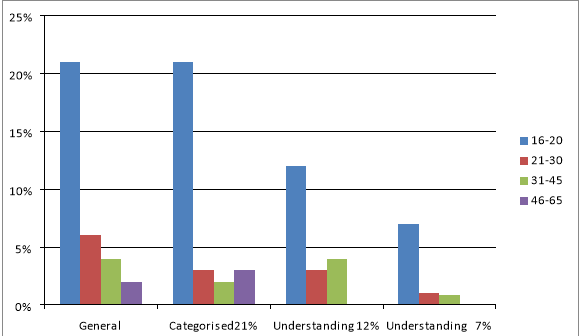
32% General understanding.

21% 16-20

6% 21-30

4% 31-45

2% 46-65


Categorised –

categorise

Verb

Past tense:categorised; past participle:categorised

Place in a particular class or group.

synonyms:


classify

,

class

,

group

,

grade

,


rate


,

designate

,

label

,

tag

,

brand

;(English dictionary)


Categorising


– abnormal, a condition, unable, prevents, negative, trouble, problems with reading, problems with writing, difficulty, can’t concentrate, misunderstands, poor literacy , poor, mentally challenged, stops you working, can’t study ‘as well as they could’, problem with words, illness, lack normal development, no understanding, not a straightforward situation, stop doing things, take longer to understand, can’t cope with others, not understanding the situation, limit, workability, not academic, affect day to day life, simple, mental basics, special education,

Negative words

29%

21% 16-20

3% 21-30

2% 31-45

3% 46-65


Some Understanding


– handicap, mental issue prohibits development, handicap, those who need support with individual learning needs, disability which affects learning, impairment, need help, impacts ability to learn, requires extra help, help with topic, reach their full potential cognitive social impairment, capabilities,

19% showed some understanding

12% 16-20

3% 21-30

4% 31-45


Unable to Identify


.

16-20 Welsh – “Retardation, slow, mentally challenged”

16-20 British – “Problem”

16-20 British – “illness”

16-20 British – “Problems and can’t do anything”

16-20 Chinese – “It’s ok”

16-20 British – “Someone or something that doesn’t learn as quickly as others”

16-20 British – “Can’t walk or speak properly”

31-45 Black African – “Someone who needs a special education”

8% of total surveyed was unable to identify with the term or its meaning.

7% 16-20

1% 31-45


Selected Quotes

16-20 British “it’s a word that defines who you are”

16-20 British “I would define it as difficult”

16-20 British “Dyslexic”

16-20 British “Unable to learn the same way as other people”

16-20 British “Cause you to learn differently”

16-20 British “May stop you from doing something you want to do”

16-20 British “When something is harder for you than others”.

21-30 Welsh “Just got to work with it”

7% of 16-20 year olds in this category showed a good understanding, lack of discrimination and non compartmentalise of ‘disability’.

1% of 21-30 as above.

Putting the literature into categories into the chosen sections seemed, at first, to be a straightforward task. But once the gathering of information had started, it became clear that it would not be so simple. Each category overlapped in some ways and each answer had different interpretations depending on who was reading the survey forms. The generalised format of the survey form may have made it more difficult to determine one definitive answer, each answer raised another question and was another point of discussion and reflection, or maybe that was my intention?

I considered different ages of people, targeting other students, lecturers, staff within the college environment, on reflection I would have broadened my group to include possibly 25% of each age group and asking a broader area of the general public. What became obvious from my survey is how the understanding of the term learning disability has changed in the age group 16 – 20 with a high percentage actually having a clear understanding of what it means and actually explains it in a positive way. I we consider these students being involved in the social care field it is refreshing to think that they do not see disability as a barrier to learning but just a different way to learn. These 16-20 year olds may be our next teachers, social workers, nurses, advocates etc, or a proportion may have a diagnosis and may explain some of the heartfelt quotes in section 5 of the survey, two which I found to be most pertinent, 16-20 British “I find it difficult to be on my own”, 21-30 Welsh “Just got to work with it”.

On hindsight I should have broadened my subject and sent surveys to; schools, carers group, statutory services, voluntary services but even then I suppose it is still difficult to ensure that you reach within an acceptable margin of individuals within the same age range across the board.

I considered whether to add more specific questions to the survey i.e. name, occupation, gender, religion, I struggled with this for several days before coming to a decision. My research showed me that now most surveys are anonymous, they tend not to record either the name of the respondent, or the name of anybody that the person may represent. This may been seen as inconvenient if you realise that you may need more specific data after collecting responses, or clarification on a comment/answer, or investigating subsequent research questions. I had considered asking for an email address, but stress that this should be optional. The drawback is if email addresses are collected, your data will then be subject to the terms of the Data Protection Act and open to all kinds of legislation?

Should I have incorporate demographic data, age, gender, education etc, but felt that this should be minimised, did I need it, should you collect any demographic data unless it is related to a specific research question? In my case a little more ‘specific’ information may have clarified my findings.

However, again demographic data may include personal details that would bring your research within the terms of the Data Protection Act, in which case precautions need to be considered, and more specific, closed questions prevent some people from completing the survey if they think that they can be identified from their answers, would an honest answer be given at all ?.

It should be explained to participants that voluntary completion of a questionnaire or interview can be taken as consent for this data to be used in research and that nobody should ever be compelled to participate in a research survey, for example, the students from Ystrad Mynach College should not be required to participate in research as a condition of for example their course grading. This was another reason why I used general non identifiable questions and participants could see the simplicity of the survey and that no personal data is collected.

Research has shown that only a percentage of the participants that are approached via a database to carry out surveys will complete them, figures suggest between 5% to 50%. I had considered this prior to setting up my survey and wanted to ensure that I had my 100% completed. I took a more pro-active approach where I physically approached every single person, told them what I wanted to achieve from the survey, (ideally my results would have been more applicable to a larger number of people beyond those that I was able to interview in the time-scales), but at the time I felt I had a representative sample, (I am not so sure now).

The other positive, although more time consuming doing the face-to-face interviews you can be sure that those who did respond have given the answer themselves, they are not biased, researched or influenced by others. Also, if a person refuses to complete the survey you may be able to establish what are the reasons why they may not respond, might these be related to any of the questions?

I would still use closed questions as a basis for statistical comparisons, either investigating differences between groups within the sample, or correlations between responses to questions. Survey responses are not generally particularly sensitive measures, so the statistical techniques available might not be straightforward as I have found out. Much debate surrounded my open questions, and how I should draw conclusions about the patterns or trends across their answers? I found the most appropriate way involved creating a set of coding categories, assigning each answer to one or more categories, and dealing with those that fell outside the coding scheme, are ambiguous and so on. I asked a second person to re-code the same data, to make a statistical inter-related reliability analysis, (second opinion), brainstorming.

It was the case that I did not have a research hypotheses relating to the open questions which did cause conflict in my thinking and analysis. On reflection it is probably unwise to collect large amounts of verbal data without having a firm plan in advance of how it will be analysed.


Ages of People Surveyed.

16-20 69%

21-30 13%

31-45 12%

46-65 6%


Nationality

Welsh 2%

Chinese 1%

Black 1%

British 96%

What did my Survey tell me?

There is no right way or wrong way to carry out a survey

There is no right or wrong answer

Answers are open to interpretation depending on age, nationality, education, status

There were more people that had an understanding of the term learning disability, in a positive manner which may mean that attitudes to ‘difference’ is changing

Younger people, 16-20 year olds seem to have the most understanding which may suggest a change teaching methods, embracing difference, education, knowledge, discussion, openness to change, changing times, understanding appears more specific

21 – 45 attitudes appeared more general to categorising, (labelled the person, saw the disability and then the person). Most had some understanding but their responses were more ‘text-book’ definition.

46-65 year olds in the majority had more ‘preconceived’ ideas again saw the disability and not the person.


Appendix One
Prevalence Of Diabetes Mellitus Health And Social Care Essay

INTRODUCTION

DIABETES MELLITUS

Diabetes is a syndrome that is caused by a relative or an absolute lack of insulin. It is characterized by symptomatic glucose intolerance as well as alterations in lipid and protein metabolism. Over the long term, these metabolic abnormalities, particularly hyperglycemia, contribute to the development of complications such as retinopathy, nephropathy and neuropathy. Approximately 5% to 10% of the diagnosed diabetic population has type 1 diabetes mellitus (Koda-Kimble et al., 2005). Most of the diabetic patients have type 2 diabetes mellitus, a heterogeneous disorder that is characterized by obesity, β-cell dysfunction, resistance to insulin action, and increased hepatic glucose production.

1.2 PREVALENCE OF DIABETES MELLITUS

Diabetes Mellitus is a chronic disease and is no longer an epidemic that can be ignored. It is confirmed that diabetes is increasing rapidly in every parts of the world (IDF, 2009). The prevalence of diabetes for all age-groups worldwide was estimated to be 2.8% in 2000 and 4.4% in 2030. The total number of people with diabetes is projected to rise from 171 million in 2000 to 366 million in 2030 (Wild et al., 2004). In South-East Asia region, the number of people with diabetes will reach 101.0 million by year 2030 which show an increase of 72.1% compared to 58.7 million in year 2010 (IDF, 2009). While in Western Pacific region, the number of people with diabetes will reach 112.8 million people by year 2030 compared to 76.7 million people in year 2010, which show an increase of 47.0%. WHO predicts that in Asia and Australia region the prevalence of diabetic will reach 190.5 million in year 2030 (WHO, 2004).

Similarly in Malaysia, the diabetes epidemic shows an increase trend over the years. The number of people with diabetes will increase to 2.74 million by year 2025 compared to 1.53 million in year 2007. The national prevalence of diabetes was estimated to be 12.3% in year 2025 (IDF, 2009). Approximately 1.2 million people in Malaysia have diabetes and more than half of them are not aware of it.

The third National Health and Morbidity Survey (NHMS III) shows that there was an increasing trend in prevalence with age; from 2 percent in the 18-19 years old to an alarming prevalence ranging between 20.8 to 26.2 percent among those 50-64 years old. Those with primary education or less have a higher prevalence. The national prevalence of known and newly diagnosed diabetes above 30 years old rose from 8.3 percent in NHMS II to 14.9 percent in NHMS III. This shows that the prevalence of diabetes has increased by 80 percent over a decade with an average of 8 percent per year. The diabetes in Malaysia has almost doubled in magnitude over the last decade (NHMSIII, 2006).

The main factors that contribute towards the increase in the risk of diabetes are socioeconomic influences, BMI, effects of urbanization, and familial aggregation. In socioeconomic influences, it shows that lower educational status and the lack of health care facilities in the rural areas delay the diagnosis of diabetes. More than 70% of diabetes subjects in India remain undiagnosed in rural area (Deo et al., 2006). Moreover, this study also observed that people of the lower socioeconomic status had lower BMI. Furthermore, urbanization leads to unhealthy lifestyle changes which affect the metabolic changes. The high prevalence of diabetes also found associated with increasing family history of diabetes. High prevalence of diabetes in the first degree relatives which is commonly seen in Asian Indians (Deo et al., 2006).

A comparative epidemiology study was conducted among Japanese immigrants in United States living around Hawaii and Los Angeles and among Japanese living in Hiroshima. Results showed that the Japanese who lives in United States are in higher prevalence of getting diabetes compared to the Japanese in Hiroshima due to the westernized lifestyle (Hara et al., 2004).

1.3 COMPLICATIONS OF DIABETES MELLITUS

Uncontrolled diabetes mellitus will leads to multiple complications. In Malaysia, only 6.1% among the 30 – 49 year age groups of diabetes mellitus patients were under control. This reflects the lack of concern for risks and complications among the young patients. A total of 1 in 4 diabetics in the 30-39 age group already show complications of the disease (Chua, 2006). Moreover, patients with uncontrolled diabetes mellitus, regardless of the type of diabetes, exhibit significantly increased odds of surgical and systemic complications, higher mortality and increased length of stay during hospitalization (Marchant et al., 2009).

Individuals with pre-diabetes, undiagnosed type 2 diabetes, and long-lasting type 2 diabetes are at high risk of all complications of macrovascular disease, coronary heart disease (CHD), stroke, and peripheral vascular disease (Laakso, 2010). Moreover, M Lgaakso also indicates that more than 70% of type 2 diabetes patients die of cardiovascular causes. Hence, the epidemic of type 2 diabetes followed by an epidemic of diabetes-related cardiovascular diseases (CVD).

Diabetes patients present a two to four time greater risk for coronary artery disease (CAD) than non-diabetes individuals (Protopsaltis et al., 2004). The data obtained from UKPDS 23 indicated that for each 1% increment of HbA1c there was a 1.11-fold increased risk of CAD, whereas for each 1-mmol/l increment in LDL concentration, there was a 1.57-fold increased risk.

A study carried out among African American with diabetes showed that the major risk factors such as hypercholesterolemia, hypertension and smoking are important determinants of CVD in African Americans with diabetes. Moreover, other blood markers of hemostasis or inflammatory response and elevated serum creatinine proved to be CVD risk factors in African Americans with diabetes (Adeniyi et al., 2002).

Retinopathy is the most common microvascular complication of diabetes, which results in blindness for over 10,000 people with diabetes per year (Fong et al., 2004). A study done among Australian population showed that the prevalence of retinopathy was 21.9% among known type 2 diabetes and 6.2% in those newly diagnosed type 2 diabetes. Generally, 15.3% of diabetes patients have retinopathy (Tapp et al., 2003).

A prospective cohort study showed that the presence of diabetic retinopathy was associated with a two-fold higher risk of incident CHD events and a three-fold higher risk of fatal CHD (Cheung et al., 2007). Hence, the microvascular diseases do play a role in the pathogenesis of CHD in diabetes.

Amputation is one of the major complications that should be taken into consideration among diabetes patients. Diabetes is the cause of 50 % of all the non-traumatic amputations in the United States. Among all the diabetic amputations, 24 % amputations are the toe, 5.8 % are mid foot, 38 % are below the knee, and 21.4 % are above the knee, and the remaining 10 % include the hip, pelvis, knee and other sites (Levin, 2002).

One study reported an 8 % increase in amputations from 61 of 10,000 patients with diabetes in 1990 to 66 of 10,000 patients with diabetes in 1995. After diabetic patients undergo amputation, their risk of developing a foot ulcer or of requiring a second amputation increases dramatically. A total of 50 % of patients with diabetes die within 5 years after amputation (Peters et al., 2001). In Malaysia, among 203 patients that underwent amputation, 66 % of the patients were diabetics and amputations performed were related to diabetic foot conditions. Among them, 17.2 % patients underwent above knee amputation, 32.8 % underwent below knee amputation and 50 % underwent local foot amputation. About 59 % patients underwent amputation due to diabetic complication were less than 60 years old (Yusof et al., 2007).

A study done involving Korean type 2 diabetic patients showed that the HbA1c is significantly associated with carotid plaque and peripheral arterial disease (PAD) (Choi et al., 2010). A cross sectional study was conducted, and it shows that the glycemic control was poor with 53.6% of the patients having HbA1c above 8% and 24% of them had microalbuminuria (Chan et al., 2005).

1.4 MANAGEMENT OF DIABETES MELLITUS

1.4.1 Controlling Glycemic Level

Tight control of blood glucose levels offers primary and secondary prevention for the development of diabetic kidney disease (Stanton, 2008). By lowering glycated hemoglobin value to 6.5% or less, a 10% relative reduction was observed in the combined outcome of major macrovascular and microvascular events. Moreover, there was also a 21% relative reduction in nephropathy (Patel et al., 2008).

A study carried out in the United Kingdom showed that intensive blood glucose control in type 2 diabetes patients significantly increased the cost of treatment, but the cost of complication was reduced and increased the time free of complication (Gray et al., 2000). Although good controlling on blood glucose will benefit the diabetes patients, the potential benefits of glycemic control must be balanced against factors that either preempt benefits (limited life expectancy, comorbid disease) or increase risk (severe hypoglycemia, weight gain) (Woolf et al., 2000).

1.4.2 Pharmacological Treatment

According to the Malaysian Clinical Practice Guidelines Management of Type 2 Diabetes Mellitus 4th Edition (2009), the first line therapy for oral agent is Metformin, while other oral agents are acceptable as alternatives. However, usage of Thiazolidinediones (TZDs) has been found to have greater durability in glycemic control compared to Metformin and Sulphonylurea (SU). Currently there are five classes of oral hypoglycemic agents, which include α-glucosidase inhibitors (AGIs), Biguanides, Dipeptidyl petptidase-4 (DPP-4) inhibitors, Insulin Secretagogues (Sulphonylurea and Non-Sulphonylurea / Meglitnides) and Thiazolidinediones (TZDs). Factors that are taken into consideration when selecting the treatment include the patient’s clinical characteristics, such as degree of hyperglycemia, weight and renal function (Walker and Whittlesea, 2007).

Scheen and Lefebvre (1998) suggested that the selection of oral antihyperglycemic agents as first-line drugs or combination therapy should be based on both pharmacological properties of the compound (efficacy and safety) and the clinical characteristics of the patient (stage of disease, body weight). Furthermore, each antihyperglycemic agent may also be combined with insulin therapy to improve glycemic control after secondary failure to oral treatment.

A systemic review on the effectiveness and safety of oral antihyperglycemic agents showed that most oral agents improved glycemic control to the same degree as sulfonylureas, though nateglinide and α-glucosidase inhibitors may have slightly weaker effect (Bolen et al., 2007). Other than that, this review also showed that most agents other than metformin increased body weight by 1 to 5 kg. In terms of safety, sulphonylureas and repaglinides were associated with greater risk for hypoglycemia, thiazolidinediones with greater risk for heart failure and metformin with greater risk for gastrointestinal problems. Another systemic review and meta analysis on the effect of oral hypoglycemic agents on HbA1c levels showed that most OHAs lowered HbA1c levels by 0.5 to 1.25 % whereas thiazolidinediones and sulfonylureas lowered HbA1c levels by 1.0 to 1.25 % (Sherifali et al., 2010). This review also concluded that the benefit of initiating an OHA is most apparent within the first 4 to 6 months.

A meta analysis on comparison of different drugs as add-on treatment to metformin in type 2 diabetes showed that sulphonylureas, α-glucosidase inhibitors and thiazolidinediones induced reduction of HbA1c of 0.85, 0.61 and 0.42 respectively (Monami et al., 2007). In direct comparisons, sulphonylureas induced a greater reduction of HbA1c than thiazolidinediones. For the treatment with α-glucosidase inhibitors (AGIs) acarbose, a meta-analysis showed favourable trends towards risk reduction for myocardial infarction and any cardiovascular event (Hanefeld et al., 2004). The meta-analysis also revealed that acarbose treatment also significantly improved glycemic control, triglyceride levels, body weight and systolic blood pressure.

1.4.3 Non Pharmacological Treatment

Exercise

Exercise plays an important therapeutic role in the management of type 2 diabetes and usually is prescribed along with dietary therapy and pharmacologic therapy. The benefits of exercise are observed through the lowering of blood glucose concentration during and after exercise (Najim, 2008). Physical activities are able to reduce the risk of progression from impaired glucose tolerance (IGT) to type 2 diabetes mellitus by 58% (Sigal et al., 2006). There is evidence that showed the relation between the exercise and the HbA1c level, where exercise training reduced HbA1c by an amount that should decrease the risk of diabetic complications (Boule et al., 2001).

b. Dietary Control

Obesity and weight gain contributes to the development of diabetes. The impact of obesity will put the diabetic patients on risk of coronary heart disease (CHD) (Anderson et al., 2003). Hence, decreasing the weight will decrease the risk for developing diabetes. Despite that, glycemic control also will be well controlled. A meta-analysis on restricted-carbohydrate diets in type 2 diabetic patients showed that there is an improvement in HbA1c, fasting glucose, and some lipid fractions (triglycerides) with lower carbohydrate-content diets (Kirk et al., 2008). A study conducted to assess the effects of high dietary fiber intake in type 2 diabetic patient shows that high intake of dietary fiber, particularly the soluble type, improves glycemic control, decreases hyperinsulinemia and also lowers plasma lipid concentrations (Chandalia et al., 2000). The Malaysian Clinical Practice Guidelines for Management of Type 2 Diabetes Mellitus 4th Edition (2009) suggests that a balanced diet consisting of 50-60% (Carbohydrate), 15-20% (Protein) and 25-30% (Fats) are encouraged. However, these recommendations must be individualized based on glucose and lipid goals.

1.5 MANAGEMENT OF CHRONIC DISEASES IN PRIMARY HEALTH CARE

In United States, there is an estimated of 99 million Americans living with a chronic illness. This becomes one of the major challenges faced by the U.S. health care system today and in the future. However, the defining features of primary care which includes continuity, coordination and comprehensiveness, are well suited to the care of chronic illness (Rothman and Wagner, 2003).

In the WHO’s World Health Report 2008: Primary Health Care Now More Than Ever shows that the primary-care team becomes the mediator between the community and the other levels of the health system, helping people navigating through the maze of health services and mobilizing the support of other facilities by referring patients or calling on the support of specialized services (WHO, 2008). Evidence has shown that with a better primary care, especially coordination of care could reduce avoidable hospitalization rates, especially for individuals with multiple chronic conditions (Wolff et al., 2002). In Thailand, the patient satisfaction toward primary care units has improved when compared to public hospitals out-patients-department. An evolutionary change, as the patients in Thailand started to have confidence in local facilities such as primary care units for monitoring of chronic diseases (Pongsupap et al., 2005).

1.5.1 The Management of Chronic Diseases in Primary Health Care Centers in Malaysia

Chronic diseases are the major cause of death and disability in Malaysia, accounted for 71% of all deaths and 69% of the total burden of disease. Preliminary data from Malaysian Non-Communicable Disease (NCD) Surveillance 2005/06 estimated that approximately 11.6 million Malaysian adults aged 25-64 years were having at least one risk factor for chronic diseases and only about 3% did not have any risk factor. (Ramli and Taher, 2008). A study carried in an urban primary health care setting in Sarawak shows that the poor glycemic control (HbA1c > 7.5%) is about 38%. Wong and Rahimah (2004) suggested that reasonable glycemic control can be achieved in the primary health care setting in Sarawak.

A study was carried out to evaluate the status of diabetes care and prevalence of diabetic complications among the diabetic patients in primary private health care Malaysia. Majority of diabetic patients treated at the primary care level were not satisfactorily controlled and were associated with a high prevalence of complications (Mafauzy, 2005). Hence, there is a need on putting on more efforts in order to achieve clinical targets.

1.6 MEDICATION ADHERENCE

A literature review showed that the adherence rates for patients with type 2 diabetes have ranged from 65 % to 85% for OHA and 60 % to 80 % for insulin (Kenreigh and Wagner, 2005). A survey was done in the United States to assess medication adherence, knowledge of therapeutic goals and goal attainment for adult patient with diabetic. The result showed that 48 % of patients were medication non-adherent and most frequently reported reasons for non-adherence were forgetfulness (34 %) and too expensive (14 %). This study also shows that the patients at HbA1c goal were more adherent than patients not at goal (Whitley et al., 2006).

A study was carried out by Tan and Judy, on self-care practices of Malaysian adults with diabetes and sub-optimal glycaemic control. The result showed that only 53 % subjects scored below 50 % in their diabetes-related knowledge, subjects with medication non-adherence, 46 % tended to have higher fasting blood glucose levels and only 15 % of the subjects practiced SMBG (Tan and Judy, 2008). Patients which non adherent to the drug regimen was found to be at higher risk of hospitalization. The study on this showed that patients with type 2 diabetes mellitus who did not obtained at least 80% of their antihyperglycemic medications across a year were at a higher risk of hospitalization in the following year (Lau and Nau, 2004).

1.6.1 Factor Affecting Non-Adherence in Diabetes Mellitus

Drug non-adherence is a major concern in patient management, especially in individuals with diabetes, which makes the glycemic control difficult to attain. Adisa et al. (2009) stated that the commonly cited intentional nonadherence practice included dose omission, 70.2%. Almost 50 % respondents were fed up with daily ingestion of drugs and 19.8% of the respondents stated that it was inconvenient to take the medications outside. Furthermore, forgetfulness (49.6%) and high cost of medication (35.5%) were also reasons for non adherence. Another factor that influenced the non adherence were patient-related factors (96%) and health care system-related factors (79%) (Ratsep et al., 2007). Ratsep et al. stated that the patient-related factors include patients’ awareness regarding diabetes and its complications, patients’ motivation to change their lifestyle, non-compliance with medical regimen, patients’ financial problems and their non-attendance. Health care system-related factors include the lack of special diabetes education for nurses, underfunding and an inadequate number of patients’ educational materials.

1.7 PHARMACISTS’ INTERVENTION

Health coaching which relies on frequent contact and ongoing intervention has emerged in recent years as part of disease management initiatives (Melko et al., 2010). This has been promoted as an effective method for improving health outcomes and patient compliance with medication. A pilot study done by Melko et al. (2010) has shown that health coaching combined with tools do increased medication adherence.

In United States, the adherence to OHA therapy ranged from 36 to 93 % in patients remaining on treatment for 6 to 24 months. Electronic monitoring identified poor compliers for interventions that improved adherence,61 to 79 % (Cramer, 2004).

A study has shown that, HbA1c levels decreased significantly in the intervention group after the 4th month and remained lower than in the control group until the 12th month (Scain et al., 2009). Moreover, a decreased of HbA1c by 0.16% was observed with each 10% increased in drug adherence (Schectman et al., 2001). With every 1 % reduction in updated mean HbA1c was associated with reductions in risk of 21 % for any end point related to diabetes, 21 % for deaths related to diabetes, 14 % for myocardial infarction and 37 % for microvascular complications (Stratton et al., 2000).

A review of the literature on the role of pharmacists indicates that there is a potential benefit of pharmacist interventions to improve medication adherence in diabetes, especially focusing in providing patient education (Lindenmeyer et al., 2006). A study on Latino patients with uncontrolled diabetes (Hemogloblin A1c ≥ 8.0%) showed that intervention from the pharmacist and health promoter team management of uncontrolled diabetes appears to be a feasible approach in order to improve the medication management (Gerber et al., 2009).

Marcio Machado and his team found that there is a significant reduction in HbA1c levels in the pharmacists’ intervention group but not in the control group which is without pharmacists’ intervention (Machado et al., 2007). In the journal which discussed the role of pharmaceutical care in diabetes management, there were evidences suggesting that the pharmacist’s efforts in optimizing the pharmacotherapy can prove a valuable component in community-based multi disciplinary diabetes care (Davis et al., 2005).

A meta analysis carried out by Conn et al. (2009) which investigated the effectiveness of interventions to improve medication adherence in older adults suggests that interventions increase medication adherence in older adults.

The types of interventions include pill count, electronic medication -event monitoring device (MEMS), diabetes education, medication counseling, monitoring and insulin initiation and/or adjustments. In comparison of MEMS and pill count, MEMS data resulted in different numbers and types of recommendations than pill counts (Matsuyama et al., 1993). Hence, the pharmacists then could make specific recommendation regarding patient educations.

A Cochrane review stated that almost all of the interventions that were effective for long term care were complex, which include combinations of more convenient care, information, reminders, self-monitoring, reinforcement, counseling, family therapy, psychological therapy, crisis intervention, manual telephone follow-up and supportive care (Haynes et al., 2008). However, there is no conclusion about the effectiveness of the interventions that could lead to large improvement in adherence and treatment outcomes.

An earlier meta analysis of studies conducted reported that chronic disease patients including those with diabetes and hypertension, as well as cancer patients and those with mental health problems benefited from interventions such as prescription refills, pill counts and electronic monitoring (Roter et al., 1998).

1.8 RESEARCH OBJECTIVES

The primary health care settings play an important role in primary steps in order to prevent the development of chronic diseases. In Malaysia, there were a number of people who have chronic diseases that received treatment in the primary health care settings. Hence, research should be carried out in order to assess the medication adherence among diabetic patients in the primary care settings in order to achieve better therapeutic outcome.

1.8.1 General Objective

To assess the impact of pharmacist counseling on medication adherence among the diabetic patients in primary care centre

1.8.2 Specific Objectives

To assess patients’ blood glucose level and knowledge, before and after counseling.

To evaluate patients’ medication adherence, before and after intervention.

To correlate the medication adherence with counseling.

Healthy People 2020: Increase Juvenile Residential Facilities that Screen for Mental Health

Healthy People 2020: Increase Juvenile Residential Facilities that Screen for Mental Health


Abstract

Healthy People 2020 (HP 2020) defines mental health as being vital to personal well-being familial and interpersonal relationships, and allowing for the capacity to successfully contribute to one’s community and society. (U.S. Department of Health and Human Services, Office of Disease Prevention and Health Promotion [HHS], (2010). The main goal of the HP 2020 mental health status initiative is to improve mental health through prevention services and increase screening to ensure accurate diagnosis, effective treatment.This paper will focus on the  HP 2020 MHMD-7 objective, which aims to increase the amount of juvenile residential facilities that screen admissions for mental health problems.

One of the most effective ways to respond to the mental health treatment needs of youth in the Juvenile Justice System (JJS) is to systematically assess and identify unmet needs with the use of mental health screening tools. The majority of youth who come into contact with the JJS have a diagnosable mental or substance use disorder. It is important to screen youth for mental health problems as it greatly affects their development.

Nonetheless, there are still some juvenile residential facilities that still do not provide adequate mental health screenings and assessments. As a result, many people, especially vulnerable populations including minority populations get diagnosed and screened for mental health problems at lower rate and suffer from a higher risk of mental and substance abuse disorders raising significant bioethical issues, primarily in the form of beneficence, non-maleficence, and justice.


History of Mental Health Screenings

Screening is defined as a brief process conducted by non-clinical staff to identify youth mental or emotional conditions and to identify if they might have a behavioral health disorder. (Grisso, 2001) Research has demonstrated that serious mental health and substance use disorders can greatly affect the rehabilitation of youth who come into contact with the juvenile justice system. Behavioral health screening measures and procedures must be in place to identify mental illness and substance use disorder needs.

Historically, the mental health needs of children and adolescents have been inadequately addressed both in policy and practice. In the early 1990s, mental health screening within the juvenile justice system was nonexistent. It was viewed as more optional than the rule; it was intended to be superficial and non-standardized. Institutional settings were more punitive and attempting to treat behavioral issues with harsher punishments for crimes. It took a much deeper understanding of mental health-related issues among youth within juvenile justice settings before reform could happen. During the late 1990s, the Office of Juvenile Justice and Delinquency Prevention’s (OJJDP) goal was to shift from extreme punishments to an approach that emphasized community health and rehabilitation. The number of youth diagnosed with  mental illness and their level of unmet need is now being recognized.   Mental health screenings became mandated for the first time in 1998, as more research studies were conducted. (Center for Mental Health Services, 1998)

In the current day, The OJJDP recommends a health screening to be performed during the intake process as youth first enter a juvenile residential facility. According to Underwood and his colleagues (2016), screening must be research-based and standardized and should be conducted fairly early in the process. In recent years, more light has been shed on the mental health needs of youth in the JJS at the Federal level. In the last couple of years, the Civil Rights Division of the U.S. Department of Justice investigated the inadequacy of mental health care and services in juvenile correctional facilities in various states (Butterfield, 1998). In addition, U.S. Department of Health and Human Services’ Center for Mental Health Services developed the first national survey of juvenile justice facilities which identifies current mental health services (Center for Mental Health Services, 1998). Moreover, Congress took into consideration many bills that mandate the use of mental health screenings and treatment programs for youth in the JJS. (Manisses Communications Group, Inc., 1999). Mental health screening, assessment, and treatment did not become mandatory until the early 2000s.

Thomas Grisso. and his colleague Richard Barnum from the University of Massachusetts developed a mental health screening tool at a time when mental health screening tools were not normalized. This tool was known as the Massachusetts Youth Screening Instrument-Second Version. (MAYSI-2) It was developed in the late 1990’s and was used for routine use for all youth who came in contact with juvenile justice facilities. This the  most widely used behavioral health screening tool within JJS to-date.(Grisso & Barnum, 2000, 2006). This mental health screening tool is used in over forty states; within juvenile probation and correction programs. (Project, NYSA 2003)


Epidemiology of Mental Health/Illness

According to NAMI, approximately 50% of chronic mental health conditions begin by age 14 and 75% begin by age 24. In terms of prevalence rates, youth who are diagnosed with mental disorders within the JJS is found to be much higher than the general population of adolescents (Grisso, 2000) Among two million youth, approximately 50% to 75% of youth meet the criteria for a mental health disorder within the JJS. In those findings, at-least 5% to 30% have been diagnosed with depression. (Underwood & Washington, 2016) Multiple studies confirm that two thirds of youth in detention or correctional settings have at least one diagnosable mental health problem. Dembo (1996) found that the prevalence psychiatric disorders in adolescents were about 16.5%. Moreover, youth in the JJS are at high risk for mental health problems which has contributed to criminal behavior and may interfere with rehabilitation (Wasserman & Larkin, 2005). From the 1960s through the 1990s, Roberts et al found that the mean prevalence of psychiatric disorders in the general adolescent population ranged between  6.2%–41.3%. In comparison, prevalence rates in the juvenile justice population range from 50% to 100% when disruptive behavior disorders are included. Youth with psychiatric diagnoses can have more than 1 psychiatric diagnosis (comorbidity) or co-occurring psychiatric and substance abuse disorders. In addition, minority youth may be more reluctant to admit to experiences with mental illness, or they or their families may have a cultural bias against seeking care.


Research Findings


Policies and Programs

The Medicaid Early and Periodic Screening, Diagnosis and Treatment (EPSDT) law requires states to provide Medicaid-eligible children regular mental health screenings. Substance Abuse and Mental Health Services Administration (SAMHSA) developed an  initiative to improve policies and programs for youth in contact with JJS with com-morbid disorders. Six states are dedicated to policies and programs for screening youth with mental health disorders (Arkansas, Michigan, Minnesota, Mississippi, South Carolina, and Virginia) Some states even have community-based treatment programs for youth who are not considered a danger to society and at risk of for their psychological disorder.

Virginia and Texas legislation requires the JJS to mandate continuity of care for mental health, substance use, and other therapeutic treatments for youth who come in contact with the JJS. (NCSL, 2011)


Surveillance & Measurement

HP2020 is measuring and identifying the mental health problems experienced by youth within the juvenile justice system via the Youth Risk Behavior Surveillance instrument. The data from that survey are found that at least half of youth reported problems with anxiety, anger, and loneliness, and approximately ⅕ had a previous suicide attempt. (Morris et al., 1995)

Most recently Massachusetts Youth Screening Instrument (MAYSI)is one of the most widespread mental health screening tools developed to identify mental health & substance abuse among youth. MYSI is a 52-item self-report instrument, that requires a 5th grade level of reading & takes 10 minutes to complete. The instrument measures six different scales which include substance abuse, anger, depression/anxiety  and suicidal thoughts.

This self-report instrument requires no clinical expertise to administer or interpret; is low cost and can be used by a range of ages, different ethnic groups, and both genders; and demonstrates reliability and validity. (Grisso, 2001) It is a tool supported by heavy evidence-based research, that has been adopted for use among 49 states for probation and correctional settings.


Improvement over Baseline

In 2006, the baseline for the Healthy People 2020 objective was 58% of youth within juvenile residential facilities were screened admissions for mental health disorders. The target goal of this objective is a 10% improvement and a target of 64% of residential  facilities screenings for mental health disorders. Baseline hasn’t changed since the Healthy People 2020 launch, so it is highly unlikely the goal of 64% will be reached by 2020.


Ethical Issues: Four Principles

Justice is affected when fairness and the distribution of who receives care comes into play. Mental health care cannot be solely for youth within the general population. Opportunities have to be distributed fairly amongst society at large.

Beneficence/non-maleficence is addressed in that not having access to mental health screenings negatively affects those in need. The idea to do no harm is exemplified by offering screenings in all facilities to those who require it. This is malevolent since we know the importance of how mental health affects the overall health of youth. To protect those with diminished autonomy especially within a vulnerable population such as youth within JJS.


Vulnerable Populations

Epidemiological studies have shown that youth are  at increased risk for mental health problems come from low-income households, those in the child welfare and juvenile justice systems. (Howell, 2004) Incarcerated Black youth have the lowest rate of mental health diagnoses and have less mental health care than their White counterparts. (Howell, 2008) Minority youth may be more reluctant to admit to experiences with mental illness.Adolescent females reveal greater persistence of emotional problems and worse outcomes. Youth who come from poorer neighborhoods and have lower socioeconomic status. Research has found that socioeconomic status (SES) plays a significant role for black and Hispanic youth and poverty is likely to be the underlying factor that most influences trends in juvenile crime.


Current Case Connection

In 2016, the Office of Juvenile Justice and Delinquency Prevention (OJJDP) conducted an analysis on mental health screenings within juvenile residential facilities. Findings suggests that six out of ten (60%) reporting facilities evaluated all youth for mental health needs in 2016. Seventy-percent of private facilities were more likely than public facilities (50%) to evaluate all youth, while 67% of state facilities were more likely than local facilities to evaluate all youth.

Long-term secure facilities were the most likely to evaluate all youth in 2016. Shelters and detention centers were compared  and it was found that shelters are least likely to evaluate youth than detention centers. Figure 1. Shows the number of facilities that screen for mental health needs among youth by facility type.

Youth involved in the juvenile justice system have a strong need for behavioral health services, especially related to mental disorders. In 2006, Mental Health and Juvenile Justice (NCMHJJ) also conducted a very comprehensive study measuring the prevalence of  youth involved with the juvenile justice system. Results show that the majority (70.4%) of youth in the juvenile justice system meet the criteria for at least one mental health disorder. Findings suggest a need to increase the number of juvenile justice facilities to screen for mental health. It ultimately identified youth who are most in need of treatment, which are girls and certain minority groups. (Shufelt & Cocozza, 2006)


Figure 1. Juvenile Residential Facility Census 2016


Conclusion

Mental health is an important factor in successful everyday functioning and long-term health outcomes. Despite an increased emphasis on mental health care and access to services, the U.S. has made little progress in reaching their Healthy People 2020 goal. However, research suggests that the juvenile justice system cannot rely on other systems to provide information on the previous use of mental health screening services for all youth at entry. There is a need for more juvenile residential facilities to implement early screening processes. There is a strong need for more research to create narratives regarding the mental health needs of youth and implement the best policies to respond to their mental and behavioral health.


References

  • Center for Substance Abuse Treatment. (1999). Screening and assessing adolescents for substance use disorders. (Treatment Improvement Protocol (TIP) Series, No. 31). Rockville, MD:Substance Abuse and Mental Health Services Administration.
  • Dembo R: Problems among youths entering the juvenile justice system, their service needs and innovative approaches to address them.

    Subst Use Misuse

    31:81–94, 1996
  • Grisso T., Barnum R. Massachusetts Youth Screening Instrument, Second Version: User Manual and Technical Report. University of Massachusetts Medical School; Worcester, MA, USA: 2000
  • Grisso T, Barnum R, Fletcher KE, Cauffman E, Peuschold D. Massachusetts youth screening instrument for mental health needs of juvenile justice youth. J Am Acad Child Adolesc Psychiatry. 2001;40(5):541–548
  • Howell, E. 2004. Access to Children’s Mental Health Services under Medicaid and SCHIP. Washington, DC: Urban Institute.
  • Howell, E.; McFeeters, J. 2008. Children’s Mental Health Care: Differences by Race/Ethnicity in Urban/Rural Areas. Journal of Health Care for the Poor and Underserved 19: 237–247
  • Morris RE,Harrison EA,Knox GW,Tromanhauser E,Marquis DK, Watts LL., Health risk behavioral survey from 39 juvenile correctional facilities in the United States.

    J Adolesc Health

    . 1995;17(6):334–344
  • The National Conference of State Legislatures (NCSL) In: Juvenile Justice Guidebook for Legislators. John D. and Catherine T., editors. MacArthur Foundation; Chicago, IL, USA: 2011.
  • Roberts RE,Attkisson CC,Rosenblatt A.,Prevalence of psychopathology among children and adolescents.

    Am J Psychiatry

    . 1998;155(6):715–725
  • Office of Juvenile Justice and Delinquency Prevention. Authors’ analysis of Juvenile Residential Facility Census 2016 [machine-readable data files]. Washington, D.C.: OJJDP.
  • Shufelt, J. L. M. S., Cocozza, J. J. P. D., & National Ctr for Mental Health and Juvenile Justice c/o Policy Research Associates 345 Delaware Avenue Delmar NY 12054. (2006). Youth with Mental Health Disorders in the Juvenile Justice System: Results From a Multi-State Prevalence Study. United States of America.
  • Teplin LA.,Abram KM.,McClelland GM.,Dulcan MK.,Comorbid psychiatric disorders in youth in juvenile detention. Arch Gen Psychiatry. 2003;60(11):1097–1108
  • Wasserman, Gail A., Larkin S. McReynolds, Prudence Fisher, and Christopher P. Lucas, C. P. 2005.“Diagnostic Interview Schedule for Children: Present State Voice Version.” In T. Grisso, G. Vincent, and D. Seagrave (eds.). Mental Health Screening and Assessment in Juvenile Justice. New York, N.Y.: Guilford Press, 224–239
  • Underwood LA, Washington A. Mental Illness and Juvenile Offenders. Int J Environ Res Public Health. 2016;13(2):228. Published 2016 Feb 18. doi:10.3390/ijerph13020228
  • US DEP’T OF HEALTH & HUMAN SERVS., Mental health and mental disorders. In: Mental Health and Mental Disorders: Overview (updated Feb. 2016).
  • Wolpaw, J., Ford, J., Newman, E., Davis, J., & Briere, J. (2005). Trauma symptom checklist for children. In T. Grisso, G. Vincent, & D. Seagrave (Eds.), Mental health screening and assessment in juvenile justice (pp. 152-165). New York: Guilford Press

  • https://pediatrics.aappublications.org/content/128/6/1219#ref-46

  • https://www.ojjdp.gov/ojstatbb/corrections/qa08540.asp?qaDate=2016

    Retrived August 7, 2019.

practice requires that health care practitioners recognize that patient outcomes are better when there is a collaborative team approach in addressing patient health issues.

Practice requires that health care practitioners recognize that patient outcomes are better when there is a collaborative team approach in addressing patient health issues.

Interprofessional practice requires that health care practitioners recognize that patient outcomes are better when there is a collaborative team approach in addressing patient health issues. Also, there are barriers to interprofessional practice that must be addressed among health care practitioners. The Interprofessional Education Collaborative (IPEC) is an initiative including multiple professions designed to advance interprofessional education so that students entering health care professions are able to view collaboration as the norm and seek collaborative relationships with other providers (IPEC, 2011).

This week your Discussion will focus on interprofessional practice. This Discussion is an opportunity for you to examine your perspective and experiences with interprofessional collaborative practice and to apply your knowledge to managing patient care.
To prepare:

Identify a professional nursing organization and review their position on inter-professional practice

Review the following case study:

Case Study:

Ms. Tuckerno has been diagnosed with multiple sclerosis (MS). The patient receives care at an internal medicine clinic. Her internist is not in the office today and she is being treated by the nurse practitioner. The patient is on two medications for her MS, three different blood pressure medications, one medication for thyroid disease, one diabetic pill daily, insulin injections twice a day, she uses medical cannabis, and uses eye drops for glaucoma. Upon assessing the patient, the nurse practitioner (NP) decides her treatment plan should be adjusted. The NP discontinues some of the patient’s meds and discontinues medical cannabis. She orders the patient to follow up in two weeks.

The patient returns and is seen by her internist. The internist speaks with the patient and reviews her medical chart. The internist states to the patient, “I am dissatisfied with the care you received from the nurse practitioner.” The internist places the patient back on originally prescribed medications and medical cannabis.

Post at least 250 words (no introduction or conclusion)

an explanation of your understanding of interprofessional practice.

2. Also, explain the position on interprofessional practice for (The American Association of College of Nursing)

3 Then, explain what you think is the best collaborative approach to manage Ms. Tuckerno’s care.

Resources

Bankston, K., Glazer, G., (November 4, 2013) “Legislative: Interprofessional Collaboration: What’s Taking So Long?” OJIN: The Online Journal of Issues in Nursing Vol. 19 No. 1.

DOI: 10.3912/OJIN.Vol18No01LegCol01

Hain, D., Fleck, L., (May 31, 2014) “Barriers to Nurse Practitioner Practice that Impact Healthcare Redesign” OJIN: The Online Journal of Issues in Nursing Vol. 19, No. 2, Manuscript 2.

DOI: 10.3912/OJIN.Vol19No02Man02

Interprofessional Education Collaborative Expert Panel. (2011). Core competencies for interprofessional collaborative practice: Report of an expert panel. Washington, D.C.: Interprofessional Education Collaborative

Buppert, C. (2015). Appendix 11-D: Sample Professional Services Agreement. In Nurse Practitioner’s Business Practice and Legal Guide (5th ed.) (417-422). Burlington, MA: Jones & Bartlett.

Buppert, C. (2015). Legal Scope of Nurse Practitioner Practice. In Nurse Practitioner’s Business Practice and Legal Guide (5th ed.) (37-78). Burlington, MA: Jones & Bartlett.

Analyses the client’s details to identify and priorities key health problems, related nursing goals and interventions aimed at achieving safe and quality care for that client, including discharge planning.

Analyses the client’s details to identify and priorities key health problems, related nursing goals and interventions aimed at achieving safe and quality care for that client, including discharge planning.

Instructions
Based on one of the case studies provided below and drawing on evidence-based literature, analyse the client’s details to identify and prioritise key health problems, related nursing goals and interventions aimed at achieving safe and quality care for that client, including discharge planning.

Your report should include the following:

Introduction (100 words)
Identify the case and outline the purpose and structure of the report.

Assessment (100 words)
Identify two nursing assessment tools that you would use to develop a current profile of your client’s health status and explain your choice.

Client’s Health Problems (350 words)
Identify THREE (3) health problems specific to your client and prioritise these problems to ensure safe and quality care of your client. Justify the prioritisation you decided.

Goals (150 words)
Based on the health problem you prioritised as the most urgent, identify 2 goals or desired outcomes for your client.

Interventions (350 words)
Identify two interventions for each of the 2 goals and provide rationales for interventions.

Discharge (350 words)
Identify at least 4 key issues the client might face after discharge. What are the strategies you are going to use to address these issues?

Conclusion (100 words)
Summarise the major points of this report, and stress the importance of the report.

References
Harvard Referencing System

Case study ONE
Mr Wilson, a 70 year old man, presented to the emergency department (ED) accompanied by his neighbour at 10:15AM. He looked exhausted and found it hard to talk in long sentences due to difficulty in breathing, even at rest. Mr Wilson said that he caught a ‘flu’ about a week ago, and it was not getting any better despite his drinking plenty of water and taking paracetamol. He was also feeling very tired, and did not have the energy to prepare breakfast that morning. He stated that this might be because he has not been sleeping very well at night, as he has been needing extra pillows to sit up to help his breathing.

You noticed pitting oedema on his lower legs. Mr Wilson has had several heart attacks, with the last one occurring 18 months ago. Following this, he was diagnosed with congestive heart failure. He had an echocardiogram that showed he had a left ventricular ejection fraction (LVEF) of 30%. He also has a history of hypertension, osteoarthritis and cataract in the right eye. Mr Wilson lives by himself in a two-story unit. His wife, who was the primary carer for him, died 6 months ago. According to his neighbour, Mr Wilson has been withdrawn and depressed since his wife passed away. The neighbour helps Mr. Wilson as much as he can, as Mr Wilson does not have any other family.

OR

Case study TWO
Cheryl–Warra Allen, a 52 year old Aboriginal woman, was brought into the emergency department (ED) by ambulance with acute shortness of breath. Cheryl has had previous ED admissions since relocating to Adelaide, from the remote Aboriginal community Poonindie, 3 years ago. Her previous medical history includes Type 2 Diabetes Mellitus (T2DM), Hypertension, and end-stage kidney disease (ESKD) for which she has hemodialysis treatment 3 times per week. Cheryl says that she has missed dialysis this week due to unforeseen family reasons and her blister pack of medications show that Cheryl had not taken her medications for 3 days. Her weight, on admission to ED, was 9kg above her ideal body weight.

The on-call nephrologist orders emergency hemodialysis for Cheryl whilst the ED nurses provide respiratory support with oxygen via a non-rebreather mask, at 15L per minute. Cheryl is transferred to the Renal Ward immediately post the emergency hemodialysis treatment.

On arrival to the ward, Cheryl needs assistance to transfer from the wheelchair to the bed, where she immediately asks you lift the back of the bed up so that she can sit upright in bed. You notice that she has peri-orbital odema and the oxygen mask has left indentations on her cheeks. She also appears to be working hard to breathe and is speaking in short sentences only. Despite this, Cheryl says that she would like a cup of tea.

Identify the current priorities for nursing research.

Identify the current priorities for nursing research.

Explore the National Institute of Nursing Research (NINR) website: https://www.ninr.nih.gov/ Review their publication Bringing science to life: NINR strategic plan (2011, p. 7) to identify the current priorities for nursing research. Do you agree with the priorities or would you recommend addition or elimination of some of the priorities? What effect do the nursing research priorities have on nursing researchers?
•What criteria must be met in order to consider a practice, evidence-based? Provide examples. Explain the role quality plays in evidence-based practice?
•Based on the information you’ve learned to this point, write a research proposal that relates to the topics you chose for a previous assignment. Be sure to include the following information in your proposal:
?Hypothesis
?Theory
?Design model
?Method
?Anticipated results
?Potential Dissemination Avenues

The assignment should be between 1500 and 2000 words in length and contain at least two scholarly sources, in addition to the textbook and provided material.

Nursing Care Plan for Asthma Management

Implement and monitor using nursing care for clients with chronic health problems

PART A

Asthma is a chronic disease of the airways. Asthma causes the muscles in the airways to tighten and the lining of the airway becomes swollen and inflamed, producing sticky mucous. These changes cause the airways to become narrow, making it difficult to breathe. This may lead to wheezing, shortness of breath and coughing. Most people with asthma only have symptoms when they inhale a ‘trigger’ such as pollen, exercise without the right preparation, or if they catch a cold or flu.

The triggers and causes for asthma symptoms vary for different people.

Some common asthma triggers are:

  • Allergy triggers such as house dust mites, pollens, pets and moulds, wood dust, chemicals
  • Family history of asthma
  • Upper respiratory tract infections
  • Hay fever or eczema
  • Cigarette smoke
  • Viral infections – for example, colds and flu
  • Cold air or changes in the weather
  • Some medicines
  • Exercise
  • Foods to which the child is allergic

Typical asthma symptoms include:

  • Coughing
  • Tight feeling in the chest
  • Wheezing – whistling noise when breathing
  • Shortness of breath
  • Struggling to breathe

During an asthma attack, people often experience difficulty breathing. This occurs because persons’ airways get swollen and narrower and it becomes a lot harder for air to get in and out of the lungs. Sometimes the swollen airways produce extra mucus, which may clog up the airways of your lungs which makes it even more difficult to breath. It can feel like the person is breathing through a straw. A person with asthma may also wheeze (a whistling sound when he or she

Asthma can take a psychological as well as a physical toll on a person’s life. Factors that contribute to the psychological effects of asthma include the severity of the illness and the extent to which activities are limited by the disease, the quality of social and family support available, the age at which the disease began the person’s knowledge about the illness and the sufferer’s coping style, skills and overall personality.

For most people, it is uncomfortable to have feelings of being different from other family members, friends or classmates. In social situations, people with asthma may feel self-conscious about using an inhaler or having to be careful to avoid triggers that can set off an asthma attack.

The desire to “fit in” can lead people with asthma to ignore their disease or fail to take care of it properly. This is the case with Jason as he prefers not to take his ventolin in front of his classmates as it makes him feel “different”. This is an issue as he suffers from frequent severe episodes of asthma which requires him to take his medicine appropriately otherwise his health will be jeopardize.

Chronic asthma doesn’t just affect the person with the condition, it also affects their family. Major changes in schedules and priorities must be made to manage the family, work and the life of child which can cause great stress. Parents may struggle with taking time off to care for Jason when he is unwell or needs to attend one of his frequent medical appointments. His activities may be limited, and, in many cases, their families must change how they live to accommodate the child. As for Jason, his school and social inclusion may be restricted. He may feel excluded from their school friends if they cannot take part in games, sports and social activities. Because of his chronic illness, Jason will feel “different” than other children which have caused him to not take his ventolin. If the chronic asthma is not managed properly, Jason’s quality of life will be impacted. The condition can lead to fatigue, underperformance or absence from school due to medical appointments or hospitalisation,

psychological problems

, including stress, anxiety and depression.


PART B


Nursing Care Plan (Diagnosis, Planning, Intervention)


Diagnoses


Goals/Expected Outcomes


Intervention

Ineffective airway clearance related to airway spasm, secretion retention, amount of mucus.

The patient is able to demonstrate deep coughing to assist in clearing the airway. The patient’s airway is patent and free of secretions, as evidenced by clear lung sounds, and ability to effectively cough up secretions after treatments and deep breaths teachings.

Patient will verbalize understanding that allergens like dust, fumes, animal fur, pollen, and extremes oftemperature and humidity are irritants or factors that can contribute to ineffective airway clearance and should be avoided

1. Airway management by freeing the airway through suction, monitoring the chest wall retraction and respiratory rate.

2. Listen to lung sounds monitor oxygen delivery.

3. Assess colour, consistency and amount of sputum.

4. Encourage deep coughing/breathing

5. Educate client on the different factors that can trigger that can cause asthma attacks

Ineffective breathing pattern related to chest wall distention, and fatigue due to increased work of breathing.

Demonstrates effective coughing and clear breath sounds; is free of cyanosis and dyspnoea.

Patient’s breathing pattern is maintained as evidenced by: eupnoea, normal skin colour, and regular respiratory rate/pattern.

Patient will be able to verbalize the understanding of appropriate measures to maintain a patent airway at all times by discharge.

1. Monitor the frequency, rhythm and depth of breathing.

2. Encourage deep coughing/breathing

3. Position the client’s chest semi-Fowler position.

4. Distract people from thinking about the state of anxiety and teach how to breathe effectively.

5. Reassure the client and give support when dyspnoea.

Activity intolerance

Patient will demonstrate skill in conserving energy while carrying out activities of daily living (ADLs).

Patient will have no shortness of breath, weakness and fatigue on exertion.

Report/demonstrate a measurable increase in tolerance to activity

1. Energy management by determining the causes of fatigue, monitoring respiratory (respiration, dyspnoea, pallor)

2. Monitor response of breathing during activity; assess abnormal response in respiration, blood pressure, pulse.

3. Evaluate patient’s response to activity.

4.Help clients choose the activities that can be done

5. Explain importance of rest in treatment plan and necessity for balancing activities with rest.


Evaluation –


Ineffective airway clearance


related to airway spasm, secretion retention, amount of mucus

Once all nursing intervention actions have taken place, the nurse completes an evaluation to determine of the goals for patient wellness have been met.


Goals/Expected Outcomes


Evaluation

The patient’s airway is patent and free of secretions, as evidenced by clear lung sounds, and ability to effectively cough up secretions after treatments and deep breaths teachings.

You will need to access the airway manually and note any obstructions. If patient requires suction, re-access the airway and listen to lung sounds to see whether it is clear or not. Note any breathing sounds such as wheezing as this could indicate an obstruction. You will also need to monitor the chest wall retraction and respiratory rate.

Assess and evaluate changes in vital signs and temperature routinely as per require. Tachycardia and hypertension may be related to increased work of breathing. Fever may develop in response to retained secretions/atelectasis.

Note presence of sputum; assess quality, colour, amount, odour, and consistency. May be a result of infection, bronchitis, chronic smoking, and others. A sign of infection is discoloured sputum (no longer clear or white); an odour may be present.

The patient is able to demonstrate deep coughing to assist in clearing the airway.

Assess cough for effectiveness and productivity – note the technique and the position of the patient. Patient should be sitting up right to promote full expansion of the thorax.

Consider possible causes for ineffective cough: respiratory muscle fatigue, severe bronchospasm, thick secretions, and others.

Patient will verbalize understanding that allergens like dust, fumes, animal fur, pollen, and extremes oftemperature and humidity are irritants or factors that can contribute to ineffective airway clearance and should be avoided

Ask the patient to provide examples of allergens that can irritate the airways and factors that can contribute to ineffective airway clearance. If the patient is unable to state the factors, the nurse will need to educate and provide appropriate information.

Patient education will vary depending on the information stated as well as the patient’s cognitive level.


Client Education

Asthma self-management education is essential to the control of asthma and should be encouraged to all patients to take responsibility for his or her own care. If asthma symptoms are controlled, the patient should have fewer exacerbations, a higher quality of life, lower costs, slower progression of airway from inflammation, less morbidity, and lower risk of death from asthma.

Patient asthma education can also improve beyond symptom control, such as patient knowledge about asthma and patient satisfaction and feeling of self-control. Other benefits include reduced school absences or work days, fewer exacerbations, restrictions on activities, and emergency-department visits.

The burden of living with asthma can also result in depression and anxiety for the patient and/or family, and these psychological changes can compromise asthma control. Children will asthma are likely to feel embarrassed of their condition and may suffer low self-esteem. If the parent’s stress, social isolation, or anxiety increases, the likelihood of poor asthma control in the child increases.

However with proper education, psychological factors such as low self-esteem, isolation and anxiety can also be managed. Parents can help an asthmatic child avoid embarrassment by asking the school teacher and/or counsellor to support and encourage the child. Having a school nurse, teacher or outside educator talk to the students in the class about asthma can also be quite helpful. The more informed the children are about the illness, the less likely they will be to tease a child with asthma.

One other way for people with asthma to feel less anxious is to educate others about it. They can empower themselves by becoming an expert in the illness. When they share information with family members, friends, fellow students and co-workers, everyone benefits and becomes more understanding about what it’s like to live with asthma.

Community Resources available


  1. Asthma Australia

    Asthma Australia and member Foundations deliver high quality support to people with asthma and their careers. They offer support, training and resources to the primary health care sector and when treatment is required they ensure patients and their careers have the skills, information and power to be actively engaged in the decision making process.

    http://www.asthmaaustralia.org.au/Children_and_asthma.aspx


  2. National Asthma Council Australia

    To improve the quality of life and health outcomes of people with asthma and their careers, reduce the social and economic impact of asthma on the community and reduce the prevalence of asthma in the Australian community

    http://www.nationalasthma.org.au/


  3. The Asthma Foundation of Victoria (Support Group)

    Provide services to help people manage their Asthma and provide the whole Victorian community with an excellent service based on asthma advice, information and programs

    Home


  4. The Australian Lung Foundation (Victorian Support Groups)

    To provide caring, support and information for those with lung disease/s and for their careers and families.

    http://www.lungnet.com.au/

Support and Charities for Geriatric Patients and the Elderly

INTRODUCION

As population age, the body or physical appearance changes, mental, emotional and social aspects of person’s life are also altered. It is inevitable since nobody can live young for a long time. This also mean that an individual is vulnerable to any diseases. Most of the time the elderly people experience a lot of illnesses due to the fact that they cannot perform certain activities like the way they do when they were still young, imbalance or change of hormones especially to women, and loss of appetite or nutritional deficiencies. Some of the geriatric diseases are curable and treatable but there are also palliative cases or end stage.

Moreover, the most common health problem among older ones is dementia, specifically Alzheimer’s disease. It causes progressive decline of person’s ability to function. Based on the Alzheimer’s organisation website, this illness is the 6

th

leading cause of death in the United States, and there are more than 5 million people living with this problem. Whilst according to the Alzheimer’s New Zealand, there are 48, 182 New Zealanders suffer from dementia in the latest statistics (2011). It is 1.1% of the total population of the country excluding those individuals who are not aware, diagnosed and documented. There are more cases of Alzheimer’s and other types of dementia recorded among females compared to males. In fact in the US, two thirds of the affected persons are women, and in NZ, 60% or majority of them are females.

Healthcare providers play a vital role in supporting demented individuals. Everyone is expected to give his/her best effort and perform the task whole-heartedly including the government. Family’s support is the most important one since blood is thicker than water. No matter how hard the medical team try to treat the patients, it becomes useless if the family is not there and are not willing to take actions. The emotional support is necessary especially to those elderly who are in their early stage of dementia.

As a Geriatric Healthcare Specialist at Kindly Residential Care Rest home, I will discuss about the

emotional support such as individuals in early stage dementia involved in decision-making

. Patient’s suffering from early stage dementia or mild- Alzheimer’s disease can most likely still be able to perform their daily activities and most probably need little assistance with the family, relatives, and support worker. These people including the care recipient will experience certain changes due to the health disease as days go by. It is important that the carer is knowledgeable enough to do the tasks and other related circumstances that goes with the situation effectively, and this includes decision-making.

Several barriers have been identified in making decision on behalf of the incapacitated person and these are; having difficulties in deciding what to do and the family member experiencing distress in making a decision, others have lack of information about the situation. Some instance in proxy decision making is lack of emotional support for people with early dementia who still have capacity hinders the discussion of future care options, including placement in residential institutions with 24-hour care. Decision making is always based on the person’s knowledge or education, training, previous experience as well as social and cultural background. Others ask for professional help and information but there are also whom do not.

There are

many support organisations for geriatric health conditions

. I will just give five different associations that are working with the same objective, which is assisting and providing help for the seniors, and to those who need their services. One of the organisations is the

Alzheimer’s New Zealand Incorporated

, it is a not-for-profit company providing support, additional information, helpful educational programmes and other services that are applicable to the local community. They are working with 21 Alzheimers member organisations located all over the country. In May 2010, they launched the National Dementia strategy at a special function that was attended by the Minister of health Tony Ryall and other important people who are part of the business.

There are eight strategic goals; 1. Acknowledge/recognise dementia as a national health priority, 2. Boost the awareness of the society about dementia, 3. Deliver easy access to affordable and proper medical treatment, 4. Better management and diagnosis of dementia, 5. Give suitable services to all dementia patient’s, 6. Provide support to family/whanau/carers of people with dementia, 7. Create a workforce to provide quality care for demented people, 8. Expand the research and the evaluation of dementia practices. This organisation is open for donation since helping to sick individuals cost money, they cannot function without the support of the community. Alzheimers New Zealand conducts a lot of programmes like “Please remember those who can’t” Countdown 2014 Alzheimers Appeal happening on 30 June to July 2014, and “Dementia: The future is now” biennial conference at Rotorua Convention centre on 14-15 November 2014.

Moreover, heart disease is a serious problem encountered by New Zealanders. There are cases in which patient is required to undergo surgery, some instances could lead to death, and others are under long-term medical treatment. That is why The

Stroke Foundation

is here to help those affected individuals. It is a non-profit association in New Zealand, and is the only organisation which aims and devoted to reduce the number of stroke, better treatment results, and supports those who are already suffering from heart disease. It is managed by board of directors and the main office is located in Wellington. There are three other regional offices in Auckland (Northern Region), Tauranga (Midland), and Christchurch (Southern Region). The Stroke Foundation of New Zealand has

three missions

; firstly, is to

save more lives

. They do this by promoting to the public about the health effects of stroke and other symptoms. An example of the programme is the “Blood Pressure awareness campaign” which is done yearly in May and happens all over the country with the cooperation of St. John, Foodstuffs supermarkets, and Rotary. F.A.S.T Campaign and Pacific stroke prevention programme are the other projects of Stroke foundation. Secondly, is to

improve outcomes.

The organisation wants to concentrate on the delivery of health services in order to provide better rehabilitation and acute hospital and treatment outcomes to the patients. They are in the process of making the stroke services in to the international best-practice standard. The organisation does National stroke Guidelines, Audit and report acute and post-acute DHB stroke services, and assists in Clinical networks. Lastly, they want

to enhance life after stroke.

The Stroke Foundation supports the families of the patients by visiting them to their home or in hospitals, giving advice and help in accessing the carer-relief services and funding. This association also have “Stroke Clubs” in which people involved have the chance to meet others regularly and all over New Zealand. They also conducts certain activities and stroke survivors are encourage to participate.

Furthermore, another non-for-profit and at the same time non-government organisation is the

Diabetes New Zealand.

This association has been established since 1962, and has a triple C vision, Controlled, Cured, and Contained. Their mission is to give the diabetic citizens of New Zealand all the support they need so that they can still enjoy the rest of their lives. It has 20 branches in other areas in the country and the main office is in Wellington. All of the branches are working together and giving the necessities of all diabetics. In order for them to achieve their envision and mission, they increase the public awareness regarding the disease, provide additional information and support to help individuals live well, to specifically give hand to those who are prone to type 2 diabetes and eventually delay the complications of diabetes, to promote improve and better services, and to do more researches about diabetes. Diabetes New Zealand is mainly funded by members’ donations, bequests, grants and fees. It is also a member of the International Diabetes Federation, an organisation for all diabetes consumer groups all over the world.

Also, changes in vision is common to elderly people. Some have poor eyesight, others may have more serious problems that could result to blindness, and glaucoma is one those. It is a condition of a group related diseases in which the optic nerve is affected. The nerve fibres continue to die which causes blockage to the peripheral or even side vision. This the leading cause of preventable blindness in New Zealand as well as in other developed countries. Early detection and proper treatment will prevent the community from blindness due to glaucoma. That is why

Glaucoma New Zealand

was established, and is a registered charitable trust in 2002. They have four aims; to enhance awareness of the public about glaucoma, assist and give knowledge to individuals regarding glaucoma, provide education to the eye health workers to ensure that a high quality of service is given to the clients, and to advocate research into glaucoma.

Then, the

Cancer Society of New Zealand

is a not-for-profit association and is dedicated to reduce the incidence of cancer as well as to give the most care to all New Zealanders. The main office is in Wellington, there are 6 regional offices and 16 cancer centres, and each is providing their own funds and other support services. The organisation’s values are integrity, respect and excellence. Their core services are Health promotion, Support, Information and Resources, and Research. The team encourages the society to have a healthy lifestyle by educating them, providing policy, advocacy, and through communicating with the public. Some of the programmes or topics are Tobacco Control, Skin Cancer Prevention, Nutrition and Physical Activity, Screening and Early detection, and Men’s Health. They also accept volunteers which are devoted to the vision and mission of the association. They mainly rely on the donations, fund-raising activities like Relay for Life and Daffodil day, bequests, and personal support.

There are a lot of

service provisions in New Zealand

, and I will just discuss six among all the types.

Hospice New Zealand

is one of those service provisions. It is established to make sure that citizens of New Zealand have an access to quality palliative care. They intent to obtain government funding, establish standards and monitor the facilities at a national level, licensing, yearly inspection of hospices, and giving education and resources. This organisation has five goals; initially is the community engagement, which increases the awareness and understanding of care. Next is leadership, they want to guide the whole country into the right direction and support with the help of other members and sectors. Advocacy is the third goal, to ensure equitable funding and delivery of hospice care. The fourth goal is to develop workforce, they want to have a high palliative care and performing hospice manpower. The fifth and final goal is the quality and standards. This will enable them to improve the quality and standards palliative care for the families, clients and whanau. The vision of Hospice New Zealand is based on the World Health Organisation, which “intends neither to hasten nor postpone death”. The core values are being Professional, Respectful, Caring, Collaborative, and Honour diversity.

Similarly,

Public hospitals

is another service rendered for New Zealanders. These are manage and owned, or funded by District Health Boards (DHBs). It is made up to provide quality acute care, and guarantee that a lot of individuals are able to access the elective or non-acute services. There are varieties of publicly funded health and disability services right now such as surgical, maternity, medical, emergency, and diagnostic services. Hospital services are provided on a day case and outpatient basis, inpatient, and depends on the type of care needed by the clients. Inpatients are admitted in the hospital for only one day or overnight, day case clients are admitted and are being discharge on the same day, while outpatients go to specialist’s clinic services and are not admitted to hospital.

In addition,

Residential care in New Zealand

is provided by private companies and non- profit organisations. In most cases the cost of care to the individuals is subsidised by government funding known as the Residential Care Subsidy. It includes long-term care, and has four levels of care: rest home care, continuing care (hospital), dementia care, and specialised hospital care (psychogeriatric care). Short-term respite care and convalescent may also provide but do not involve income and asset testing. To be eligible for a government-subsidised residential care must be assessed as “needing care”. DHBs are responsible for funding residential care services for elderly persons. They also have contracts to other rest homes and hospitals owners, if the client is eligible for government funding through the residential care subsidy, DHBs will decide based on the assessment of a resident. Whether “high” or “very high” needs, and it is necessary to send the client to one of the service provisions, and the family or relative cannot be safely cared.

Moreover,

GP or General Practitioners

are one of the healthcare providers who help the residents in dealing with their diseases or situation. GP diagnose and treat the health concerns of the people within the community. Pay depends on the location, hours, and the number of patients they rendered their service. General Practitioners job description are the following: examine and diagnose client’s health problems, perform minor surgery, refer residents/patients to other health services if necessary, prescribe and administer medications, keep medical records and maintain the confidentiality of patients, advise on health care and prevention of illness, and also train and supervise doctors working towards their GP exams. It is essential for them to be great in communicating with the patients, they are knowledgeable about the anatomy and how human body works, and have the knowledge of different diseases, illnesses and injuries. They must update themselves by new research, treatments, and practices. The knowledge of medical ethics and law is very important, and the diagnostic skills. GP’s job is very important since the diagnosis of the patient depends on their assessment.


Counsellors

are also important in the community. They help individuals in dealing with their personal problems, it could be emotional or financial. They also aid in deciding on what actions they can take to solve problems and create changes in their lives. The professional fees vary and depend on the offer of employer, as well qualifications and experience. It is a vital characteristic for the counsellor to be a good listener, respond, and reflect with clients. Counsellors must also convince their clients to talk and express their feelings about the happening in their life. It is also part of their job to help the patients in understanding themselves, their necessities as well as how to meet their goals. The skills and knowledge that a counsellor must have are: the knowledge of social, cultural issues, and self-care strategies. To be able to understand the human development and relationships, skills in analysing and evaluating human behaviour. This profession is very helpful for the elderly since they experience a lot of changes not only in their physical looks but also emotionally. They need an expert in decision making and an advice from their personal problems.

Finally,

Dieticians

play a vital role in health services when it comes to the seniors. Balance diet and healthy lifestyle is one of the common geriatric problems, that is why dietician is needed to ensure that they are eating nutritional food, preventing and eliminating vices such as smoking and drinking alcoholic beverages. A registered dieticians often seen working in the community like in, hospitals, catering companies, food industry, companies, sports commission, and other non-traditional work settings. This profession is essential in the treatment and prevention of disease in the hospital and other health care facilities. The elderly must eat properly since they are prone to other diseases like skin infection, allergies, skin tears and other related illnesses. Once they are healthy, they can prevent those diseases and can still enjoy the rest of their lives.

In conclusion, there are so many geriatric problems like emotional, physical, mental etc. The government and other non-profit associations are working hand and hand in order to eliminate and eventually prolong the lives of the seniors. Emotional support from the family especially in the early stage of having a disease is important for both parties so that they can cope with the problems together. By doing this, the sick individual is not feeling ignored or left behind. Heaps of support services are available nationwide such as Alzheimers New Zealand, Stroke Foundation, Diabetes New Zealand, Glaucoma New Zealand, and Cancer Society of New Zealand. All of these provide an outstanding health services towards residents who badly need help and support from the community. Aside from that, service provisions are necessary to complete the cycle of the health care plan. Examples are hospices, hospitals, residential cares, General practitioners (GP), Counsellors, and Dieticians. All of those have their own responsibilities and are experts in caring and giving their best efforts for the betterment of the elderly.