MKT 100 EXAM 1

MKT 100 EXAM 1

Question 1

Potential strategic fit is a function of all of the following EXCEPT:
A. firm’s strengths
B. firm’s resources
C. brand personalities
D. product prices

Question 2

What are two perspectives a business can use in assessing each segment’s attractiveness in terms of its potential for targeting?
A. profitability and marketability
B. profitability and strategic fit
C. marketability and strategic fit
D. marketability and positioning

Question 3

A company tries to serve the segments whose needs match their _______, and in doing so hope to make very happy and loyal customers who will be very profitable.
A. abilities to deliver/delight
B. Opportunities
C. financial resources
D. Targets

Question 4

Fiat Chrysler is developing a marketing strategy for a new hybrid car and just discovered that their biggest competitor is launching a very similar product at almost exactly the same time. In a SWOT analysis, the competitor’s product would be a (n) _____.
A. Strength
B. Weakness
C. Opportunity
D. Threat

Question 5

A form of comparative analysis where customers show their opinions of another firm’s strengths vis-à-vis their competitors is a ______.
A. perceptual map
B. SWOT analysis
C. conjoint analysis
D. target comparison

Question 6

Which branding approach provides stronger financial outcomes to the company?
A. umbrella approach
B. house of brands
C. community branding
D. marketing approach

Question 7

Companies build associations to their brands through _____.
A. classical conditioning
B. operant conditioning
C. Learning
D. behavioral studies

Question 8

A brand name whose image is waning is less of a liability in which approach?
A. umbrella approach
B. community approach
C. house of brands
D. marketing approach

Question 9

Which is an example of co-branding?
A. Krispy Kreme gets a new donut flavor
B. Nike offers golf balls as part of its golf line
C. QuickBooks has its basic software, a version for Macs, another for small business needs, and premier packets for professionals, nonprofits, retailers
D. Brembo brakes are in Aston Martins

Question 10

One way marketers get customers to relate to brands is by creating a brand _______, such as Apple’s classification as “exciting” or how Gillette is action oriented.
A. Spokesperson
B. Image
C. Personality
D. Awareness

Question 11

A __________ is the general term used to describe both goods and services.
A. Price
B. Product
C. Promotion
D. Place

Question 12

Marianne is shopping for a new Apple Watch. Which of the 4Ps is most central to her purchase?
A. Price
B. Promotion
C. Place
D. Product

Question 13

_______ attributes are those that require some trial or consumption before evaluation.
A. Search
B. Product
C. Credence
D. Experience

Question 14

A _____ is comprised of several product lines that can vary in breadth and depth.
A. product mix
B. marketing mix
C. Company
D. Service

Question 15

What does good variability consists of?
A. Errors in the system, logistics, human resources and marketers want to reduce this variability.
B. The customization and tailoring of the service delivery for the customer’s unique needs.
C. A service provider representing the company.
D. Advancing in many industries wherein a customer interacts with technology, banking, airport check-in, etc.

Question 16

Hannah and Ellen rely on consistent messages received via word of mouth, and are older and more conservative than other customers of Product X. Hannah and Ellen most likely fall into which of the following categories?
A. late majority
B. early majority
C. laggards
D. innovators

Question 17

In which phase of the Product Life Cycle is customer awareness getting stronger, and there may be some buzz in the marketplace?
A. market introduction
B. Decline
C. market growth
D. Maturity

Question 18

What term refers to the group of people who are the most risk averse, skeptical of new products, and stereotypically lower in income?
A. early adopters
B. early majority
C. innovators
D. laggards

Question 19

If a company wants to be innovative, which strategy are they most likely to use?
A. market penetration
B. product development
C. market development
D. diversification

Question 20

At which stage in the new product development process does the company have a number of ideas that it thinks might work, and gets customers’ feedback as to which ideas sound most promising?
A. test marketing
B. concept testing
C. product development
D. product testing

Question 21

The different types of purchases are different because ______.
A. of the product itself
B. of differences in the mind of the customer
C. of customer attitudes
D. the price varies

Question 22

Which phase of the vehicle purchase process generates word of mouth?
A. customer evaluation
B. pre-purchase
C. Purchase
D. post-purchase

Question 23

A ____ item is something that is purchased without much thought before the purchase.
A. Quick
B. Specialty
C. Convenience
D. Shopping

Question 24

If a company wants a customer to have a higher motivation to learn more about their products, they should do what?
A. create customer involvement
B. advertise more
C. lower prices
D. increase brand awareness

Question 25

Customer involvement is ____ on a B2C specialty purchase.
A. Very low
B. Low
C. Medium
D. High

Question 26

Instead of trying to appeal to the entire marketplace, smart marketers and smart companies will try to find out ______.
A. what will appeal to high end customers
B. which customers might like their product, and how to get the product into their hands
C. which customers are price sensitive
D. which customers have brand loyalty and seek a brand image similar to other brands they like

Question 27

__________ means that each customer serves as his or her own segment. This approach sounds appealing from the customer point of view because the product would be tailored specially for each person’s idiosyncratic desires.
A. Geographic marketing
B. One-to-one marketing
C. Mass marketing
D. Psychological marketing

Question 28

Newlyweds are most likely to spend money on which of the following?
A. charitable giving
B. Furniture
C. Music
D. health care

Question 29

As segments increase in size, it becomes _______ to satisfy them with the same product.
A. more difficult
B. Easier
C. Cheaper
D. more fun

Question 30

_______ means that all customers are treated the same. This approach might sound attractive because it simplifies the marketing task, but it is usually unrealistic because customers differ.
A. One-to-one marketing
B. Gender marketing
C. Group marketing
D. Mass marketing

Question 31

The 4Ps include all of the following EXCEPT:
A. Positioning
B. Price
C. Product
D. Place

Question 32

Most firms advertising’s goal is to enhance _____.
A. Brand Image
B. Profit
C. Marketing
D. Purchases

Question 33

Fundamentally, the best marketers at any company put themselves in the place of their _____.
A. Company
B. Customers
C. Competitors
D. Friends

Question 34

Due to marketing’s success in business, what do management gurus think about marketing’s role in a company?
A. they think its role is to direct sales
B. it takes no special skill to be a good marketer anymore
C. that it’s not just a function anymore
D. it’s the most important aspect

Question 35

_____ and _____ are the central players in the marketing exchange.
A. Context, customer
B. Collaborator, competitor
C. Context, company
D. Customer, company

Question 36

Product leadership refers to companies that ______.
A. are good at production and delivery, and price and convenience
B. are expensive but is expected to pay off in long-term loyalty and enhanced customer lifetime value
C. pride themselves on quality and innovation
D. are willing to tailor their products to particular customer needs

Question 37

A firm’s positioning statement should address their target segment. Anything else they’ll say in the positioning statement will have _______ meaning to customers who are not in that segment.
A. a lot of
B. No
C. very significant
D. Confusing

Question 38

The positioning statement can serve as an internal memorandum keeping all managers aligned as a basic guiding principle in all their collective decisions, so as to enhance the likelihood of ______ in the results of those decisions.
A. Innovation
B. Consistencies
C. Boredom
D. Excitement

Question 39

Marketers and senior managers like to see graphical depictions of where their brands are, and where their competitors are in the minds of their customers. What are these called?
A. Histograms
B. perceptual maps
C. Genograms
D. opinion charts

Question 40

Operational excellence refers to companies that ________.
A. are good at production, delivery, price, and convenience
B. pride themselves on quality and innovation
C. are willing to tailor their products to particular customer needs
D. are expensive but is expected to pay off in long-term loyalty and enhanced customer lifetime value

Case Study Of A Complicated UTI

PBL Scenario: A young woman with a complicated urinary tract infection

Miss KP was a 24-year-old hospital cleaner with Type 1 diabetes which she had developed at the age of 18. Her usual treatment was Actrapid insulin, 8 units 3 times daily 30 minutes before meals and Actraphane insulin, 16 units at bedtime. On the day of admission to hospital she had presented to the A&E department with a three day history of dysuria, loin pain and feeling feverish. She felt unwell, had lost her appetite and because she was not eating she had not taken any insulin for 24 hours.

In A&E the casualty officer noted that she was disorientated in time and space, she had Kussmaul’s respiration and he could smell ketones on her breath, He diagnosed a urinary tract infection and arranged some blood tests and a dipstix urine test which showed:

Plasma

Glucose – 28mmol/L (normal fasting, 3.9-6.1)

Na+ – 145mmol/L (normal range, 136-146)

K+ – 3.7mmol/L (normal range, 3.5-5.1)

Arterial blood

pH – 7.1 (normal range, 7.38-7.44)

HCO3- – 8.0 (normal range, 22-29)

PO2 – 13kPa (normal range, 10-13.4)

PCO2 – 3.6kPa (normal range, 5-5.5)

Urine

Ketones – ++++

Blood – ++

Protein – ++

She remained in hospital for 5 days receiving treatment. Although she usually attended the Diabetic Clinic regularly, prior to discharge from hospital she had a further education session with the diabetes specialist nurses.

Group agreed learning objectives.

Discuss the mechanisms of action of insulin in normal health and in diabetes.

Discuss different regimes of treatment for people with diabetes.

Outline how patients can be educated in the management of their diabetes.

Describe the effects of diabetes on the immune system and whether patients are more susceptible to opportunistic infections.

Describe DKA in the context of the investigations and results presented in this case.

Relate the signs and symptoms to the test results.

Discuss the management of DKA in hospital.

For the purposes of improving the flow of the write up I have combined objectives 5 and 6 in order to avoid repetition.

Introduction

Learning objectives.

Discuss the mechanisms of action of insulin in normal health and in diabetes.

Insulin is a 51 amino acid protein formed of 2 chains linked by disulphide bonds, created following the cleavage of proinsulin to functional insulin. Insulin synthesis and secretion occurs in the endocrine pancreas, specifically in the Beta cells. The cleavage of proinsulin to form the functional molecule occurs within the secretory vesicles just prior to release from the beta cell. Insulin may be considered as a hypoglycaemic hormone.

In normal health, insulin has actions on blood glucose levels, protein and fat metabolism. Insulin acts to lower blood glucose in three ways:

Acts to enhance cellular uptake of glucose by increasing release of GLUT4 transporters from cytosolic vesicles to the plasma membrane. This particularly occurs in fat and muscle cells.

Acts to inhibit the breakdown of glycogen to glucose to prevent an increase in blood glucose supplied by stored glycogen.

Inhibits conversion of amino acids/fats to glucose.

These actions occur through the initiation of a signalling cascade activated by insulin acting on its receptor, which is a tyrosine kinase. Generally, cell energy needs are supplied and excess glucose is converted to glycogen. If further glucose is available it is converted to fat. Insulin acts muscle cells to increase the uptake of amino acids, thereby stimulating protein synthesis.

The release of insulin can be stimulated by many factors but the most common, is the elevated blood glucose which occurs following a meal. Other release stimulators are rising plasma amino acids or fatty acids levels. Insulin release can be stimulated through parasympathetic mechanisms. Insulin is also stimulated when hyperglycaemic hormones such as glucagon promote increases in blood glucose.

In type 1 diabetes, there is a pancreatic insufficiency, meaning that little or no insulin is produced. Such insufficiency occurs as a result of autoimmune destruction of pancreatic beta cells by T cells but the causes of this appear to be polygenic with additional environmental determinants.

In type 2 diabetes, the pancreas may be able to produce insulin in response to blood glucose but this is resisted and the 1st phase of this response is impaired. This condition is not relevant to the subject of this PBL and it thus not discussed further.

Discuss different regimes of treatment for people with diabetes.

Conventional insulin therapy: Patients will inject premixed insulins 2-3 times/day. The mixtures contain short acting and intermediate acting insulin. Lifestyle is rigidly controlled as mealtimes are scheduled to coincide with the anticipated peaks of insulin following injection. It is more difficult to acheive fine control thus blood glucose targets are higher. This regimen is more suited to people with a very regular lifestyle who do not want to test and inject regularly.

Basal bolus insulin therapy: Patients use a combination of long and short acting insulin. The long acting insulin forms the basal component, typically given once per day. This works over 24 hours, mirroring the way that background levels of insulin would control blood glucose in the fasting state. When patients eat a meal, they inject a bolus of fast acting insulin to respond to the anticipated rise in glucose. One benefit to this regimen, is that patients are not restricted to eating at set times; insulin can be taken at any time in response to a meal. The patients can also vary daily activities and therefore insulin as necessary The DCCT and UKPDS trials demonstrated that patients using this therapy regimen were able to achieve levels of glucose control closer to that of a healthy person and better than patients using conventional insulin therapy. In addition, retinopathy and nephropathy occurred with less frequency and severity. However, patients require more education and the cost of medication is higher.

Continuous subcutaneous insulin infusion (CSII) is a type of basal bolus therapy. A small cannula is inserted into the subcutaneous tissue and infuses small amounts of insulin continuously (basal), mimicking the normal action of the human pancreas. When the patient eats a meal, a bolus dose can be infused, in the same way that the pancreas releases a large amount of insulin following a meal. For some patients, the pump improves glycaemic control and minimises the frequency of hypos that a person will experience. It is therefore useful in patients who are prone to hypos and whose blood glucose is particularly variable. However, blood glucose has to be measured regularly to tightly control insulin dose requiring high patient adherence. In addition some people don’t like the idea of being hooked up to the pump continuously. Currently, NICE reccomends the use of the pump, where multiple daily injections have failed to maintain HbA1c at an appropriate level or where hypoglycaemia is disabling.

Outline how patients can be educated in the management of their diabetes.

Current NHS reccomendations suggest that all patients with diabetes, or either type 1 or 2, are offered specialist education to promote good self-management. These are known as Structured Education sessions. This is in addition to regular contact with the multidisciplinary team which patients may access in either primary or secondary care.

There are several important points of education for people with diabetes.

Learning to test their blood glucose, understanding the result and making appropriate dietary modifications.

Learning to inject insulin and vary their dose according to carbs (carb counting).

Learning the risks of poor management and the benefits of tight glucose control.

Learning the benefits of regular health contact review and of self checks (e.g. feet).

Sick day rules – as the body upregulates glucose production as part of the normal response to infection, it is particularly important to maintain insulin dosing during illness, even when the patient isn’t eating. Advice is – to stick to normal diet and insulin regime where possible but to maintain insulin dosing even in the absence of food. Drink lots of fluids, test blood glucose regularly and test urine for presence of ketones. Seek help if glucose levels remain high even with extra insulin, ketones present in urine consistently, unable to eat or drink, recurrent vomiting/diarrhoea leading to fluid loss, confusion or drowsiness.

Describe the effects of diabetes on the immune system and whether patients are more susceptible to opportunistic infections.

At present, patients with good glycaemic control are not thought to be at increased risk of infections. Patients with poor control are at risk of infections in:

Skin – staphylococcal infections such as boils and abscesses. Mucocutaneous candidiasis.

GI tract – chronic peridontitis, rectal and ischiorectal abcess formation.

Urinary tract – urinary tract infections in women, pyelonephritis, perinephric abscess.

Lungs – staphylococcal and pneumococcal pneumonia, gram negative bacterial pneumonia and TB.

This is thought to be because high glucose concentrations impair the actions of some leucocytes. Infections can precipitate DKA as patients need to increase insulin dosing during infection. This is due to increased glycogenolysis and gluconeogenesis which occurs during a period of infection.

Describe DKA in the context of the investigations and results presented in this case and relate the signs and symptoms to the test results.

Normal range

Miss KP’s results

Result

Interpretation

Plasma

Glucose

3.9-6.1mmol/L

28mmol/L

High

DKA

Na+

136-146mmol/L

145mmol/L

Normal

N/A

K+

3.5-5.1mmol/L

3.7mmol/L

Normal

N/A

Arterial blood

pH

7.38-7.44

7.1

Low

Acidotic

HCO3-

22-29mmol/L

8.0mmol/L

Low

Compensation

PO2

10-13.4kPa

13.0kPa

Normal

PCO2

5-5.5kPa

3.6kPa

Low

Compensation

Urine

Ketones


++++

Present

DKA

Blood


++

Present

UTI

Proteins


++

Present

UTI

On presentation, Miss KP described dysuria and loin pain. She had also been feeling feverish. These symptoms were present 3 days prior to her seeking medical advice and are likely to result from her urinary tract infection.

Discuss the management of DKA in hospital.

Following a diagnosis of DKA, through tests to confirm hyperglycaemia, ketonaemia and acidosis as described in objective 5, hospital management moves through a three stage process with additional measures if necessary. The table below, shows in detail the measures necessary at each stage. As the DKA has been precipitated by the urinary tract infection in this case, it will be important to treat Miss KP with antibiotics. A good choice would be the antimicrobial agent, Trimethoprim which interferes with folate acid synthesis in bacteria and is particularly effective in UTI.

Initially, diagnosis is confirmed with simple tests of blood glucose to confirm hyperglycaemia, blood ketones to confirm ketonaemia and arterial blood gases to measure pH and show acidosis.

Phase

Investigations

Other considerations

Phase 1

Blood glucose

Blood pressure

Blood [K+]

Arterial pH

Phase 2

Blood glucose

Phase 3

Blood glucose

4x daily insulin, given subcutaneously. Dose according to previous 24 hour requirements and anticipated consumption of food.

Conclusion

Communicate ideas in a clear, succinct, and scholarly manner.

Communicate ideas in a clear, succinct, and scholarly manner.

Purpose

The purpose of this assignment is to a) identify a nursing theory, b) analyze the importance of the selected theory to the nursing profession, c) summarize key concepts and relationships among the concepts of the selected nursing theory, d) present views of the selected theory on areas of specialization, and e) communicate ideas in a clear, succinct, and scholarly manner.

crime reduction interventions

Research methods for evaluating crime reduction interventions

The question relates to how we may go about evaluating crime reduction interventions. 
For example, probation is a crime reduction intervention, but does it work? How can we answer that question? Should we look at statistics? What are the advantages and disadvantages of looking at statistics. Should we interview probation officers? Should we interview offenders who are on probation? Should we interview offenders who have completed a sentence on probation? What are the advantages and disadvantages of these methods.
IN TEXT CITATION MUST INCLUDE 
eg. xxxxx…..(name, year)
The file uploaded may help, will upload them just in case

Acute Pain And Chronic Pain Nursing Essay

Management of pain is very important in the clinical setting. A good assessment of pain is necessary to identify the type of pain and cause of the pain. It is a subjective experience and therefore there is a necessity of individualised pain management. Pain has an inter-relationship with the injury response and has physiological and psychological effects on the patient. These effects may lead to a poorer outcome in the patient therefore optimal pain management is important. Multi-modal pain management is effective and the pathophysiology of pain helps understand the use of different analgesic drugs.

Acute Pain and Chronic Pain

The International Association of the study of pain has defined pain as ‘an unpleasant sensory and emotional experience associated with actual or potential tissue damage, or described in terms of such damage’ (Merskey & Bogduk, 1994). Pain can be nociceptive pain or neuropathic pain. . Nociceptive pain could be somatic or visceral pain where somatic pain is usually described as a sharp, hot, stinging, well localised pain associated with local tenderness. Visceral pain is dull, cramping and colicky pain that is often poorly localised (Scott & McDonald, 2008). It is important to identify the cause of pain as it will help with effective individualised pain management. Neuropathic pain is ‘pain initiated or caused by a primary lesion or dysfunction in the nervous system’ (Loeser & Treede, 2008). These types of pain can be either acute or chronic pain. In the acute pain setting nociceptive pain is predominant but some patients may also present with neuropathic pain (Gray, 2008). Acute pain can be defined as ‘pain of recent onset and probable limited duration. It usually has an identifiable temporal and causal relationship to injury or disease’. Acute pain serves an important biological function. There is increasing evidence that recognizing acute pain early and effectively will delay or prevent the acute pain sliding into chronic pain or illness. In contrast to acute pain, chronic pain may serve no useful purpose. Chronic pain ‘commonly persists beyond the time of healing of an injury and frequently there may not be any clearly identifiable cause’ (Ready & Edwards, 1992). It possibly may cause extreme emotional, physical economic and social stresses upon the patient, the family and society.

Pathophysiology of pain

‘Nociception can be defined as the neural process that underlies the encoding and processing of noxious stimuli’ (Loeser & Treede, 2008). The somatosensory system is able to detect the stimuli that are noxious and potentially tissue-damaging and therefore, serves as an important protective mechanism. The somatosensory system involves multiple peripheral and central mechanisms which interact.

Pain is a subjective experience that is affected by psychological and environmental factors in each individual. The amount of pain that a particular stimulus creates depends on many factors other than the stimulus itself and therefore the sensation of pain is multifactorial (Eccleston, 2001).

Two major components can be distinguished in the pathological state of pain. They are the peripheral nociceptors that are activated by the noxious stimulus and the central mechanisms by which the afferent input generates a sensation of pain.

Peripheral nociceptors-

To detect a noxious stimulus the peripheral sensory organs (nociceptors) need to be activated and, transduced action potentials need to be conducted to the central nervous system. The nociceptive afferent nerve fibres are present throughout the body, including the skin, muscle, joints, viscera and meninges. Most of these afferent fibres are the non-myelinated slow conducting, small diameter, C fibres. Others are the myelinated, medium diameter Aδ fibres which conduct more rapidly. The C fibre afferents respond to mechanical, thermal and chemical stimuli. A variety of receptors such as the transient receptor potential vanilloid receptor 1 (TRPV1) (Patapoutian et al, 2009), acid- sensing ion channels (ASICs) and potassium channels respond to different noxious stimuli (Woolf & Ma, 2007). Endogenous modulators of the nociceptors include proteinases, pro-inflammatory cytokines, anti-inflammatory cytokines and chemokines. These may also act as signalling molecules in the pain pathway. Infection, inflammation or ischaemia causes tissue damage resulting in the release of local mediators by cell disruption, degranulation of mast cells or by the inflammatory cells which results in the direct activation of the nociceptors or sensitization of the nociceptors via ligand gated ion channels or metabatropic receptors.

Within the dorsal horn inhibitory modulation could also occur via non-nociceptive peripheral inputs, local inhibitory GABAergic and glycinergic interneurons, descending bulbospinal projections, and higher order brain function such as distraction and cognitive input. These inhibitory mechanisms exert their effect through neurotransmitters such as endorphins, enkephalins, noradrenaline and serotonin.

Pain relief can be achieved by either reducing the excitatory transmission by using agents such as local anaesthetics and ketamine or by enhancing the inhibition with agents such as opioids, clonidine and antidepressants.

Central Pathway-

There are two primary ascending nociceptive pathways present. The spinomescenphalic tracts that originate from deep in the dorsal horn and project to the medulla and brainstem and play an important role in integrating the nociceptive information together with arousal, homeostatic and autonomic responses. They also project to central areas which are concerned with discrimination of pain and also mediate the emotional component of pain. The spinobrachial pathway which originates from the superficial dorsal horn feeds areas with the brain that are involved with the affective and motivational component of pain.

Acute Pain and the injury response

Acute pain is one of the factors that mediates the activation of the complex neurohumoral and immune response to injury. The peripheral and central responses to injury in turn have a major impact on the mechanisms of acute pain. Thus there is an inter-relationship between acute pain and injury and if the injury response is prolonged there can be a negative effect on the outcome.

The response to noxious stimuli that occurs in injury or disease is a result of multiple interactions between different neural systems and psychological factors. The interactions of the sensory, motivational and cognitive processes act on the motor systems and produce the complex physiological behaviour, and affective responses which characterize acute pain.

Generally the immediate response involves:

An involuntary response that involves the segmental and suprasegmental reflex response that helps to usually preserve homeostasis which is manifested by the –

Contraction or spasm of the skeletal muscles

Increased glandular, vasomotor and sudomotor activity

Changes in the cardiovascular and respiratory systems, alterations in the visceral functions and a widespread and general endocrine response.

A cerebral cortical response which includes the emotional experience of pain, psychodynamic responses which produce affective responses such as anxiety, apprehension and general responses which are characteristic of acute pain.

The immediate response will also involve the release of local mediators which will result in biochemical and metabolic changes that will decrease the threshold of the nociceptors and cause local tenderness and hyperalgesia.

Pain is finally an emotional response which requires consciousness. During general anaesthesia the patient who reacts to the surgical incisions made by moving, by an increase in blood pressure and heart rate, or altering the respiratory pattern is not feeling the pain but is producing reflexes to the noxious stimuli. Some reflex responses to noxious stimuli (intense stimulation of the mesentery) can be only be suppressed by general anaesthesia. Muscle relaxants are able to suppress the reflex muscle movements but are unable to suppress the circulatory, respiratory and endocrine response to injury. Regional anaesthesia is able to suppress these reflex responses by disrupting the afferent and efferent limbs of these reflexes.

Systematic effects of pain

Experiments have shown that pain in the absence of injury is associated with a hormonal/metabolic response which included increased levels of cortisol, catecholamines and glucagon and also a decrease in sensitivity to insulin (Greisen et al, 2001). It is believed that there is a correlation between the magnitude of pain caused by tissue injury and the activation of the sympathetic systems which includes the activation of the cardiomotor neurones, vasoconstrictor neurones which innervate the resistance vessels, sudomotor neurones and sympathetic pre ganglionic neurons that innervate the adrenal medulla. As a result of this activation of the sympathetic system there is an increase in the heart rate, arterial blood pressure, cutaneous conductance, and levels of plasma norepinephrine or epinephrine. This assumption was derived by the fact that experiments have shown that graded noxious stimuli shows a graded activation of the different functional sympathetic neurons.

The activation of the sympathetic efferent nervous systmen by pain and the subsequent increase in heart rate, inotropy and blood pressure increases the myocardial oxygen demand. There is also a reduction in the myocardial oxygen supply. This increases the risk in cardiac ischaemia especially in patients with pre-existing cardiac disease.

The enhanced sympathetic activity also affects the gastrointestinal system and results in reducd gastrointestinal motility which contributes to post-operative ileus. The widespread effect on the gut and urinary tract motility may lead to post operative ileus, nausea, vomiting and urinary retention.

Severe pain that is present after upper abdominal and thoracic surgery may contribute widespread changes in pulmonary function, and increase in abdominal muscle tone and an associated decrease in diaphragmatic function. This may result in an inability to cough and clear lung secretions which may lead to lung atelectasis and pneumonia. A reduction in functional residual capacity may result in ventilation-perfusion abnormalities and hypoxaemia.

The response to injury also suppresses the cellular and humoral immune function and contributes to a hypercoagulable state following surgery. Prolonged pain can reduce physical activity and lead to venous stasis and increased risk of deep vein thrombosis and consequent pulmonary embolism.

Acute pain after surgery, as mentioned above, is said to be an activator of the sympathetic stress response but a recent study done by Ledowski et al., has shown that in contrast to common belief the severity of postoperative pain does not appear to have an association with the degree of sympathetic stress response after surgery. The mean arterial pressure, heart rate, respiration rate, plasma levels of epinephrine and norepinephrine were measured and they showed no relation with the rate of pain. It was therefore importantly stated that the absence of sympathetic stimulation does not guarantee that there is no pain (Ledowski et al., 2012).

Importance of Acute Pain management

Patients at a higher risk of complications from unrelieved acute pain include very young or elderly patients, patients with co morbidities and those who are undergoing major surgery (Liu & Wu, 2008).

Effective acute pain relief is of great importance to anyone who is treating patients undergoing surgery. Pain relief should be achieved especially for humanitarian reasons and for the comfort of patient but as pain has a physiological effect pain relief has been shown to have a significant physiological effect. Effective pain relief means enhanced recovery which means patients recover from surgery more swiftly and results in earlier discharge from hospital. Patients are able to resume their normal daily lifestyle more quickly and there is also reduction in the onset of chronic pain syndromes (Fawcett et al., 2012).

If acute pain is not relieved it can affect the patient psychologically as well. It may result in increased anxiety, inability to sleep, demoralisation, loss of control and feeling of hopelessness (Cousins et al., 2004).

The goal of pain management is to reduce or eliminate the pain and discomfort and must take into account the needs of the patient. The ultimate determinant of adequate pain relief will be the patient’s perception of pain.

Multimodal management of pain

The responsibility for recognizing and managing acute pain lies within the entire healthcare team. The acute pain team provides leadership, education and forward planning as well as assistance with the management of more complex problems. The responsibility for managing more straightforward pain cases would lie primarily with the doctors and nurses on the ward.

Patients at risk of more severe acute pain are patients with pre-existing chronic pain, those taking strong opioid analgesics, those with high levels of anxiety and who have had a previous poor pain experience.

The world health organization has introduced the concept of the analgesic ladder (Figure 1) in which paracetamol is used with or without non steroidal anti inflammatory drugs (NSAIDs) initially, then weaker opioids such as codeine and then strong opioids such as morphine are used. This model is perfect for conditions in which the pain intensity gradually increases over time but may not be very appropriate for conditions in which the acute pain is expected to decrease over a short period of time. In such situations the inverse of this approach could be used where a number of different drugs are used initially and the more potent analgesics which usually have more side effects are tapered off and discontinued as the intensity of the pain decreases (Vickers 2010).

Figure 1: The WHO analgesic ladder

Analgesics can be divided into three main groups. Paracetamol, the NSAIDs and Cyclo-oxygenase (COX) 2 inhibitors (‘Coxibs’), and the opioids. The term opioids include the naturally acting opioids such as morphine, the synthetic opioids such as fentanyl as well as the endogenous opioids such as the endomorphins. The concept of multi-modal analgesia is used in which a combination of drugs that have a different mechanism of action can be used to maximize the pain control with minimum amount of side effects. The combination of tramadol and paracetamol synergistically act together to give a greater effect. (Figure 2)

Figure 2: The efficacy of different analgesic alone and in combination with other analgesics

Paracetamol which is an anti pyretic and analgesic drug has no anti-inflammatory actions. It is known to act via the central nervous system and has effects on COX pathways, stimulates descending inhibitory pathways via serotonin and inhibits substance P. Paracetamol is usually prescribed either alone or in combination to all patients who have no contraindications and have post operative pain.

NSAIDs act via inhibiting the cyclo-oxygenase enzyme which catalyses the conversion of arachidonic acid to prostaglandins. Their potent analgesic and anti-inflammatory effects as well as their relatively common adverse effects are due to this action. The NSAIDs that are most commonly used for post-operative pain in the UK are ibuprofen and diclofenac.

NSAIDs have a number of side effects which include inhibition of platelet aggregation, interaction with other anticoagulants, peptic ulceration and bleeding, exacerbation of asthma and renal impairment. The inhibition of platelet aggregation results in a prolonged bleeding time but do not affect the prothrombin time or the activated partial thromboplastin time.

The effect on platelet function may complicate other anticoagulants such as warfarin or heparin. NSAIDs are able to displace warfarin bound to plasma proteins further inhibiting coagulation therefore NSAIDs are prescribed with caution to patients receiving other anticoagulants. NSAIDs are avoided in patients with peptic ulcers or a past history of peptic ulcer bleeding. Approximately 5% of asthmatic patients exhibit aspirin-induced asthma and there maybe some cross-reactivity with NSAIDs therefore they are used with caution in asthmatics who have not been prescribed NSAIDs before. Prostaglandins play role in maintaining the blood flow to the kidneys and therefore NSAIDs in healthy patients may temporarily affect kidney function. NSAIDs should be avoided or prescribed cautiously in patients who have kidney dysfunction or are at risk of developing kidney dysfunction (Vickers 2010).

The cyclo-oxygenase exists in two forms namely, COX1 and COX2. The constitutive form of the enzyme is COX1 which maintains the normal functions of prostaglandins such as platelet aggregation, protection of the gastric mucosa and perfusion of the kidneys. The inducible form which is COX2 is triggered by stimuli such as tissue injury and is responsible for the inflammation and pain caused by prostaglandins. Selective inhibitors of COX2 were discovered and were not shown to have the side effects associated with the COX inhibitors but it was revealed that they have an increased risk of myocardial infarction or stroke in high risk patients.

Codeine is the most commonly used weak opioid. Since codeine is a prodrug of morphine and needs to be converted into the active analgesic in the gut in a proportion of the population codeine may have little or no analgesic effect. Tramadol, although regarded as an opioid analgesic has only a weak effect on the mu opioid receptors and therefore less respiratory depression than seen with morphine. Tramadol has an inhibitory effect on the re-uptake of both noradrenaline and seronin therefore is more effective in neuropathic pain when compared to pure opioids. Nausea, vomiting dizziness and drowsiness are common side effects seen with Tramadol.

Strong opioids are used to manage severe pain and morphine is usually the first choice for the majority of patients. Side effects of opioids include sedation, nausea, vomiting and constipation. A serious side effect of opioids is respiratory depression and the combination of respiratory depression and increasing level of sedation acts as a warning sign. Morphine can be administered intermittently as a part of the multimodal management of pain. Patient controlled analgesia (PCA) has often been shown to have better pain relief than the intramuscular delivery of opioids.

Adjuncts to these major classes of analgesic drugs may be local anaesthetics, ketamine and gabapentinoids.

Conclusion

The effect of analgesic drugs vary greatly from patient to patient and the response cannot be predicted. Studies have shown that the health care team which includes doctors and nurses overestimate the length of action of the drug and the strength of the drug, and have concerns over side effects, in the case of opioids vomiting, sedation and dependency, therefore under-treating acute pain especially in the post-operative setting. Improvement can be achieved by better education for all staff concerned with the delivery of postoperative pain relief and by making the assessment and recording of pain levels part of the routine management of each patient.

HAND WASHING WITH SOAP AND WATER

HAND WASHING WITH SOAP AND WATER

DOES HANDWASHING WITH SOAP AND WATER AMONG HEALTHCARE WORKERS REDUCE HOSPITAL ACQUIRED INFECTIONS IN ICU PATIENTS THAN USING OTHER SOLUTIONS ?
Paper instructions:
DOES HANDWASHING WITH SOAP AND WATER AMONG HEALTHCARE WORKERS REDUCE HOSPITAL ACQUIRED INFECTIONS IN ICU PATIENTS THAN USING OTHER SOLUTIONS ?

P – HOSPITAL ACQUIRED INFECTION AMONG ICU PATIENTS

I – HANDWASHING WITH SOAP AND WATER

C – OTHER SOLUTIONS e.g. alcohol hand scrub

O – REDUCED INFECTION

T – 8 MONTHS

Completion of the assignment entitled: Documenting Evidence-based Practice Aspects. Along with the completion of the Documenting EBP Grid, you will be including an individualized discussion. This individualized discussion is a ONE page discussion of any aspect from this course material that you have found benefit for advancing your practice of nursing. It is turned in with the Documenting EBP Grid document.

per the instruction the question for the research is already written.
listen to the powerpoint with audio for explanations on what is required for each heading on the grid.

three supporting peer reviewed articles needed to support the research question.

the other solution can be anyother agent.

the study period can be any period of time depending on what article you are using

Mental Capacity and Informed Consent to Receive Treatment


Legal, Ethical and Professional issues surrounding mental capacity and informed consent to receive treatment

Throughout this essay, we will be reviewing and discussing the legal, ethical and professional issues associated with two key aspects of paramedic practice, these are mental capacity and the ability to provide informed consent to treatment and intervention. As the title suggests, the essay will be broken down into three separate sections which will individually relate to the topics in hand. The legal section will focus on how legislation affects the two stated aspects. The professional aspect will cover how mental capacity and informed consent can create professional issues for the paramedic, whilst the final part of the essay will focus on relating the four principles of ethics to the topics which are discussed in this essay. The regulator for Paramedics, the Health Care Professions Council (HCPC) sets out standards of conduct, performance and ethics which states that you must make sure that you have consent from service users or other appropriate authority before you provide care, treatment or other services (HCPC, 2016). There are four principles of ethics will be related to throughout the essay and explanations for these principles are found in appendix A of the essay (UKCEN, 2011).

Legally, it is always necessary to seek informed consent before beginning treatment and intervention, except in certain circumstances which will be detailed later in this essay. The department of health’s guidance on consent states that consent is a ‘general, legal and ethical principle which must be obtained before starting treatment or physical investigation’ (Dept. of Health, 2009). If a clinician were to being treatment/care without the informed consent of the patient, the patient may be able to present a case of battery against the clinician. Most cases where the clinician has failed in the process of gaining consent have been due to not thoroughly explaining risks; this can lead to medical negligence as the recipient of care would not be expecting the associated risks. (Laurie et al, 2016). In legislation in the United Kingdom, there is a standardised examination called the Bolam Test which needs to have its criteria fulfilled in order to prove that medical negligence has taken place. The Bolam test involves a group of peers from the same profession as the clinical reviewing the procedure which the patient may see as being negligent (The Royal College of Surgeons of England, 2016). In terms of the paramedic profession, the regulator will provide peers in order to conduct the Bolam test (HCPC, 2016). In some situations, it is very difficult to gain consent before beginning patient treatment, this can be for various reasons such as the patient being unconscious. In this situation, Paramedics/Healthcare providers are able to use the doctrine of necessity which allows them to provide initial life-saving interventions in order to save life/limb when the individual receiving the care is unable to provide informed consent (Hartman K, et al, 1999).

The Mental Capacity act 1983 provides the main legal basis for providing guidance and regulation on whether an individual over the age of eighteen would be seen to have or lack mental capacity, it defines a person who lacks capacity as a person who at the time of assessment “is unable to make a decision for himself in relation to the matter because of an impairment of, or a disturbance in the functioning of, the mind or brain.” (Mental Capacity Act, 2005). The Mental Capacity act was created to safeguard and give power to individuals which may lack the capacity to make informed decisions about care and treatments (Brown M, 2014). The legislation in place provides clear guidance on how to safely identify when an individual lacks capacity and the rights of the individual which lacks capacity. Paramedics use a standardised approach when assessing whether an individual lacks mental capacity, this is known as the two-stage test of capacity (Dept. of Constitutional Affairs, 2007). The first stage of the test involves investigating whether there is cause to believe that there is an impairment in the function of the individuals cognitive functioning. There are many different reasons why there may be a disruption in the functioning of the mind, which can include but is not limited to: Dementia, Head injury, Stroke, Intoxication and learning difficulties (Dept. of Constitutional Affairs, 2007) . Stage two of the mental capacity assessment requires the clinician to evaluate whether the disturbance outlined from stage one causes the individual to be unable to make a specific decision with regards to their treatment, this is assessed by providing the individual with information regarding their condition and then asking them to repeat it at a later time so that the clinician is confident the patient is able to retain the information (Dept. of Constitutional Affairs, 2007). The Mental Capacity Act 2005 contains five principles which underpin the act and must always be applied in the process of evaluating whether an individual may lack capacity, the five principles are explained in more detail in appendix B.

Ethically, when a patient is deemed to not lack capacity, they are then in a position where they may be able to provide informed consent to treatment. For the patient to have informed consent they must have received or have the four components needed to make informed consent. The patient must have the capacity to make the decision. The Paramedic must fully explain the treatment, the side effects of the treatment, the risks of having the treatment and the risks of not having the treatment whilst also explaining the probability of said risks occurring. The patient must fully understand the information that has been given to them by the Paramedic and the patient must then voluntarily give consent to treatment without coercion from a third party such as a relative, friend, or the health care provider (David, 2010). In healthcare, the idea of consent may be sometimes misunderstood as doing what the doctor says which, in modern days, is not the case. There has been debate as to whether consent was sought in the past, due to the fact the patient placed trust in the physician’s beneficence (aim to reduce harm to the patient) and non-maleficence (doing no harm to patients intentionally) and therefore trusted in what the clinician was doing (Habiba, 2000). Beneficence and non-maleficence are two of the four ethical principles.

The assessment of whether someone lacks mental capacity is vital in the Paramedic’s ability to use alternative pathways and referral systems. As Paramedics are highly skilled, autonomous practitioners and work in a variety of out-of-hospital areas, such as public places, patients own homes, and residential care settings, it sometimes proves more relevant to discharge patients from care on scene (Ball, 2005). To do this safely, in a way which will cause no further harm for the patient, the patient must have mental capacity to make their own decisions regarding their care and treatment. The key definition of mental capacity comes from the Mental Capacity Act (2005) which states that capacity is the ability of an individual to make their own decisions regarding specific elements of their life (Mental Capacity Act, 2005). Patients are only able to give informed consent to treatment/intervention if they have mental capacity and therefore it is imperative that Paramedics can effectively assess whether a patient lacks capacity. In assessing whether an individual lacks mental capacity, the paramedic is showing respect for the patient’s autonomy which is one of the four ethical principles.

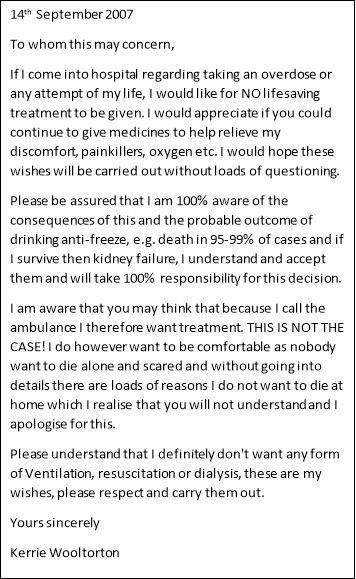
In terms of professional issues, the ability to provide informed consent can seriously affect the way in which Paramedics treat and advise patient. An example of this comes from a 2009 case in which an individual drank anti-freeze and then presented the ambulance crew with a letter, clearly stating that she did not consent to lifesaving intervention but did consent to analgesics in order to comfort her. Through the letter (which can be read and has been annotated in appendix C), the individual displayed she had full mental capacity to make her own decision and also accepted the responsibility for the outcomes of not receiving care (Armstrong W, 2009). In the context of a time critical situation where a decision would need to be made with regards to giving lifesaving saving intervention and withholding it, it can be sometimes difficult for the Paramedic to gather sufficient evidence that the patient (who may lack mental capacity) has created a living will, or that there is an advanced decision to refuse treatment (ADRT) put in place which clearly outlines the patient’s wishes (what they do and do not consent to) when it comes to end of life care. In the absence of this (or absence of any evidence of this) ambulance staff may be forced to act in the patients ‘best interests’. In the context of ambulance staff, the best interests of the patients may be difficult to decide as very little background may be available to the attending paramedic, however if the health care professional is unaware of any ADRT and has taken all reasonable steps in the time available to discover whether an ADRT is in place in the time frame available to them, the clinician making the decision will be protected from liability (Dept. of Constitutional Affairs, 2007). The HCPC states in their standards of conduct, performance and ethics that competent individuals have the right to refuse treatment and that this right must be respected (HCPC, 2016).

Whether an individual is deemed to lack or have capacity can sometimes present similar professional issues to informed consent in terms of paramedic practice. For the individual who lacks capacity, it can be a very stressful time as they may be confused, disorientated or feel as though they have little control over what is happening to them. The Mental Capacity Act states that nobody has the right to deprive someone of their liberty except in situations where they lack capacity and it is necessary to give life-sustaining treatment or to prevent a serious deterioration in their condition. In this situation, any restraint used must be proportionate to the risks to the person from inaction (Mental Capacity Act, 2005). There are no additional rights or authority for paramedics to act in this situation, but if there was cause to believe that there was serious risk to an individual’s life and that they lacked capacity, it would be within the Paramedic’s rights to act in such a way to protect the individual from further harming themselves or provide life sustaining treatment in the event of lack of capacity. Furthermore, the standards of conduct, performance and ethics provided by the health care professions council states that registrants must take all reasonable steps to reduce the risk of harm to service users (HCPC, 2016), therefore if a registrant were to stand aside and allow an individual who lacked capacity to cause harm to themselves or to further deteriorate, they may be at risk of committing an act of omission or even committing wilful neglect which can constitute a criminal offence.

In conclusion, the professional issues surrounding informed consent and mental capacity are applied in every single incident a paramedic may attend and are closely linked. A failure to recognise a lack in mental capacity or gain informed consent may cause detrimental legal and professional repercussions for both the clinician and service user. Although Paramedics are able to seek further advice from sources such as the local police force, senior members of ambulance staff, and general practitioners in order to safeguard their practice, a good working knowledge of the policies and procedures surrounding the issues mentioned in this essay will provide a good basis for gaining informed consent, the assessment of mental capacity and management of service users who lack capacity in the pre-hospital urgent care environment.


Reference List

Armstrong W, (2009)

Kerrie Wooltorton Inquest Held 28 September 2009 – Notes of Extracts From Summing Up By Coroner William Armstrong – HM Coroner –

Norfolk District (page 1)

Ball L . (2005). Setting the scene for the paramedic in primary care: a review of the literature.

Emergency Medicine Journal

. 22 (12), p896-900.

Brown M. (2014). Should we change the Mental Health Act 1983 for emergency services?.

British Journal of Mental Health Nursing

. 3 (3), P114-115.

Department for Constitutional Affairs. (2007).

Mental Capacity Act 2005 – Code of Practice.

Available: https://www.gov.uk/government/uploads/system/uploads/attachment_data/file/497253/Mental-capacity-act-code-of-practice.pdf. Last accessed 11th Mar 2017.

Department of Health (2009).

Reference guide to consent for examination or treatment

. London: Her Majesty’s Stationary Office.

Habiba, M. (2000). Examining consent within the patient-doctor relationship.

Journal of Medical Ethics

. 26 (5), p183-187.

Hartman K, Liang b. (1999). Exceptions to Informed Consent.

Hospital Physician

. 6 (3), p53 – 59.

Health and Care Professions Council. (2016).

Standards of conduct, performance and ethics.

Available: http://www.hcpc-uk.org/assets/documents/10004EDFStandardsofconduct,performanceandethics.pdf. Last accessed 1st Mar 2017.

Health Care Professions Council. (2016).

What happens if a concern is raised about me?.

Available: http://www.hpc-uk.org/assets/documents/100008E2HPC_What_happens_if.pdf. Last accessed 8th Mar 2017.

Laurie GT, Harmon HE and Porter G (2016).

Mason and McCall Smith’s Law and Medical Ethics

(10th Edition). Oxford University Press. Oxford.

Mental Capacity Act (2005) . Available: http://www.legislation.gov.uk/ukpga/2005/9/section/2. Last accessed 11th Mar 2017.

Sibson, L. (2010). Informed consent.

Journal Of Paramedic Practice.

2 (5), p189.

The Royal College of Surgeons of England. (2016). Consent

: Supported Decision-Making

. London: Professional and Clinical Standards.

UKCEN. (2011). Ethical Frameworks. Available: http://www.ukcen.net/ethical_issues/ethical_frameworks/the_four_principles_of_biomedical_ethics. Last accessed 13th Mar 2016.


Appendix A – The four principles of medical ethics

Respect for autonomy This principle involves respecting the decision-making capabilities of the service users and providing reasonable assistance in order to make informed choices regarding their care.
Beneficence This principle considers the weighing up of the associated risks and costs of treatments against the benefits and likely outcomes. Paramedics should always aim to act in a way which benefits the patient
Non-maleficence This principle surrounds the need for paramedics and other health care professionals to avoid causing harm to the individual. Although all treatments involve some level of harm, this should not be disproportionate to the benefits which are as a result of intervention.
Justice This principle is about distributing treatments available to each individual fairly and not favouring one service user over the other by means of extra treatments/intervention.
  • UKCEN, 2011


Appendix B – The Five Key Principles of the Mental Capacity Act

Presumption of capacity This principles states that an individual adult should always be presumed to have full mental capacity until they are proven otherwise. A presumption of capacity should not be made as a result of an individual having a certain medical condition or disability.
Individuals being supported to make their own decisions This principle states that individuals should be supported in every possible way to make their own decision before they are deemed to lack capacity. It also means that if it is deemed the individual does lack capacity that they should still be involved in the decision-making process.
Unwise decisions This principle states that the individual has the right to make unwise decisions and that the assumption the person lacks capacity should not be made based on a decision. This is due to a difference in cultural values, beliefs and preferences.
Best interests This principle states that an individual who lacks capacity is entitled to the decisions which are made on their behalf are done solely in their best interests
Less restrictive option This principle states that the individual who makes decisions on behalf of the incapacitated person must make decisions which will have the least effect on the individuals rights and freedoms.
  • Mental Capacity Act, 2005


A

ppendix C – Kerrie Wooltorton Advanced Decisions Letter

– Armstrong W, (2009)

Effects on the Fetus During Pregnancy

This essay will describe prenatal development, labour and birth. Before getting pregnant women take folic acid, this helps prevent birth defects that can affect the brain and spinal cord. Women wanting to get pregnant will also ensure that they eat healthily and drink less alcohol.

Prenatal development is the period from conception to birth, it has three periods within the nine-month period; the start of life occurs when the sperm and ovum unite, this is the germinal stage and lasts between 8 and 10 days. The fertilised egg is called a zygote, the zygote will divide itself again and again, after approximately a week it will implant itself into the wall of the uterus, by two weeks this will be completed and is now an embryo, the embryo is protected by the amniotic sac, it is made of two membrane sheets the outer sheet is the chorion and the inner layer the amnion The embryonic stage lasts until the end of the second month, the embryo begins to take on the look of a baby with a body, head, arms and legs. The final stage is the foetal stage, the foetus will begin to develop fingernails and eyelids as well as begin to move, by the seventh month the foetus can breathe and cry; the last two months is when the foetus grows and puts on weight. (Thomas Keenan and Subhadra Evans, 2010)

During pregnancy, the mother will be monitored by the doctor and midwife to check for blood type, anaemia, urine tests, glucose testing and blood pressure. Ultra sounds will take place at 12 weeks and 20 weeks, this is to check the baby’s heart rate and growth. The bump will also be regularly measured.

The first stage of labour begins with contractions this starts with a backache and then gradually becomes stronger, also at this point the mother will have a ‘show’ this is where the plug of mucus from your cervix comes away. Next the waters may break this is the amniotic fluid that the baby grows in. In the second stage of labour the contractions continue they get stronger and last longer, as this happens the cervix softens and dilates. Once the cervix has expanded enough, usually 10cm, the mother will begin to bear down and push. The head will come first; breech birth is when the feet come first, once the head is born the baby is then turned so it can arch it’s back and allow the shoulder, one at a time to pass, the rest of the body then passes through easily. The umbilical cord is then cut. The third stage of labour comes after the birth, the placenta separates itself from the wall of the uterus and is pushed out by one final contraction, often the mother has been given an injection and this helps shrink the uterus allowing the midwife to pull it out. The midwife will check that the placenta and cord are intact otherwise there is a risk of infection. (Reynolds, 1987)

Whilst in the womb the baby will be covered in vernix and lanugo, the vernix acts as a moisturiser for the baby whilst it is in the amniotic sac and lanugo are fine soft hairs that cover the baby, it acts as an anchor to hold the vernix. This usually falls off just before birth but some babies still have lanugo when they are born. The midwife will check the baby using the APGAR score 1 minute and 5 minutes after the birth, this is to check activity, pulse, grimace, appearance and respiration. The baby is scored on the results: 7-10 baby is in good shape; 4-6 baby may need help; 3 or less immediate life saving measures needed. Postpartum care begins after the birth and lasts 6-8 weeks, this entails making sure the mother eats well, rests enough and cares for her vagina. A new mother will go through physical and emotional changes and it is important that she looks after herself.

There are many things that can affect the foetus whilst being pregnant, this can either be genetic and chromosomal such as spina bifida and Down’s syndrome, Down’s syndrome is caused by having an extra chromosome instead of 46 they have 47 chromosomes. This can be detected early in the pregnancy through ultra-scans and a test called amniocentesis, the doctor will extract a small amount of the amniotic fluid and examine it. (Reynolds, 1987)  Infections that have been contracted by the mother can cause congenital anomalies such as TORCH, this includes Toxoplasmosis, other (syphilis, varicella-zoster, parvovirus B19), Rubella, Cytomegalovirus (CMV), and Herpes infections. These infections cause mild maternal morbidity and cause serious consequences to the foetus, unfortunately treatment has no effect on the outcome of the foetus. A vaccine called the MMR (Measles, Mumps and Rubella) is given to all children in 2 doses, first between 12 to 15 months and then again between 4 and 6 year old to provent Rubella.

Other factors are teratogens, these are classified as physical infectious or chemical agents and they can cause defects in the embryo or foetus; this can be through smoking and drinking and can affect the foetus by low birth weight or foetal alcohol syndrome. (FAS) Drugs such as cocaine are harmful to the foetus, babies exposed to cocaine tend to be born prematurely or have low birth weight, “cocaine exposed babies are three times as likely to have a very small head circumference or to show some signs of neurological abnormalities.” (Helen Bee and Denise Boyd, 2004) Unfortunately, it is still unclear what the long-term effects of cocaine use are to the unborn child.

The mother’s health and age can affect the foetus, the mother needs to have nutrients and calories to prevent malnutrition otherwise there is the risk of stillbirth, low infant birth weight or infant death in the first year. Also, ensuring the mother has folic acid reduces the risk of spina bifida this is an abnormality in which the lower part of the spine does not close. (Helen Bee and Denise Boyd, 2004) Whilst it is important that the mother has a sufficient diet it is also important that she does not put on too much weight, this could lead to a cesaren delivery and be prone to postpartum obesity this includes heart disease and diabetes. According to the Human Reproduction journal, data was used to look at the risks associated with pregnancy in women over the age of 35, their findings showed that there is an increased risk of gestational diabetes, placenta praevia and breech presentation and still birth was higher in older women. (M Jolly, N Sebire, J Harris, S Robinson and L Regan, 2000)

Fortunately, there is a lot of support to help expectant mothers such as doctors, midwives and health visitors. Pregnant mothers are routinely monitored to check the development of the foetus and are assessed for any complications that may arise, it is important to inform the doctor of any family impediments so that regular tests can be conducted and support is put in place for the family.

The attachment theory originated from the work of John Bowlby, he states that all children need to form a bond with someone, not necessarily the mother but the main caregiver; this is known as monotropism. Bowlby said that babies need to maintain proximity to their caregivers. He followed on from Freud’s psychodynamic theory and from ethology which is the study of animal behaviour, to develop his theory about the “bonding relationship that develops between parents and children and the disruption to that relationship that can occur through separation, bereavement or emotional deprivation”. (Barnes, 1995)

Bowlby felt there were 4 stages of attachment, the first stage preattachment occurs in the first few months of life, the child will not show any preference to any caregiver. The second stage is attachment-in-the-making and this is from 2-7 months of age, the child will begin to discriminate between who they know and who they do not know and will have a preference. The third stage is clear-cut-attachment, the child has developed attachments with their main caregivers and will actively seek them out, they also show signs of distress when they cannot see their caregiver. The final stage is goal-corrected partnership and this occurs from about 2 years of age, the child begins to be aware of the caregiver’s feelings, up to this time the relationship has been one-sided, now the relationship is being reciprocated. (Peter Smith, Helen Cowie and Mark Blades, 2003)

The maternal deprivation hypothesis by John Bowlby came about from a study he did with delinquent boys, the study showed that continued disruption of the attachment between child and primary caregiver resulted in the child struggling to develop relationships with others as well as having emotional and behavioural problems. Bowlby felt there was a critical period, if the child had not formed an attachment by the time they were 2, then attachment would not occur, causing the child to then develop issues later in life. Bowlby later amended this to 5 years.

Michael Rutter developed Bowlby’s theory further by suggesting that if a child does not develop an attachment at all this is privation, but if the child has formed a bond but this bond has been broken this is deprivation. Privation may occur because the child has had a lot of carers, Rutter felt that these children who are not distressed when separated will likely go on to be clingy, attention-seeking and as they get older the inability to stick to rules, form lasting relationships and in some cases anti-social behaviour and intellectual development. (McLeod, 2008)

As a result of Bowlby and Rutter’s findings there has been changes in the care environment. Before children without parents would stay in orphanages or children’s institutions, now children go into foster care and be with one family as opposed to having many carer’s. Pre-schools now assign a key worker to help children integrate into school life this allows the child to form an attachment with them making the child feel more secure. Previously children staying in hospital would stay on their own now hospitals allow mothers/caregivers to remain with their children so the child is not left alone feeling scared and worried.

Peer relationships are important to the social development of the child, it is through interacting with peers that children learn about their social world and how to interact within it.

In the home the child will interact with their parents and siblings, Older siblings tend to have a lot of patience with their younger siblings and they act as their attachment figure in strange situations. Research does suggest however that the child will develop their social skills firstly through their parents, parents provide the playmates and watch the interactions ensuring behaviour is good, the parent will also play with the child themselves. Older siblings will be the ones that teach the child the rules of socialization.

Babies from 2 months old are aware and look at one another, by 6 months they will smile and stare at others and by 1 year they will intentionally smile, frown and use other gestures to their play partner, they are aware of how the other behaves too and adjust their behaviour to respond to theirs. From 1 to 2 years the child will play alongside others, this is parallel play. Their interactions last longer and language will become a factor in play; as the child moves from 2 towards 3 they begin to understand rules of social exchange and can show empathy towards others. From 3 to 5 years the child

Related content

Value-based Care; An Organizational Shift from Volume to Value-based Care


Introduction

To provide general information that would support why the shift from volume to value-based care is more effective and efficient. It will also reflect on how value-based care can be cost-effective as well as improve the quality services provided.


Proposal/thesis statement

There is a need for healthcare institutions to shift operational basis to other modules that translate to better patient care and disease management outcomes. The standards of operation should agree with the Healthcare Act and put more emphasis on the value of patient care and not the number of patients seen at any given point in time.

There is a need to have healthcare institutions shift from volume to value-based care.


Healthcare Administrative, Overview of the Problem

Most healthcare organizations public or privately owned operate on a business module that translates to the need to incur profits in order to sustain operations. The need to make profits by extension forces the healthcare organizations to adopt a module of service delivery that is volume based and not value based (Cleven et al., 2016). The more patients a given doctor or hospital institution sees, the more profits made. Research studies have shown that increased emphasis on patient numbers instead of the quality of care results in sub-optimal service delivery and with prolonged hospital stay (Hata et al., 2016). An increased number of patients compared to the number of physician’s available results in physician burn out with an eventual result of reduced productivity and medical errors (West et al., 2016). The lack of quality care as a result of increased emphasis on the patient number as opposed to the quality of care can be addressed from a managerial or administrative standpoint through the formulation of regulatory policies that will focus on the quality of care.

The project is mainly aimed at trying to find out the advantages that will be realized in the vent that healthcare institution shifts from volume to value-based care. This project seeks to establish new information about this shift and suggest possible reasons why it should be adopted as a common practice.


Personal /Professional Research

It is expected that this project will bring out the negative impact of volume-based care to value-based care. The results from the project should be able to influence policy makers and hospital administrators to consider the shift to a value-based care model given the various advantages it promises to both the patients and the human resource.


Project Research

The actual study will be carried out through a literature search in various online databases. The study will only take into account credible and reliable articles and peer-reviewed journals. The study will make use of search engines and keywords to find relevant research work that can be used for the study.


HCA Topics- Healthcare Quality


Personnel

Healthcare quality is determined by the number and competence of the personnel. A highly trained and competent healthcare worker that meets the demand of the population is effective in promoting quality in the provision of healthcare services. Further, they should be enough for a given catchment area; hence the reason for WHO recommendation a physician population ratio (Prakash, 2019).


Equipment and Materials

Healthcare thrives on medical technology seen in the type of equipment used in patient management. Good quality of healthcare is brought by the adoption of the best equipment and technology in the treatment of patients. However, such equipment is often significantly costly to acquire and maintain.


HCA Topic -Strategic Planning


Human Resource Planning

Human resource planning, in this case, entails the determination of population that forms the catchment area and using the WHO doctor-population ration to find out the required number of healthcare workers needed. Planning in this case, therefore, heavily relies on demographic findings of an area.


Planning for Equipment and Materials

The process of strategic planning for this case requires the determination of the desired equipment and materials for the healthcare sector. The materials herein include drugs as well as supplies such as syringes, cotton, gloves, and other accessories. The strategy of achieving the equipment and materials would involve soliciting for funds from the relevant sources such as the government, private developers as well as donors. The expected period of acquiring the desired equipment and materials is documented.


Leadership Traits- Skill

There are certain important leadership skills important in resolving evidence-based solutions considered herein. The first one is communication skills in which the leader portrays the ability to promote top-down, bottom-up, and horizontal communication (Hudak, Russell, Fung & Rosenkrans, 2015). Communication skills will enhance employee leadership. Another skill which of utmost importance, in this case, is listening and learning because effective leaders need to listen to the problem and learn from others as well as the environment to understand the best ways for resolution (Hudak, Russell, Fung & Rosenkrans, 2015). Flexibility is another skill required because research has shown that healthcare is one of the most dynamic fields because of the ever-changing information that is derived from research as well as technological advancement (Hudak, Russell, Fung & Rosenkrans, 2015). There are several cases whereby a solution becomes obsolete hence requires an individual who is flexible to adapt to the new changes. Flexibility, in this case, is characterized by the ability to embrace new information and to adopt evidence-based outcome in real practice.

Planning skill is essential for a healthcare leader in the resolution or implementation of any solution (Shaw, Wong, Griffin, Robertson & Bhatia, 2017). Planning skills enables the leadership to consider all the possible factors, both seeable and unforeseen before taking action (Shaw, Wong, Griffin, Robertson & Bhatia, 2017). In this case, there is a need to know the consequences of the proposed evidence-based solution and sorting them first before finalizing the resolution process. This skill also requires the leader to be visionary so that effective and productive planning is conducted to ensure the vision of the organization is attained. Creativity skills are highly critical for this case because it should be borne in mind that resources are often limited in any setting (Sözbilir, 2018). Such a situation requires leadership that is greatly resourceful to help achieve the desired goals. Creative leadership in this scenario will strive to look for alternative ways of resolving an issue with the most beneficial outcome out of the many possible options.

Decision-making skills cannot be underestimated as essential leadership skills in any situation or problem. Important steps for an organization or at an individual level are carried out after good decision making (Szymaniec-Mlicka, 2017). A good choice to pursue comes from good decision-making skills, which has certain critical components. They include careful consideration of circumstances, the definition of the question and the objective, brainstorming, organizing ideas, seeking opinions and feedback, evaluating the options, and making a choice (Szymaniec-Mlicka, 2017). The final components are taking action and evaluating the decision made.

Healthcare is a high-risk industry, and for that reason, there is a need for composure. It should be noted that an action that a healthcare worker takes directly affects a patients’ wellbeing and subsequently their lives. Further, the environment is often a stressful one, coupled with the problem of employee burnout. It for this reason that a good leader should have composure and avoid causing additional stress to members of the healthcare team as well as to patients.

Skills in participative management are also required in the resolution of evidence-based solution regarded in this paper. It requires that leaders employ more than one style of management and that there is a need to include every stakeholder concerned in the running of the healthcare organization (Okpala, 2018). Leaders with these skills will encourage employees to share ideas and perspectives regarding the action that is to be taken. They might have crucial information that may change the course of events for the better.


Knowledge

Knowledge in leadership is also essential for this resolution of the evidence-based solutions. There are seven elements of knowledge leadership that are considered herein, such as the context in the sense that it incorporates the performance metrics. Knowledge leadership is a matter of context because organizations are composed of self-managing knowledge workers. The second element that is necessary as regards to knowledge is competence in which leadership needs to portray the highest level of competence in the application of the solutions obtained from the evidence-based process.

Knowledge in leadership also needs to incorporate culture. Both the organizational culture, as well as the cultural background of every member should be paid attention to ensure that the best approach is employed in the resolution process (Ghasabeh & Provitera, 2018). It is related to the fourth element, which stipulates that knowledge in leadership should be a matter of communities. In this case, convergence is advisable if certain disciplines have common goals. Other aspects of knowledge that are useful for leadership include conversation, communication, and coaching (Ghasabeh & Provitera, 2018).

Leadership needs to have an in-depth and vast knowledge regarding healthcare systems because it puts it at a better place in making resolutions affecting the sector. It is also important that the leadership acquires good knowledge on the management of resources since it is critical in implementing almost all evidence-based solutions (Ghasabeh & Provitera, 2018). The reason for such is because the resolution, in this case, is a management issue; hence, leaders involved in the exercise need to have experience in managing healthcare system. The knowledge that is necessary for this case also includes human resource and technology. Moreover, good background and knowledge in research are essential for healthcare leaders.


Organizational Excellence: Resolve

The organizational excellence in resolving the solution considered herein takes into consideration six effective steps. First, as regards to information, there is well-developed decision support. Such a phase enhances the decision-process in all the levels of management. The second step is that of the organizational structure that is characterized by the effective distribution of roles and responsibilities to all the parties involved. This step of organizational excellence will ensure that the highest productivity is attained in each functional area. The third phase concerns the people whereby all the required human capital needs to be obtained to implement the proposed solution. It should be noted that the actual work of resolution or implementation of any solution is carried out by people who should, therefore, possess the required skills and knowledge for the job.

Resolution of the solutions from the evidence-based process also requires compensation and incentives. The leadership has the mandate of ensuring that there is a proper and functional reward system that allows for action plans to be executed. The next step of attaining organizational excellence, in this case, is through learning systems characterized by knowledge acquisition and training. Proper training of the personnel is undertaken so that they can carry out the healthcare tasks that require high levels of skills, knowledge, and competence. The final phase of realizing organizational excellence regards work processes whereby the leadership considers the interaction and linkage of workflows to ensure that the solution is carried to completion.


Proposed Evidence-Based Solutions

The proposed evidence-based solutions considered herein are the adoption of evidence-based practice in the healthcare system, utilization of recommended technology for optimal outcome and instituting an appropriate size of the workforce. The other solutions for improving healthcare quality are increasing resource allocation and ensuring that wastefulness is minimized since there is a scarcity of resources and healthcare sector is an expensive one to run effectively to achieve the desired goals.


Potential obstacles and challenges

As with any research, there are potential challenges and barriers that are unforeseen and always present during the project. Such kind of obstacles ends up threatening the credibility and validity of the research findings, thus making this an important point to note prior to the start of the research project. Among the potential challenges include the lack of relevant data on the research question. This will make it very difficult to do a detailed literature review and consequently, by extension, impact on the discussion of the study findings. The resources that will be explored in order to find relevant data on the topic include the use of online scientific databases such as NIH, AMA and google scholars.


Strategic Analysis/


Risk Management

Reputation damage: Given that the research will be focusing on various organizations and their modes of operations, there is a possibility of publication of negative information that would taint the image of the respective organizations. This will be mitigated by ensuring that the research adheres to the objectives and not any other information.


Conclusion/


Objectives

The project is aimed at establishing the advantages of a shift from volume to value-based care in the delivery of healthcare services. This project seeks to establish new information about this shift and suggest possible reasons why it should be adopted/implemented as a common practice.


References

  • Cleven, A., Mettler, T., Rohner, P., & Winter, R. (2016). Healthcare quality innovation and performance through process orientation: Evidence from general hospitals in Switzerland.

    Technological Forecasting and Social Change

    ,

    113

    , 386-395.
  • Ghasabeh, M., & Provitera, M. (2018). Transformational Leadership and Knowledge Management: Analysing Knowledge Management Models.

    Journal Of Values-Based Leadership

    ,

    11

    (1), 8.
  • Hata, T., Motoi, F., Ishida, M., Naitoh, T., Katayose, Y., Egawa, S., &Unno, M. (2016). Effect of hospital volume on surgical outcomes after pancreaticoduodenectomy.

    Annals of surgery

    ,

    263

    (4), 664-672.
  • Hudak, R., Russell, R., Fung, M., & Rosenkrans, W. (2015). Federal Health Care Leadership Skills Required in the 21st Century.

    Journal Of Leadership Studies

    ,

    9

    (3), 8-22.
  • Okpala, P. (2018). Innovative Leadership Initiatives to Reduce the Cost of Healthcare.

    Journal Of Healthcare Management

    ,

    63

    (5), 313-321.
  • Prakash, S. (2019). Medical education in India: Looking beyond doctor: Population ratio.

    Journal Of Family Medicine And Primary Care

    ,

    8

    (3), 1290.
  • Shaw, J., Wong, I., Griffin, B., Robertson, M., & Bhatia, R. (2017). Principles for Health System Capacity Planning: Insights for Healthcare Leaders.

    Healthcare Quarterly

    ,

    19

    (4), 17-22.
  • Sözbilir, F. (2018). The interaction between social capital, creativity, and efficiency in organizations.

    Thinking Skills And Creativity

    ,

    27

    (1), 92-100.
  • Szymaniec-Mlicka, K. (2017). The decision-making process in public healthcare entities – identification of the decision-making process type.

    Management

    ,

    21

    (1), 191-204.
  • West, C. P., Dyrbye, L. N., Erwin, P. J., &Shanafelt, T. D. (2016). Interventions to prevent and reduce physician burnout: a systematic review and meta-analysis.

    The Lancet

    ,

    388

    (10057), 2272-2281.

Quantitative And Qualitative Research Methodologies


Another reflection, everyone…this one will help you to discover (or re-discover?) your own approach to advanced inquiry…Here is your prompt:
Recall in the Module 3 section titled, Differences in Research Methodologies, I described having all 3 research methodologies in my portfolio: Quantitative, Qualitative, and Mixed Methods. While you are not researchers (yet!), and therefore you may not have consciously considered this, we all have a philosophical perspective that guides our thoughts, beliefs, and values as we walk through this life. This means that how we view ‘reality’ or the world ‘out there’ will strongly influence the methods we choose to investigate it.  


Reflecting on how you view the world will provide perspective on why you view the world as you do and yourself in it. Such introspection provides a model for social inquiry and, by extension, advanced nursing inquiry. Considering that it is not unusual for a researcher (or a non-researcher for that matter) to occupy a range of positions along the spectrum from Positivist to Pragmatist to Constructivist, where would you place yourself on that continuum? How do you know? What real-world examples lead you to this conclusion? As a result of critically reflecting on your beliefs and values, which is intended to lead us to a better understanding of self, which research methodology would you be drawn to as a nurse researcher and why? Why is this process of self-discovery an important leg of your journey of learning in this course?
As you are engaging in this process of reflection, please do not restate the questions in your response post but rather weave your answers into a scholarly narrative